
India's Moment in Global Textiles Is Now
The world is already choosing India. The question is whether India's textile industry is ready to deliver.
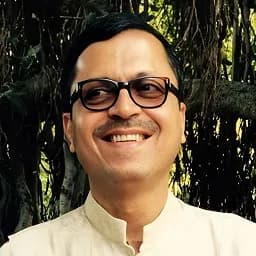
Sanjay Jhunjhunwalla
Co-Founder and MD, Turtle Limited Leading menswear manufacturing and retail in Eastern India for 30 years
.webp&w=3840&q=75)
The global manufacturing order is being redrawn. After decades of routing supply chains almost entirely through China, buyers across the United States, Europe, and Japan are actively looking for alternatives. Tariff volatility, geopolitical friction, and the hard lessons of pandemic-era supply chain collapse have made single-country dependency untenable. India sits at the top of the alternatives list, emerging as a preferred destination alongside Vietnam and Mexico as multinational firms diversify supply chains away from China. This preference is real. The problem is that it has not translated into orders at the scale the opportunity presents.
“More recently, when political unrest disrupted Bangladesh's apparel industry in 2024 and global buyers looked to redirect orders, India was the obvious next choice. Yet, as industry bodies acknowledged, India's manufacturing capacity was too limited to absorb orders at the scale buyers needed.”
We had the opportunity handed to us. We have yet to take it.
Over thirty years of building a garment manufacturing and retail business in West Bengal, I have seen a lot of change and growth. We began with the capacity to make twenty shirts a day. Today we have nearly two thousand employees and a retail presence across hundreds of Indian cities. The industry, along with the world, has changed in ways I could not have predicted when I started. However, the same structural failures repeat themselves, decade after decade, without resolution.
India’s textile industry lacks the infrastructure to compete at scale
Bengal was once known as the Manchester of the East, its jute-manufacturing belt along the Hooghly River the engine of an entire industrial era. Then the mills shut. The orders went elsewhere. Garmenting continues in Bengal because the artisans are skilled and the labour costs are competitive. But without the full value chain, growth remains structurally constrained.
“India's cotton travels thousands of kilometres between growing, spinning, weaving, and garmenting centres before a shirt reaches a shelf.”
China's Changshu cluster alone has over 4,000 textile and apparel enterprises. Bangladesh has thousands of integrated mills. India, however, remains highly fragmented and has only a handful of composite mills. The shift needed is to look at textiles as a cluster and build plants where the entire cycle, from spinning to garmenting, is integrated.
Textiles need the same industrial policy that unlocked electronics
India's manufacturing share of GDP stood at 17.3 percent in 2023-24, identical to where it was a decade earlier in 2013-14. The question worth asking is how the countries ahead of India developed their manufacturing capabilities, and what lessons India can draw from them. China scaled manufacturing through state-led industrial policy; Bangladesh through focused support for garment exports; Vietnam through foreign investment and trade integration; and the United States through innovation, capital, and productivity. In India, private capital alone is unlikely to deliver China-level manufacturing scale. The government will need to build clusters, provide land, and create the conditions that make large-scale investment attractive.
This is not a new idea. India has already seen it work in electronics manufacturing.
“Following the launch of the Production Linked Incentive (PLI) scheme in 2020, the sector scaled rapidly. In just four years, electronics production rose 146%, and the country expanded from two mobile phone manufacturing units in 2014 to more than 300 today. What was done for smartphones, can be done for garments.”
The textile PLI tells a different story. It was approved with an outlay of ₹10,683 crore in 2021. Four years on, it remains far from the transformative intervention the sector was promised. There is a particular irony in the fact that none of the seven PM MITRA parks currently under development are located in eastern India. Bengal, the former Manchester, is yet to be rebuilt.
Industry 4.0 is already transforming Indian factories
Inside textile factories, a different transformation is already underway. The garment industry is semi-mechanised, with every machine requiring a human operator. AI is now making it even more efficient. It has brought science into the art of forecasting, telling us which colours, fits, and patterns will sell, based on global brand data. It has enabled visualisation, with designers able to drape a garment on a model digitally before a single sample is cut. In warehouses, AI is allocating products to stores based on shop-level sales data. The production calendar has shrunk from 14 months to about 10. The scale of this shift is significant. Globally, the market for AI in textiles is projected to rise from USD 4.12 billion in 2025 to USD 68.44 billion by 2035. India is keeping pace: AI adoption in domestic manufacturing is forecast to grow at 58.96% CAGR between 2023 and 2028, one of the fastest rates in the world.
However, this transformation is not reaching everyone equally. The biggest advances are being made by large groups that have the resources to modernise multiple stages of production simultaneously. Mid-sized and smaller manufacturers are often able to upgrade only incrementally, one part of the value chain at a time. This unequal pace of adoption matters because the global opportunity will not wait.
“As AI compresses timelines and raises quality standards across the industry, manufacturers who cannot keep up will lose orders to those who can.”
Looking ahead: challenges, opportunities, and the big questions
India is a follower in textile innovation, not a leader. Why didn't India come up with Heattech, or moisture-wicking performance fabrics, or graphene-infused textiles? India has the raw material base, the manufacturing knowledge, and the domestic market. What it lacks is investment in R&D, which can only come from the government at scale. Until that changes, India will remain a supplier of other people's ideas at other people's prices.
The picture on sustainability is no more encouraging. Sustainability to me is a cycle where whatever we produce enters nature and eventually comes back to us.
“The textile industry is far from sustainable. Water use in dyeing and processing is severe, for instance, and cheap harmful chemicals remain widespread because margins come first. Though every actor is behaving rationally, the system is producing collective irrationality.”
Only a government mandate can break that cycle. They did it for EVs. They need to do it in textiles.
The human dimension is where the industry is least prepared. Most garment workers are not in organised employment. When a crisis hits, there is no framework for conversation between owner and worker, no safety net on either side. And the transformation coming will make this vulnerability acute. Within a generation, textile manufacturing may not need any human workers at all. The motor car industry already works this way. Garments can too. South Asia created 10 million jobs a year between 2000 and 2023 while the working-age population grew by 19 million annually. The textile industry has historically absorbed unskilled and semi-skilled labour at scale, but it is rapidly automating itself out of that role.
Mid-sized manufacturers like me cannot plan on a thirty-year horizon. But I can see that in a generation, this industry may well run without human workers.
“For manufacturers like me, trying to navigate a transformation I can see coming but cannot control, the answer is collaboration: with a government that plans long-term, with academia and technology partners that can make adoption accessible, and with industry bodies that can organise the sector.”
The window for India to claim its place in global textiles is real, but finite. India is already preferred. The question is whether we will show up.
Sanjay Jhunjhunwalla
Co-Founder and MD, Turtle Limited Leading menswear manufacturing and retail in Eastern India for 30 years

0 Comments
- No comments yet. Be the first to comment.


You Might Like
Stories and perspectives from leaders shaping India’s long-term future.
.png&w=3840&q=75)
Compute, Chips, and Ambition: Building the Foundation for India's AI Future
Kundana K. Lal.webp&w=3840&q=75)
The Personalisation Revolution
Nitin Raj.webp&w=3840&q=75)
The Age of Anticipation
Nitin Raj
The History of Scarcity
Nitin Raj
India@2047: What Must Change Now?
Gurcharan Das
India at the Strategic Crossroads: AI, Talent, and the Long Game
Viney Sawhney
India's Climate Tech Moment Has Arrived. Here Is What Will Unlock It
Dr Somnath Baidya Roy-1.webp&w=3840&q=75)
India Is Not Waiting Anymore. The Question Is Who’s Steering
Sakshi Anand.webp&w=3840&q=75)
A Billion Minds, One Unasked Question: What Are We Actually Building?
Gaurav Gaggar
India’s Next 20-Year Cycle: Designing Intelligence, Not Just Adopting It
Nitin Raj