
India@2047: What Must Change Now?
On paper, India has everything: the world's youngest population, strong educational institutions, entrepreneurial energy, and global ambition. And yet, we're not quite where we aspire to be. So what choices, reforms, and ideas will shape India's path to becoming a true global powerhouse? Fahad Moti Khan, Founder and CEO of venture builder T9L and Advisor to One Big Future shared a conversation with author, commentator, and public intellectual Gurcharan Das, to answer that one pertinent question.
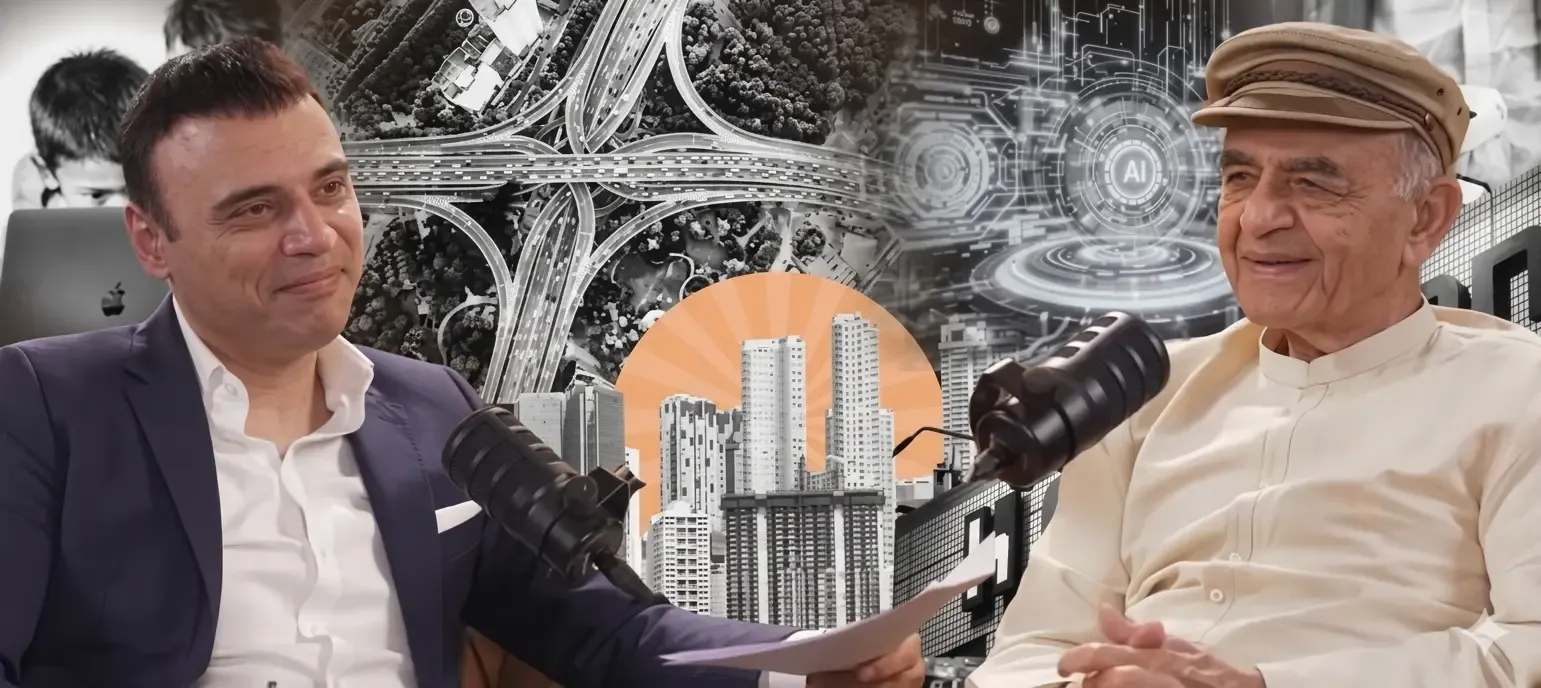
Fahad: You predicted India's rise in your book India Unbound in the year 2000. Now, 25 years later, where have we succeeded, where have we fallen short, and what still stands in the way?
Gurcharan Das: Well, I predicted the rise of India. And India has obliged by rising. In the last 30 years, India has grown at 6.5% a year. For a democracy, this is unprecedented. We have lifted 450 million people out of poverty. The middle class has grown from 10% to 30%. The per capita income has risen from $100 to $3,000. We have also created a green revolution. We’ve gone from being an agricultural deficit country and importer to one of the largest exporters in the world. Domestically, we have created a digital revolution and emerged as a player in the IT space.
However, we have failed to create an industrial revolution. Every country that went from poverty to prosperity in the last 200 years went from an agricultural surplus to industry. We seem to have skipped the factory stage. Manufacturing represents less than 15% of GDP. And 45% of our working people are stuck on the farm in small holdings. Most of them are redundant as agriculture doesn't need that many people. That is the heart of the problem.
Fahad: You have described India’s successes and failures. So the question is, what now? Have we missed the bus?
Gurcharan Das: The answer is no, we have not missed the bus. It would have been better if we had done this 10 or 15 years ago, but today infrastructure is far better, the logistics are far better, and we've taken a lot of friction out of the system.
That said, the window of opportunity is not that great. We have a chance to get the demographic dividend, but our people are going to start aging in about 15 to 20 years. Advanced economies with aging populations are struggling - Japan and Korea being examples. In our case, we are young and hungry.
The really damning statistic is that the export of labour-intensive manufactured products from India is less than 2% of world exports. Every country that went from poverty to prosperity did it through exports, certainly since the Second World War, all the Asian tigers, from Japan, Korea and Taiwan to Vietnam and most recently China, did it through the export of labour-intensive manufacturing. And we did not.
So the way forward is through labour-intensive manufactured products. Now, Mr. Trump has pushed us to open our economy. Closing our economy in the 1960s was the original sin. When you close your economy, you're telling the world that we're not confident enough to compete.
We’ve also realised that we are among the most overregulated countries in the world. TeamLease Regtech calculated that India has 69,000 compliances, a company has to make 6,500 filings, and a fifth of those filings are jail-able. This is rooted in what Rajaji called the "license, permit, inspector raj." We called it a mixed economy but ended up with a mixed-up economy.
Fahad: What do you see as the solution?
Gurcharan Das: The government has set up three deregulation commissions in the last year, headed by very senior people, and I am hoping for a bonfire of these 69,000 compliances. The Jan Vishwas Bill that has passed Parliament is a step in that direction; it's about trust, the idea that regulation should be based on trusting the citizen.
Other reforms remain. Our electricity rates are subsidised and freight and railway costs are not competitive. But that is where PLI comes in, and the best example of using it well is the iPhone.
Two years ago, less than 0.2% of global iPhones were made in India. Today, 30% are made here, all shifted from China. Just the assembly has created 2 lakh jobs. But the more interesting part of that story is what happened next. When Vietnam heard they had lost the iPhone to India, the Prime Minister of Vietnam got on a plane, flew to Cupertino to meet Tim Cook, and persuaded him to give them the iTablet. He succeeded.
I asked a senior person in our government: "What did we do to get the iPhone?" He said, "We gave them permission." Look at that attitude versus the attitude of the Prime Minister of Vietnam.
The moral of the story is that we should be targeting brand leaders in shoes, garments, food processing, toys, electronics assembly. If I were a chief minister, I would take a delegation of business people, show them our capability, and go after a global brand leader, the way India landed Foxconn for Apple.
Fahad: Why does India not have a global brand? We are assembling Apple products, but why don't we have an Apple of our own?
Gurcharan Das: When we closed our economy, we closed it to competition. A company becomes strong through competition. Why don't our companies invest in R&D? Because they don't need to. If you have 60% market share in a protected market, why improve your product? But open the economy to global competition and suddenly you have to compete. And if you beat foreign companies in your own market, you gain the confidence to go after the next one.
Now, I seem to be blaming the 1950s and 60s, but why hasn't this government fixed it? In fact, it raised tariffs. ‘Atmanirbhar’ has two meanings: self-reliance, which is good, and self-sufficiency, which is bad. When Mr. Modi says ‘Atmanirbhar’, many people hear "we don't need foreigners, we can do it ourselves." That mentality is the mentality to poverty.
That said, if we want to reach the Viksit Bharat goal, we can. The intent is there.
Fahad: India is the third largest startup hub in the world, with over 200 unicorns. Yet most of what we're building is derivative: an Ola copies Uber, a Flipkart copies Amazon, and much of our edge is cost arbitrage. What is the path to genuine, original innovation?
Gurcharan Das: Indians don't lack ambition, and they don't lack innovative ability. As a people we enjoy jugaad. But innovation follows incentives, and for a long time there were no incentives to do it any other way.
The reason Sony became a global brand is because Sony became a top brand in Japan first, and then had the confidence to go further. Toyota, Honda and Samsung took the same path of first succeeding in their own territory. We need to do the same: create world-class brands by competing in our own market first. Some of our startups will scale. Amul is already going abroad.
There is plenty of entrepreneurial energy in this country. We have a rich history of trade going back to the Silk Road. Very few people know that Gujarati traders once dominated commerce across Oman and the UAE. India ran a trade surplus right through until the Industrial Revolution. We were never a country without ambition or commercial instinct. We just need the right conditions.
Fahad: What are your thoughts on AI? How can it be used for the greater good?
Gurcharan Das: Everybody in the country should be using AI. We always jump in and say, "Oh, cognitive skills will be lost." But let's look at the glass that's half full. AI literacy should be universal. And it'll get there because it's too good to keep out of people's hands.
A doctor friend of mine started sharing his diagnoses with AI, and asking for a second opinion. He has done this for over 500 patients. He says the AI's diagnosis is invariably superior to his. Now imagine: a poor woman in a village is taking care of her daughter with a high fever. It’s midnight, there are no health workers available. She speaks the symptoms into an AI. It advises her on what to do right now, knows which pharmacies are nearby and what their inventory is, and gives her a prescription for the morning.
I met a school teacher from a small town in UP who had given every child in her classroom an AI tutor. The child could converse with the AI in his mother tongue, Maithili, without knowing how to type or speak in English. After one month, the children said they understood their lessons far better. But the teacher felt insecure because they were getting better teaching from AI than from her.
For my own research, I use AI as a Socratic partner to test my ideas. In every field, we need this AI literacy.
Fahad: India is going through a brain drain. But you chose to come back. With your profile, you could have gotten any job anywhere. Why did you choose to come back, and what is your message for Indians thinking about returning?
Gurcharan Das: One morning, when I was in my 40s, I was driving to work in Ohio to the headquarters of Procter & Gamble for a meeting about Pampers, our baby diapers brand. I looked out the window and wondered: “Is this what life is all about? Selling the next case of Pampers? Surely there's more to do in life.”
I turned on the radio and heard that India's reforms were in trouble. I emailed Manmohan Singh. He wrote back: "Why don't you come back and sell the reforms yourself?" That was enough. I switched from being Managing Director of P&G worldwide to what my wife called a starving writer.
India has changed. The opportunities that didn't exist when many of us left are being built now. My message to Indians is: come back.
Fahad: What is your take on the One Big Future of India?
Gurcharan Das: For me, the first duty of the state is to enable people to live with comfort. We may have lifted people out of poverty, with the absolute poverty level now only 2.5%, but people who have just crossed the poverty line are still very vulnerable. AI is going to eat up a lot of jobs. But people will still need to wear clothes, children will still need toys, and not everything will be on a screen.
The India of my dreams is not a fairy tale; it is doable. For 30 years we have been growing at 6.5%. All we need to do is take that to 7.5%. Do the reforms. Create an industrial revolution. Bring in more Apple-type companies, more Nikes. It is all low-hanging fruit. Going from 6.5% to 7.5% will take our per capita income from $3,000 today to $12,000. And by then the middle class will be not 30% but 60%. Just get some of those people off the farm and into factory jobs. Do what Vietnam is doing, what Bangladesh did with garments. It is not rocket science.
But also: preserve our democracy. It is in danger of turning illiberal.
This interview is an edited excerpt from a wide-ranging conversation with Gurcharan Das on the One Big Future podcast, covering India's economic trajectory, the crisis of governance, the promise of AI, and what it means to come home. Listen to the full episode here.
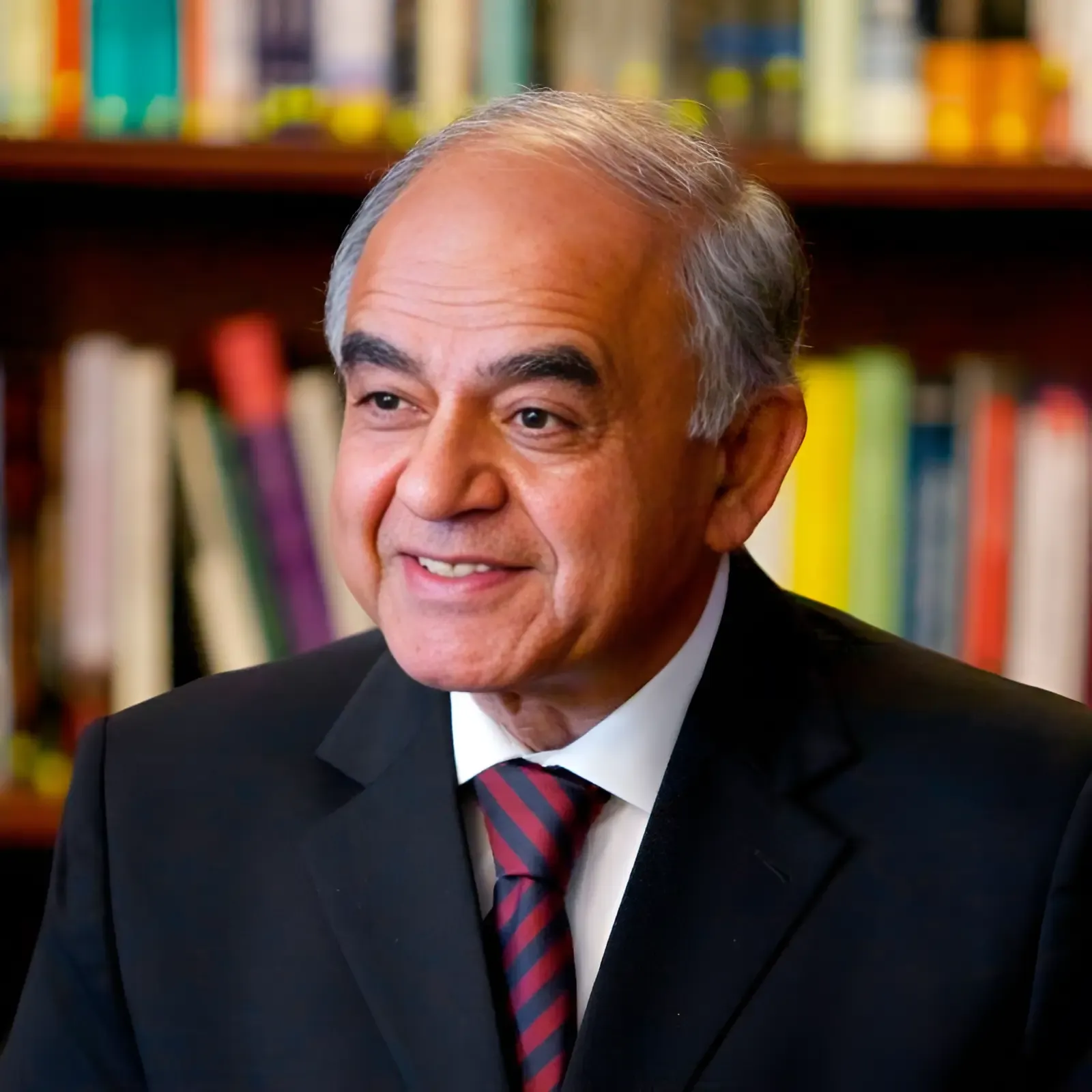
Gurcharan Das
Author, Commentator, Public Intellectual

0 Comments
- No comments yet. Be the first to comment.


You Might Like
Stories and perspectives from leaders shaping India’s long-term future.
Chapter 1: The History of Scarcity
Nitin Raj
India at the Strategic Crossroads: AI, Talent, and the Long Game
Viney Sawhney
India's Climate Tech Moment Has Arrived. Here Is What Will Unlock It
Dr Somnath Baidya Roy-1.webp&w=3840&q=75)
India Is Not Waiting Anymore. The Question Is Who’s Steering
Sakshi Anand.webp&w=3840&q=75)
A Billion Minds, One Unasked Question: What Are We Actually Building?
Gaurav Gaggar
India’s Next 20-Year Cycle: Designing Intelligence, Not Just Adopting It
Nitin Raj
One Big Future: A Collective Vision for Viksit Bharat
Dr Subho Ray