
India at the Strategic Crossroads: AI, Talent, and the Long Game
As artificial intelligence, geopolitical fragmentation, and global instability converge, India faces a defining choice: to react to the world as it changes, or to help design the order that emerges.
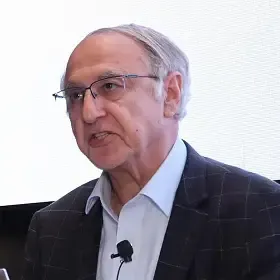
Viney Sawhney
Member of the Finance Team at Harvard University Teaching Private Equity, Venture Capital, Investment Banking, and Project Finance President, Boston National Capital Partners
India stands at a defining strategic moment. The nation’s rise is no longer measured only by economic growth rates, demographic advantage, or market scale. A far larger question is emerging before policymakers, entrepreneurs, and institutions alike: can India evolve from being an emerging economy into a system-shaping power capable of influencing the future architecture of technology and governance?
The urgency of this question is being intensified by transformations reshaping the world order: the extraordinary acceleration of artificial intelligence and automation, the fragmentation of geopolitical alignments, and the persistent instability arising from conflict zones such as West Asia. These may seem like isolated events, but they are interconnected disruptions that are redefining how nations compete, collaborate, secure resources, build institutions, and sustain social stability. In this environment, conventional policymaking rooted in short-term cycles is proving increasingly inadequate. The future is moving faster than institutions are adapting to it.
India's opportunity lies not merely in responding to these changes, but in shaping the frameworks through which they are managed. This requires a transition from reactive governance to long-horizon strategic thinking across three fronts: artificial intelligence, human capital, and the institutions that will govern both.
India’s AI Moment: Trusted, Democratic, and Built to Scale
One of the most significant opportunities before India is the ability to emerge as the world’s most trusted democratic AI power. Today, the global debate around artificial intelligence is deeply polarised. Some models prioritise innovation speed with limited oversight. Others emphasise state control and centralised authority. Meanwhile, highly regulated systems often struggle to scale rapidly.
“India is uniquely positioned to offer a more balanced path: one that combines innovation with inclusion, digital scale with democratic legitimacy, and technological advancement with public trust.”
India’s digital public infrastructure, entrepreneurial ecosystem, engineering talent, and linguistic diversity provide the foundations for this leadership role. UPI now processes over 21 billion transactions a month, accounting for nearly half of all global real-time payment volume. AI systems developed in Indian languages, deployed responsibly across healthcare, education, agriculture, and governance, could represent one of the world’s largest and most inclusive digital transformations. India's Bhashini platform, with over 300 AI models built across 22 Indian languages, is already laying that foundation.
No other democracy has managed this at scale. This positions India to establish globally relevant frameworks around data rights, transparency, algorithmic accountability, and ethical deployment. By doing so, India can build the kind of trust that, in the coming decade, may be as valuable a strategic asset as technology itself.
The Talent Gap India Cannot Afford to Ignore
None of these ambitions can be achieved without a parallel transformation in human capability. Artificial intelligence will alter labour markets more rapidly than traditional education systems can adapt. The World Economic Forum's Future of Jobs Report 2025 estimates that 63 in every 100 Indian workers will require retraining by 2030, with over 70 million unlikely to receive the skills they need in time.
Job displacement is only part of the problem. The deeper challenge is the widening mismatch between present workforce preparedness and future economic requirements. This requires a national human capability mission focused on future-oriented skills. Alongside technical competence in AI, robotics, semiconductors, and advanced manufacturing, equal emphasis must be placed on uniquely human strengths such as creativity, communication, design thinking, problem-solving, and leadership.
“In the AI era, the nations that succeed will not be those with the largest populations, but those that can combine technology with adaptable human capital.”
For India, that combination is both the challenge and the opportunity.
India’s Long Game Starts Now
Underlying all these priorities is the need to institutionalise long-horizon thinking within governance itself. Democracies often operate within compressed political and administrative cycles, while technological and geopolitical transformations unfold across decades.
“India would benefit significantly from dedicated futures-oriented institutions capable of conducting scenario analysis, strategic forecasting, and systems-level risk assessment.”
The future will increasingly reward countries that can anticipate structural shifts before they become crises. Technological sovereignty, workforce disruption, and the governance of AI are not distant concerns; they are emerging realities that require coordinated preparation today.
India enters this period with considerable strengths: democratic legitimacy, digital infrastructure, entrepreneurial energy, a youthful population, expanding global credibility, and rising economic influence. However, advantages alone do not determine outcomes. Alignment does. Strategic clarity does. Institutional imagination does.
The defining question for India is no longer whether it can grow. It is whether it can help shape the systems through which the world itself will evolve.
“The nations that matter most in the coming decades will be those that move beyond acquiring capital, scale, and military strength to design trusted institutions, future-ready workforces, and the governance systems to manage what is coming.”
India has now reached that threshold. The coming decade should therefore not be approached merely as a period of economic expansion, but as an opportunity to design the foundations of long-term national and global relevance. The future will not be inherited by default. It will be shaped deliberately by those willing to think beyond immediate cycles and build for generations ahead.
Viney Sawhney
Member of the Finance Team at Harvard University Teaching Private Equity, Venture Capital, Investment Banking, and Project Finance President, Boston National Capital Partners

6 Comments
- B.N.Mukhi18 days ago
Excellent article You are class beyond compare Viney
- Vinod Vijayan18 days ago
Great article and very insightful. I share the same view - with right policy framework, infrastructure investments, and talent development, India has the potential to emerge as a major force in the next AI- driven economic era.
- Randip18 days ago
Interesting insights Sir Professor! India is peculiar in terms of how the population reacts to any stimulus.AI is no different.Population at large was involved in digital scam out of a remote place in Jharkhand called "Jamtara " & that was without AI & no public school education .
- Geeta Chadha18 days ago
Very Well written and informative piece ….
- Arun K Vij18 days ago
knowledgeable interesting
- Dhanraj Singh18 days ago
Very impressive article. Explained AI and it's importance in terms of Indian context very well. Congratulations Sir.


You Might Like
Stories and perspectives from leaders shaping India’s long-term future.
Chapter 1: The History of Scarcity
Nitin Raj
India@2047: What Must Change Now?
Gurcharan Das
India's Climate Tech Moment Has Arrived. Here Is What Will Unlock It
Dr Somnath Baidya Roy-1.webp&w=3840&q=75)
India Is Not Waiting Anymore. The Question Is Who’s Steering
Sakshi Anand.webp&w=3840&q=75)
A Billion Minds, One Unasked Question: What Are We Actually Building?
Gaurav Gaggar
India’s Next 20-Year Cycle: Designing Intelligence, Not Just Adopting It
Nitin Raj
One Big Future: A Collective Vision for Viksit Bharat
Dr Subho Ray