
AI
The Great AI Scare
A satirical look at whether AI’s existential-risk narrative is also becoming a convenient shield for weak economics, slowing progress and mounting capital pressure.

A satirical look at whether AI’s existential-risk narrative is also becoming a convenient shield for weak economics, slowing progress and mounting capital pressure.
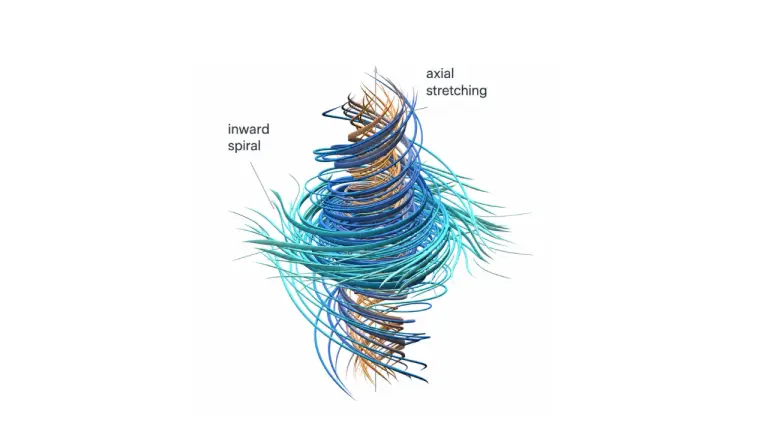
OpenAI says it has produced a proof for the Navier–Stokes problem. But disputed credit, unresolved verification and questions over private research complicate the claim.

Expertise is becoming abundant and accessible, putting the traditional firm and the way we organise work up for redesign.

As AI changes jobs and skill requirements, workers will need to combine domain knowledge with technology, problem-solving and continuous learning.

Sovereignty isn't simply about building bigger models; it's about whether Indian institutions can deploy, adapt and control AI on their own infrastructure.

AI can generate code, but it cannot replace the knowledge, trust and complexity that make enterprise software actually work.

Microdramas are gaining ground in India, driven by episodic storytelling, feed-led discovery and growing experimentation.

As India scales AI, cost-competitive data infrastructure at scale becomes increasingly important.

AI hiring is rising as overall tech recruitment slows, concentrating demand in fewer skills.

Prediction is becoming cheap, which means seeing the future is now the easy part. Acting on it is the hard part.

A new EY-CII report examines whether India is prepared for the next wave of AI.

Every revolution has really been about ending a scarcity. AI ends the scarcity of expertise. The next scarcity may be trust.
Choose which cookies One Big Future can use. Strictly necessary cookies keep the site working and can’t be switched off. See our Cookie Policy.
Required for core functions — security, sign-in, and saving these preferences. Always active.
Helps us understand which stories are read and how the site performs, so we can improve it.
Remembers your text-size and reading choices to tailor your experience across visits.
Lets us measure and share relevant OBF content on other platforms. Never sells your data.