
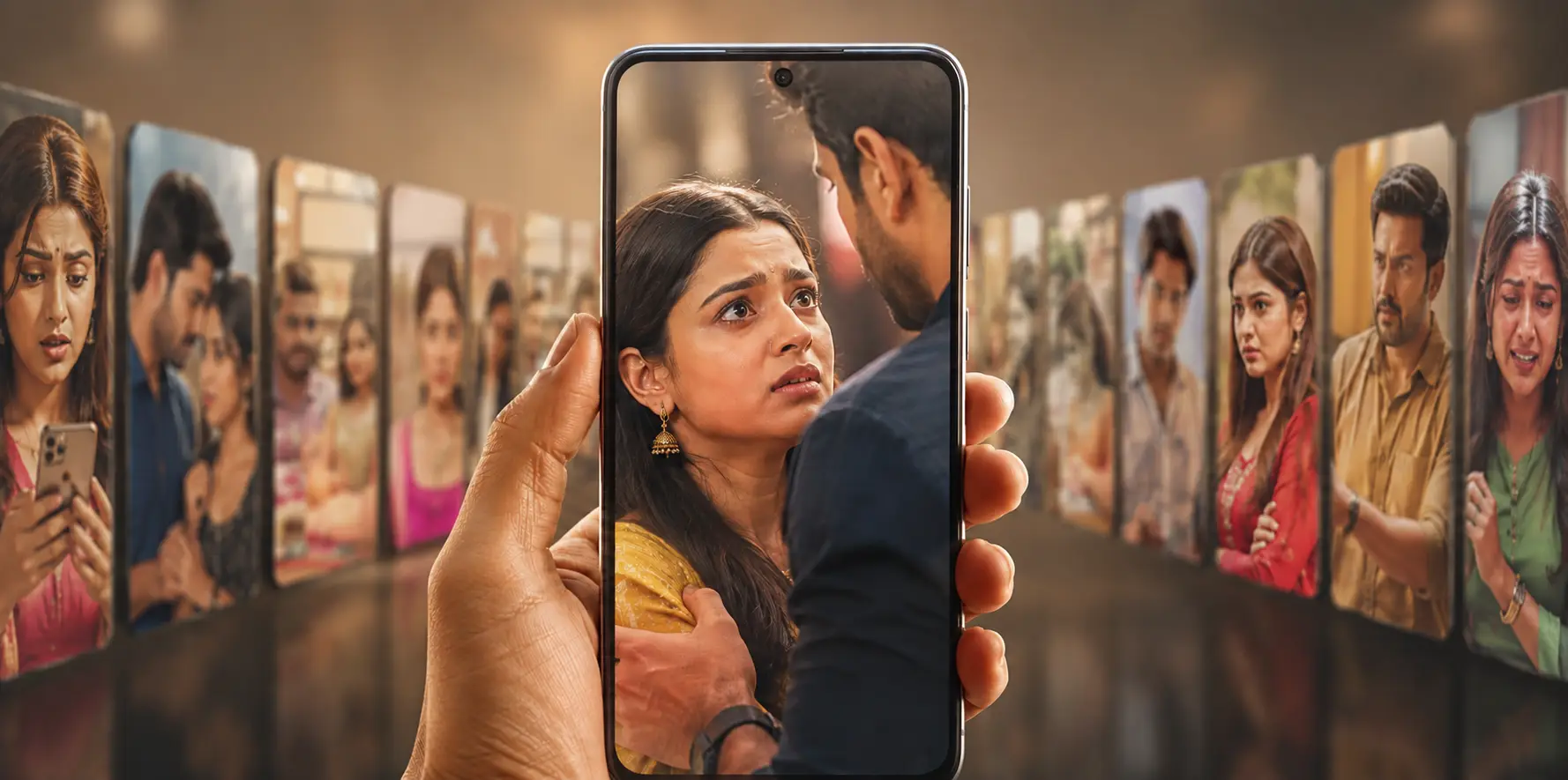

Microdramas are gaining audiences rapidly in India, combining the addictive mechanics of reels with the serial storytelling model of television through stories around everyday life, romance and other popular genres. A recent report by ShareChat and Moj in partnership with Kantar found strong uptake, with 80% of surveyed users expressing a preference for the format and 86% consuming more than 15 minutes a day. The growing engagement also points to opportunities to build an Indian microdrama business around original IP, localisation and sustainable monetisation.
What Is Changing?
Microdramas are becoming part of regular entertainment consumption for a growing section of Indian smartphone users. The ShareChat and Moj report with Kantar covered smartphone and social media users across 14 Indian cities and examined viewing habits, storytelling preferences and engagement with the format. It found that 54% of viewers return for a repeat viewing session, suggesting that microdrama is moving beyond novelty and becoming part of regular entertainment consumption. Social media also plays a key role in discovery, with 77% of viewers saying they discover microdramas through social feeds.
Microdramas have developed alongside the growth of bite-sized content on social platforms, but they are structured differently from ordinary reels or shorts. They typically use vertical, short episodes built around immediate hooks, continuing stories and cliffhangers designed to bring viewers back for subsequent episodes. The format first emerged in China in 2018 before expanding into markets including the United States, Latin America and Southeast Asia, and more recently, India.
Microdrama platforms and the companies behind them have seen rapid growth, with Story TV crossing 90 million downloads, ShareChat saying its ecosystem of ShareChat, Moj and QuickTV now serves around 70 million monthly active microdrama users, and Kuku’s paid subscriber base across Kuku FM and Kuku TV growing fivefold in a year, from 2 million to around 10 million.
Why Does It Matter?
Microdramas are similar to short social videos in their quick and engaging format, but they tell longer stories through a series of short episodes. Plot twists, cliffhangers and other storytelling techniques are used to keep audiences engaged and coming back for the next episode. They fit the format of bite-sized content on social media, which is where audiences are finding and consuming the format. According to a Meta-Ormax study from March 2026, 89% of microdrama viewers discover the format through social feeds or recommendations. The same study found that audiences spend a median 3.5 hours a week watching microdramas across seven to eight short sessions.
AI is also beginning to play a role in how this content is produced. Audiences have displayed openness to AI-generated content in this format. The Meta-Ormax study found that 47% of viewers considered AI-generated microdramas unique and creative, while a mere 6% rejected them outright. Several platforms and media companies are already investing in AI-led production, using AI for plot and script generation, dialogue writing, audio-video creation, dubbing and post-production.
What Happens Next?
The next phase will depend on whether growing engagement with microdramas can translate into sustainable businesses. India’s microdrama market was valued at around US$300 million (INR 28.68 billion) in 2025 and has been projected to reach US$4.5 billion (INR430.25 billion) by 2030. Dozens of homegrown platforms are already competing for viewer time and retention, while creators from television, film, digital media and advertising are entering the format.
A report by BDO from May 2026 identifies localisation, cohort-based targeting, content strategy and monetisation as important factors determining success as the market develops.
Feed-led discovery gives microdramas a way to reach audiences, but platforms will also have to convert that discovery and engagement into sustainable monetisation. The market could therefore increasingly favour platforms and studios that are able to produce content repeatedly at high volume while maintaining viable economics.
What Should India Do?
India should focus on building microdrama intellectual property that can travel across languages, formats and potentially markets. This will require understanding which stories consistently retain viewers and developing the ability to produce those stories at scale. A more specialised vertical-storytelling production ecosystem could help creators, studios and platforms build repeatable content rather than treating every microdrama as a one-off experiment.
***
Source note:
This article is based on findings from ShareChat and Moj’s The State of Microdrama in India study conducted with Kantar, alongside the March 2026 Meta-Ormax report on microdrama viewing behaviour in India. Additional reporting on the growth of the sector, platform traction and AI-led production was drawn from The Economic Times, ET Brand Equity and The Hollywood Reporter India, including data on KukuTV, Story TV, QuickTV. Market estimates and insights on localisation, content strategy and monetisation were drawn from Lumikai and BDO India.
Editorial Disclosure:
AI-assisted tools were used to help summarise and organise information from the source reports and to support language and copy-editing