
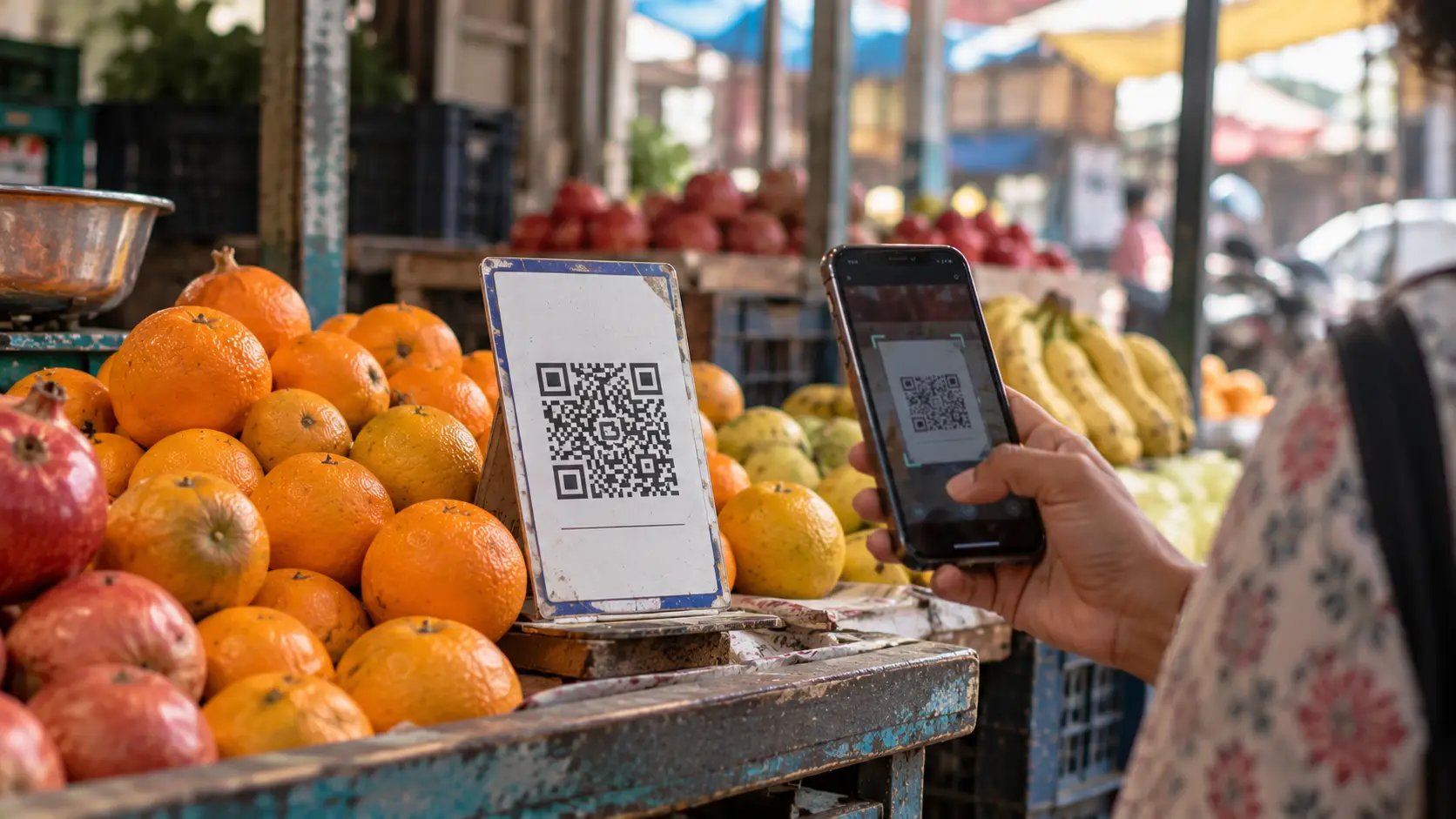

India has postponed a planned fee on selected payments through its Unified Payments Interface (UPI) until after Diwali, the Hindu festival that marks a major shopping season. The charge was due to begin on 15 October 2026. The network’s operator, the National Payments Corporation of India (NPCI), announced the delay on 13 October and said it would notify a new date separately.
The pause gives retailers and payment companies more time to prepare. It leaves a larger disagreement unresolved: how much businesses should contribute to a payments system whose growth has depended partly on free acceptance.
UPI allows people to transfer money instantly between bank accounts using different participating apps, including by scanning a shop’s QR code. It is the shared payments network behind those apps. More than 500 million people use it, according to Reuters, making its funding model relevant to other countries expanding digital payments.
What The Fee Would Change
The proposed merchant discount rate, or MDR, is a payment-processing fee businesses pay. The standard rate would be 0.4% on eligible merchant payments above ₹2,000 (roughly US$21), capped at ₹300 per transaction. A qualifying ₹10,000 purchase would therefore cost the merchant ₹40. The revenue would be shared among banks and other payment providers.
Person-to-person transfers and merchant payments up to ₹2,000 would remain free. Qualifying small merchants receiving up to ₹1,00,000 a month through UPI QR codes in the designated small-merchant category would retain their exemption, including for larger individual payments. Some sectors have separate rates: eligible payments above ₹2,000 for services such as railways, fuel and insurance would attract a flat ₹5 fee.
The finance ministry says around 96% of merchant transactions would remain exempt. That measures transaction numbers, not the value of sales affected or the burden on a particular business.
The Case For Merchant Fees
Running an instant payments network requires reliable banking systems, cybersecurity and support when transactions fail. Free acceptance does not remove these costs. In a 2022 discussion paper, India’s central bank argued that payment providers need income to sustain operations and invest in technology.
Public funding can cover some of those costs. India approved a ₹15 billion incentive scheme for the 2024–25 financial year to support low-value UPI payments to small merchants. Such support draws on public funds. A recurring merchant fee would provide another funding source.
The commercial argument is that businesses benefiting from quick receipts and less cash handling should contribute to the service. The official FAQs put typical credit-card acceptance fees at 1.5%–2.5%, above the proposed UPI rate. If the alternative is a credit card that carries those fees, UPI could remain an economical choice.
A dependable revenue stream could also help smaller payment firms compete with companies able to subsidise free services for longer. That is a rationale advanced in the official FAQs, rather than a guaranteed outcome. It would depend on how the revenue is shared and whether new firms can compete effectively.
The Case Against The Proposed Charge
For retailers, the relevant comparison is often with the UPI service they currently accept for free. A lower fee than a credit card still represents an additional cost.
A percentage of sales can also be a substantial percentage of profit. In a simplified example, a ₹10,000 sale generating ₹200 in profit at a 2% margin would incur a ₹40 fee. With prices and other costs unchanged, the charge would absorb one-fifth of that profit. This illustrates the arithmetic; it is not an estimate of typical retail margins.
The exemption does not settle the issue for every small business. Monthly UPI receipts measure payment activity, not profitability. A shop can exceed the threshold while operating on a narrow margin. Similarly, the national exemption figure says little about a retailer whose customers regularly spend more than ₹2,000.
There is also a dispute over the fee’s design. Kumar Rajagopalan, chief executive of the Retailers Association of India, told The New Indian Express that he favoured a fixed charge over a percentage of the transaction. The central bank’s 2022 paper had itself sought feedback on fixed versus percentage charges and on subsidies as an alternative. Those were consultation questions, not a recommendation of the present rate.
The broader argument for keeping acceptance free is that digital payments produce benefits beyond any one transaction. Records can help businesses demonstrate cash flow and obtain credit. Retail groups warn that additional fees could encourage some merchants to favour cash. That is a risk to assess after implementation, rather than an established consequence of a charge that has yet to begin.
What customers could still experience
Under the proposed rules, consumers would not pay the MDR directly, and merchants would be prohibited from adding the charge to customers’ UPI payments.
It does not establish that consumers would face no economic effect. As with other business costs, merchants might respond through general price increases or smaller discounts. Alternatively, competition could force them to absorb the charge. These are possible responses, not evidence that prices will rise. The outcome would depend on margins, competition and the costs of alternative payment methods.
What India Needs To Resolve
The international experience shows that free personal payments and business fees can coexist. Brazil’s central bank generally protects ordinary electronic Pix transfers by individuals from fees while allowing financial institutions to charge business users. Pix offers a useful comparison, although differences in costs and market structure mean its approach cannot establish the right fee for India.
The postponement gives India time to explain the cost basis for 0.4%, assess the small-merchant threshold and compare a percentage fee with alternatives. Merchants also need clarity about classification and exemptions, while payment providers should explain how the revenue will support better service.
Payment providers will also need to ensure that their systems apply the correct charges to eligible transactions while keeping exempt payments free. A confirmed start date and consistent guidance would help businesses prepare for the transition.