
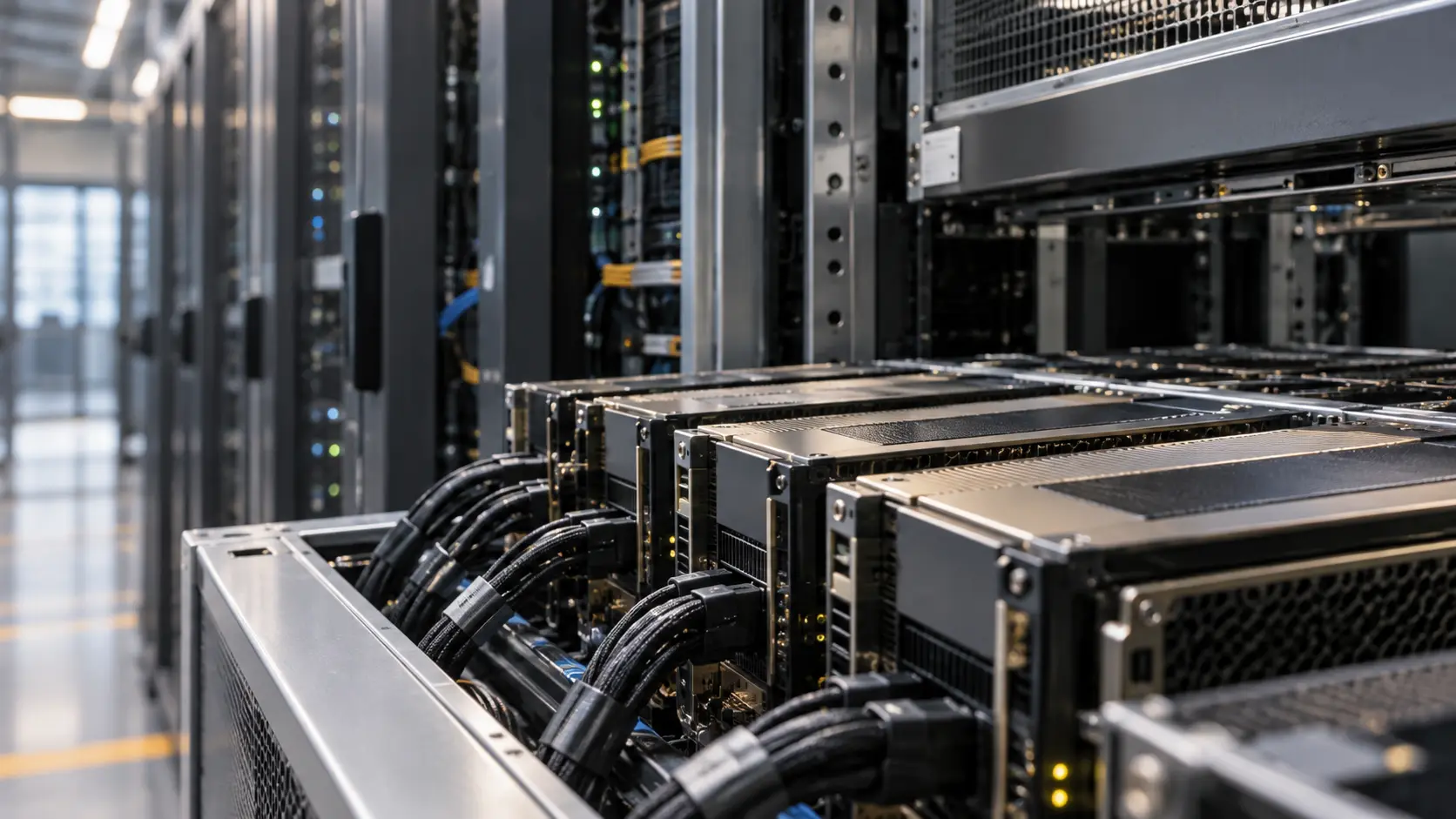

India plans to make 100,000 GPUs available through the IndiaAI public compute programme by December, more than doubling the shared capacity that had crossed 45,000 GPUs by June 2026. The expansion is part of the IndiaAI Mission’s effort to build sovereign AI computing capacity and reduce dependence on foreign cloud infrastructure. The Mission, approved in March 2024 with an outlay of ₹10,371.92 crore over five years, originally envisaged compute infrastructure of 10,000 or more GPUs through a public-private partnership. The move towards 100,000 GPUs marks a substantial increase from the scale contemplated when the Mission was approved.
The larger compute pool is intended to give startups, universities, researchers and other AI developers more affordable access to the processing power needed to train, test and run AI models. It can support work ranging from academic research and experimentation to foundation models and sector-specific AI applications, without requiring each organisation to build or procure large-scale computing infrastructure of its own.
How The Shared Compute Model Works
A graphics processing unit, or GPU, is a specialised processor that can perform many calculations simultaneously, making it particularly useful for computationally intensive AI workloads. Larger models and more complex AI tasks can require substantial amounts of this computing power over extended periods.
Under the IndiaAI programme, eligible users can request shared computing capacity through the IndiaAI Compute Portal and select hardware according to their workload and the period for which it is required.
Access is subsidised, allowing startups, universities and research teams to use advanced compute without having to buy and operate the GPUs themselves. The common pool relies on empanelled compute service providers; by August 2026, 15 providers had been empanelled under the Mission. By August 2026, 237 projects had accessed subsidised computing through the programme, accounting for 93.18 lakh GPU-hours across model development, training, testing and research.
How The GPU Expansion Fits Into Sovereign AI
The government has described technological sovereignty across AI as requiring a “multi-pronged and calibrated approach” spanning computing infrastructure, foundation models, semiconductor capability and research. NITI Aayog has also argued that India needs to build these capabilities in stages, including stronger access to cloud infrastructure, computing power and high-quality datasets.
Compute is one of those layers because high-end AI capacity remains concentrated among a relatively small group of global cloud and technology providers. Indian startups, universities and research teams needing substantial computing power have therefore relied heavily on capacity rented from predominantly foreign providers. Expanding the IndiaAI pool gives India greater domestic control over the availability, pricing and allocation of that capacity.
The common compute pool is not IndiaAI’s only approach to expanding domestic compute. A separate secure national cluster with 3,000 next-generation GPUs is also being set up for sovereign and strategic AI applications, alongside the larger shared-access programme.
Greater domestic control over access to compute, however, does not yet extend across the entire hardware stack. The processors powering much of that infrastructure are still sourced globally. The IndiaAI Compute Portal lists accelerators from Nvidia, AMD, Intel and Google, among other suppliers, while the government has acknowledged India’s reliance on globally sourced GPUs alongside limited domestic capability in advanced semiconductor manufacturing.
The 100,000-GPU target therefore advances the compute layer of India’s sovereign AI strategy by bringing more high-end capacity under a domestic access and deployment framework, while advanced chip capability remains part of the longer-term build-out.
***
Source note:
This article is based primarily on ETDatacenters’ 28 September 2026 report on IndiaAI’s 100,000-GPU target. The March 2024 Cabinet announcement provides the Mission’s original outlay and compute plan. PIB releases and factsheets provide details of shared capacity, empanelled providers, approved projects and sanctioned GPU-hours, alongside information on the secure national GPU cluster and reliance on globally sourced hardware. Hardware options and pricing come from the IndiaAI Compute Portal. NITI Aayog’s AI for Viksit Bharat: The Opportunity for Accelerated Economic Growth provides context on strengthening sovereign AI capabilities through phased development and better access to cloud infrastructure, computing power and datasets.