

The Opportunity In Front Of India
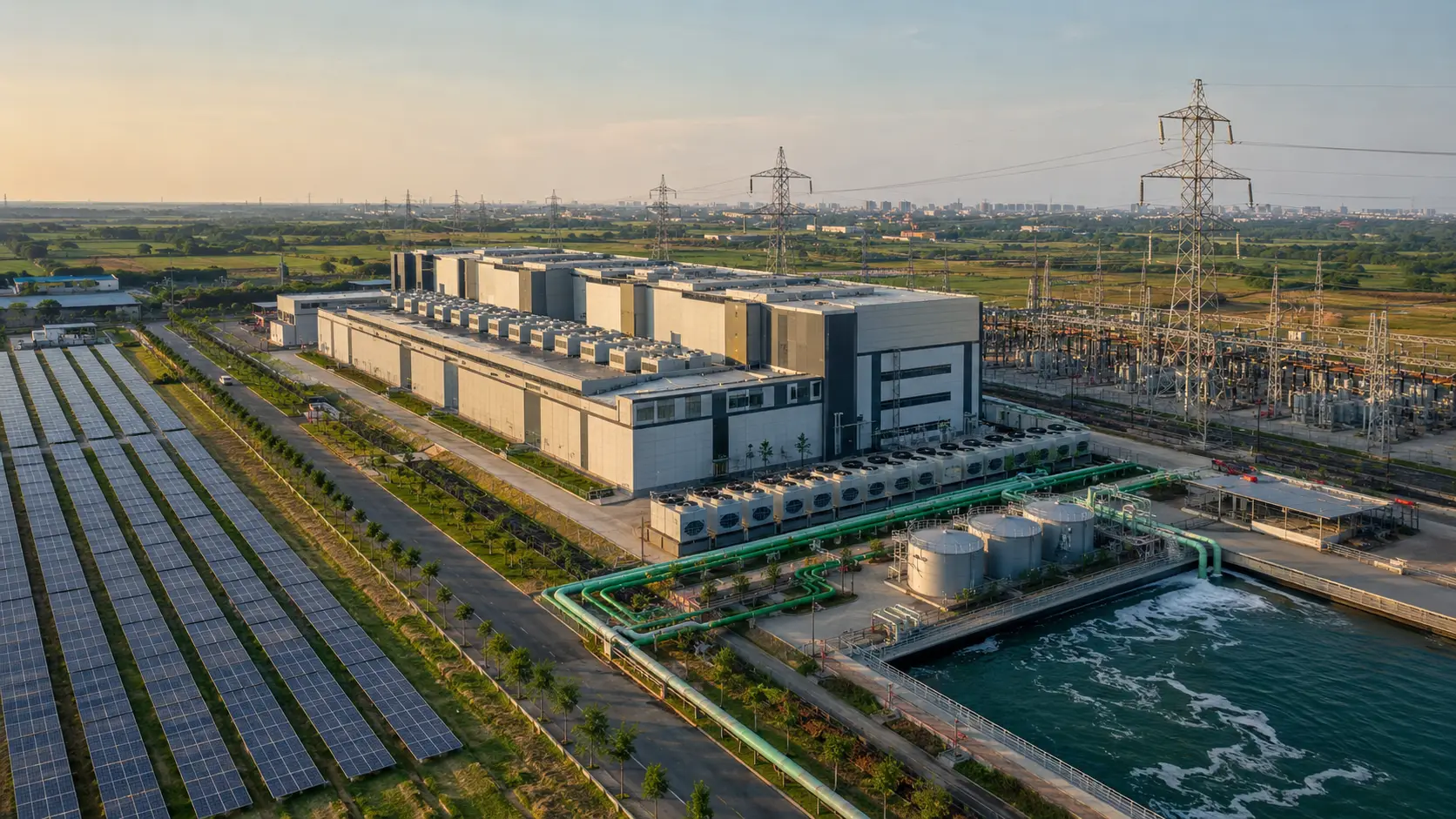
Artificial intelligence has turned data centres from a back-office utility into one of the most strategically important pieces of infrastructure a country can host. Training and running large AI models requires enormous amounts of land, power, cooling water and capital.
The countries that can offer these at competitive cost, without compromising on reliability or sustainability, stand to capture a disproportionate share of the world’s AI compute investment over the next decade.”
India is now firmly in that conversation. Industry estimates put India’s installed data centre capacity at roughly 1.5-1.7 GW in 2025–26, more than tripling from levels just a few years earlier, with cumulative investment commitments already running into tens of billions of dollars and a further wave of announcements adding several gigawatts of planned capacity since early 2025.
What makes this moment different from earlier data centre cycles is the AI overlay. Generative AI, large language model training, and India’s own push toward “sovereign” AI infrastructure are layering a new category of high-density, power-hungry, GPU-based facilities on top of the traditional enterprise and colocation market.
The question this article addresses is whether India’s underlying cost and real estate advantages can be converted into a durable hub for AI compute, and whether this can be done without triggering the water stress, grid strain and carbon-intensity problems that have already caused political and environmental backlash in markets like the United States.
Cost And Real Estate: Where India’s Edge Actually Lies
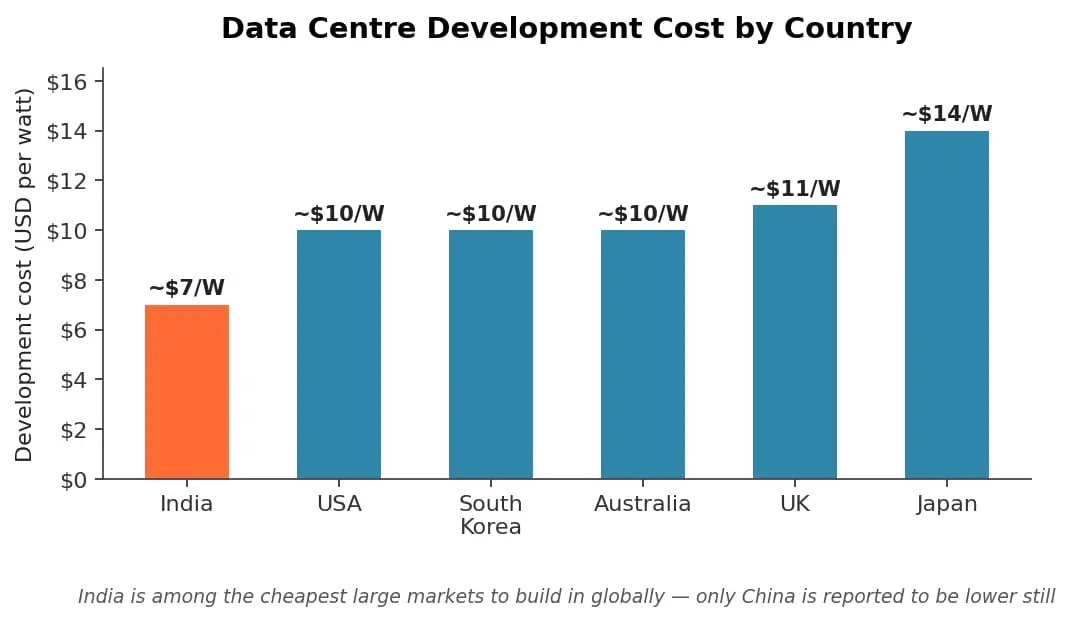
India’s core advantage is the cost of building and running large facilities. Recent industry analysis places India’s data centre development cost at around USD 7 per watt, among the lowest in the world and behind only China — compared with roughly USD 10 per watt in the US, South Korea and Australia, USD 11 per watt in the UK, and as high as USD 14 per watt in Japan. This gap matters enormously at scale: for a 100 MW facility, the difference between a $7/W and $10/W build can be the difference between roughly $700 million and $1 billion in upfront capital.
Real estate adds a second layer of advantage. India has large tracts of land available in and around its major metros and in emerging secondary cities, at a fraction of the cost of land-constrained markets such as Singapore or parts of the US East Coast. Mumbai has emerged as one of the fastest-growing primary data centre markets in the Asia-Pacific region and is expected to cross 1 GW of operational capacity by the end of 2026, while Hyderabad has become the top secondary market in Asia-Pacific and is ranked ninth globally. Maharashtra alone accounts for roughly half of India’s installed capacity and hosts over 85 facilities, while Andhra Pradesh and Telangana together have attracted more than 2 GW of newly announced AI-focused mega-campuses around Visakhapatnam and Hyderabad. Tier-II cities such as Pune, Raipur and Indore are also being positioned as lower-cost alternatives as the main hubs fill up.
On top of land and construction costs, India offers a third lever: policy-driven cost reduction. The government’s classification of data centres as “essential infrastructure” since 2020 has unlocked reduced electricity tariffs and favourable financing for operators. State governments have gone further- Tamil Nadu’s data centre policy, for example, offers a full subsidy on electricity duty, access to a dual power grid, and exemptions on wheeling and open-access charges. For AI workloads specifically, the India AI Mission has made tens of thousands of GPUs available to startups, researchers and enterprises at roughly a third of global market rates, effectively subsidising the compute layer itself and lowering the cost of doing AI work from Indian soil.
| Cost lever | Indias position | Global comparison |
| Development cost | ~$7 per watt | $10/W (US, South Korea, Australia); $11/W (UK); $14/W (Japan); China is lower still |
| land | Abundant in metros (Mumbai, Chennai, Hyderabad, NCR, Bengaluru) and tier-II cities (Pune, Raipur, Indore, Visakhapatnam | Constrained and expensive in Singapore; tightening in parts of the US |
| Electricity tariffs | State-level subsidies (e.g., Tamil Nadu: 100% electricity duty exemption, dual-grid access, wheeling charge relief) | Few comparable blanket exemptions in mature markets |
| Ai compute access | India AI Mission GPUs at ~₹65–100/hour | |
| Tax treatment | Draft National Data Centre Policy: 20-year tax exemptions, GST input credits; Budget 2026–27 tax holiday to 2047 for eligible foreign cloud providers | Most markets offer shorter or narrower exemptions |
Where India Stands Today, And The Road To 2030 And Beyond
Estimates of India’s future capacity vary depending on the source and methodology, but the direction is unambiguous. Some forecasts put India’s data centre capacity at around 6.5 GW by 2030 with the sector reaching roughly USD 58 billion in value; others, factoring in the accelerating AI-driven build-out, project capacity growing nearly tenfold to as much as 17 GW by 2030, with investment commitments exceeding USD 100 billion by 2027. Even the more conservative estimates represent a four-to-tenfold expansion from today’s base within five years. Between March 2025 and April 2026 alone, operators announced around 30 large projects adding roughly 3.5 GW of planned capacity, concentrated in Andhra Pradesh, Telangana, Maharashtra, Tamil Nadu and the Delhi-NCR region.
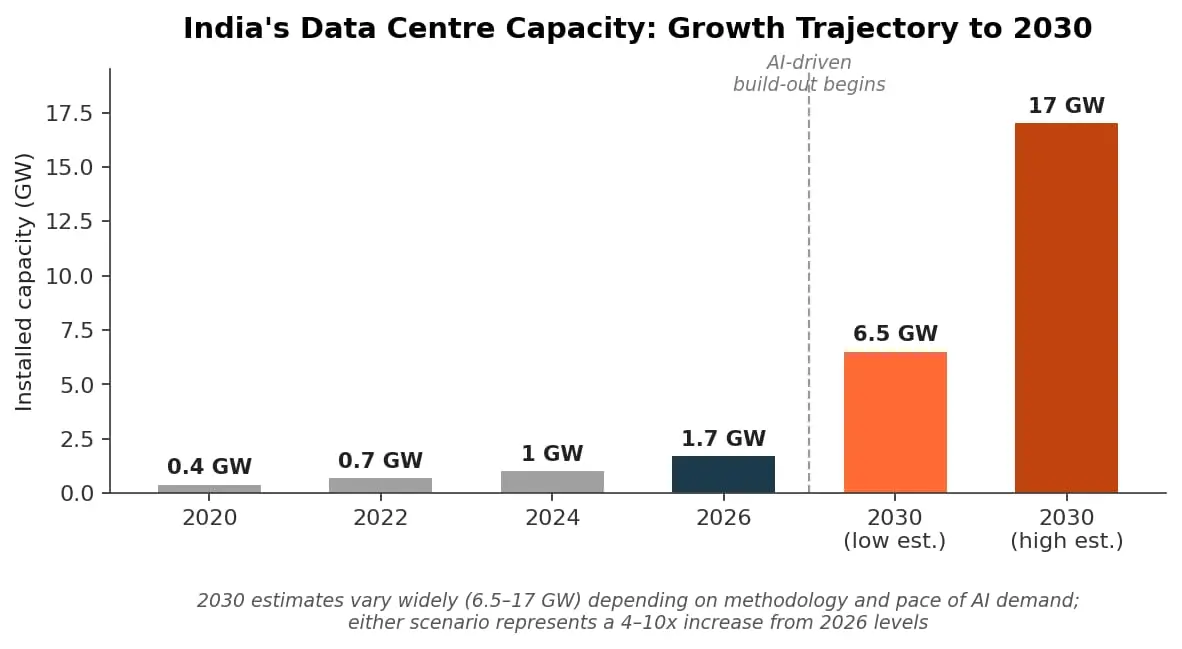
Table 2: India’s data centre growth timeline
| year | Installed capacity | Market size | Key drivers |
| 2020 | 0.4 GW | – | Government classifies DCs as “essential infrastructure |
| 2024 | 1 GW | $10.5 BILLION | RBI/SEBI localisation mandates; early AI demand |
| 2025-26 | ~$10.5 billion | ~$13.4 billion | DPDP Act 2023 takes effect; ~3.5 GW of new projects announced |
| 2030 low estimate | ~6.5 GW | ~$58 billion | Steady AI/cloud growth |
| 2030 high estimate | ~17 GW | $100 billion+ in cumulative investment by 2027 | Full AI-led build-out, sovereign compute push |
This expansion is being driven by two forces working together. The first is data sovereignty: India’s Digital Personal Data Protection Act of 2023, combined with earlier localisation mandates from the Reserve Bank of India and SEBI, is compelling global companies to build or lease local infrastructure, with localisation-driven demand alone estimated to add around 1,800 MW of capacity by 2027. The second is India’s sheer digital scale — the country generates an estimated 20% of the world’s data while hosting only around 3% of global data centre capacity, a gap that the market is now racing to close.
Looking toward 2030 and beyond, the more important shift is qualitative rather than just quantitative. Analysts increasingly frame India’s build-out as an “execution story” rather than a capacity story: the differentiators going forward will be power availability, land access, execution capability and regulatory readiness, not just announced megawatts.”
If India can close the execution gap, building transmission capacity, streamlining clearances and de-risking water and power supply at the same pace as it announces projects, it is realistically positioned to become one of the world’s top three or four AI data centre markets by the early 2030s, alongside the US and China and ahead of most of Southeast Asia.
How India Compares With Other Hubs
India’s closest comparators fall into three groups, each illustrating a different lesson. Singapore was Southeast Asia’s original data centre capital but is now land- and power-constrained, with industrial electricity costs around USD 0.24–0.27 per kWh, among the highest in the region and a long moratorium on new builds earlier this decade. This has pushed overflow demand into Malaysia, particularly Johor, which offers electricity at roughly USD 0.135 per kWh (about half of Singapore’s rate) and land at a fraction of Singapore’s prices, helped by national incentive schemes such as the Digital Ecosystem Acceleration Scheme. But Malaysia’s success is now running into its own limits: data centre power demand is projected to roughly triple as a share of total electricity demand by 2027, a new tariff structure has pushed up power costs by 10–14% for large users, and the government has had to pause approvals for non-AI data centres due to water and power constraints. This is the cautionary tale India needs to study closely.
Cheap land and power can attract a boom, but without proactive grid and water planning, the boom itself creates the bottleneck that ends it.”
The United States offers a different warning. US data centres consumed around 176 TWh of electricity in 2023 – about 4.4% of national electricity use with carbon emissions roughly tripling since 2018 to around 105 million tonnes, and electricity costs in some data centre hubs more than doubling. Local opposition has already killed major projects, including a $1 billion Google proposal in Indiana that was withdrawn after community pushback. China remains the only market with development costs lower than India’s, and has responded to its own scale challenge with binding Green Data Centre Standards that cap water-to-energy ratios for cooling – a regulatory model India could adapt. Europe, meanwhile, is moving toward binding efficiency and renewable-sourcing requirements under Germany’s Energy Efficiency Act and an EU-wide data centre rating scheme expected from 2026, alongside Singapore’s Green Data Centre Roadmap and Green Mark certification and Malaysia’s emerging national guidelines on power, water and carbon efficiency.
The pattern across all of these markets is the same: cost and land advantages attract the first wave of investment, but sustainability regulation determines whether the second and third waves arrive and whether the first wave survives political and environmental backlash. India is currently in an enviable position because it has both the cost advantage and, if it acts now, the chance to build the regulatory guardrails before the strain becomes acute.
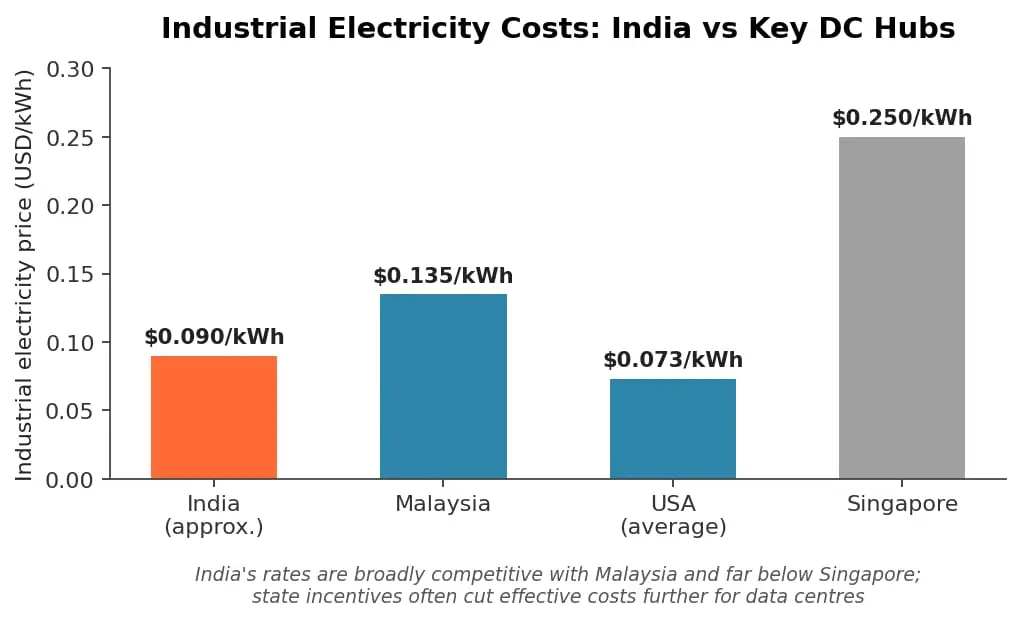
Table 3: How India compares with other AI data centre hubs
| Market | Development cost | Electricity cost | Land position | Key constraint / lesson for India |
| India | ~$7/W | ~$0.09/kWh (approx., often discounted further by state incentives) | Abundant in metros and tier-II cities | Execution: power availability, transmission and clearances |
| Malaysia (Johor) | Competitive, ~22% below Singapore | ~$0.135/kWh | Large, low-cost greenfield sites | Power/water strain led to a pause on non-AI DC approvals |
| Singapore | High | ~$0.24–0.27/kWh | Land-constrained; history of moratoria | Pushed overflow demand to Malaysia and Indonesia |
| USA | Higher ($10/W) | Rising sharply in DC hubs (some have doubled) | Generally available but politically contested | Carbon emissions tripled 2018–2023; local opposition halting projects |
| China | Lowest globally | Not specified | Large-scale, state-directed | Binding Green Data Centre Standards cap water-to-energy ratios |
The Risk: Water, Carbon, And The Coal-Heavy Grid
The risks are real and already visible. India’s data centres consumed an estimated 150 billion litres of water in 2024, a figure projected to more than double by 2030, with a typical 1 MW facility using up to 25 million litres annually for cooling. Water Usage Effectiveness across facilities ranges enormously, from near zero to over 2.5 litres per kWh, meaning the gap between an efficient and an inefficient facility is dramatic at scale. The concern is most acute in water-stressed regions: Visakhapatnam district in Andhra Pradesh, where a 1 GW data centre park is planned, already has among the lowest groundwater availability in the state, and environmental clearances for major projects have so far disclosed little about actual operational water use.
On the carbon side, India is the world’s third-largest greenhouse gas emitter, and its grid remains roughly 68% coal-powered. If India builds out several gigawatts of new data centre capacity on the current energy mix, the emissions consequences would be severe — by some estimates, data centres could consume around 8% of India’s electricity by 2030 if capacity reaches the higher end of projections. Because thermal power generation itself is water-intensive, a coal-heavy grid effectively creates a double water burden: water used to cool the power plant, and water used to cool the data centre it powers.
Strategy And Precautions: Building The Hub Without Breaking The System
The good news is that India does not have to choose between growth and sustainability but it does need to be deliberate, and the window to embed the right practices is now, while most of the planned capacity is still on paper rather than poured concrete.
The single most important structural advantage India can exploit is geography.”
With the exception of the National Capital Region, nearly all of India’s emerging data centre clusters sit within 300 km of the coast. This makes seawater cooling used without desalination a realistic option for a large share of new capacity, dramatically reducing pressure on groundwater and municipal supply in already-stressed regions. Andhra Pradesh’s state data centre policy already references seawater cooling for its Visakhapatnam mega-park, though greater transparency on the actual freshwater-to-seawater split is needed before this can be held up as a model.
Alongside coastal cooling, India needs to mandate water efficiency the way China has: capping water-to-energy ratios for new facilities and requiring public disclosure of Making Water Usage Effectiveness (WUE) and Power Usage Effectiveness (PUE ) figures as a condition of environmental clearance, rather than leaving these as voluntary green-building certifications. Zero liquid discharge, already adopted by Reliance Jio for its large facilities should become a baseline expectation for any data centre above a certain size, alongside a shift toward liquid cooling for high-density AI racks, which both reduces water intensity and handles the much higher heat loads of GPU clusters.
On the energy side, the most promising template is already emerging at the state level: Maharashtra, Tamil Nadu and Karnataka have begun linking data centre incentives to a requirement that at least 30% of energy come from renewable sources. This should be extended nationally and tightened over time, following the lead of operators like Jio, which has committed to 60% renewable power by 2025 and 100% by 2030 through dedicated solar and wind investment, and CtrlS Data Center, which has built long-term renewable power purchase agreements directly into its data centre campuses. Co-locating renewable generation solar and wind farms built specifically to serve a data centre cluster allows operators to “ring-fence” their power supply, reducing both their carbon footprint and the additional stress they place on the local distribution grid.
Equally important is addressing the grid and transmission bottleneck before it becomes the binding constraint that industry analysts already flag as the key differentiator for future competitiveness. This means dedicated transmission corridors for major data centre clusters, faster open-access approvals for renewable power purchase agreements, and treating data centre demand forecasts as an explicit input into India’s broader plan to reach 500 GW of non-fossil generation capacity by 2030. Finally, India should resist over-concentration: pushing new capacity toward tier-II cities and regions with genuine water and power surplus rather than layering further demand onto already-stressed clusters like Visakhapatnam or parts of the NCR both spreads economic benefits more widely and reduces localised environmental risk.
Policy Implications
For the central government, the immediate priority is finalising and operationalising the Draft National Data Centre Policy from the Ministry of Electronics and Information Technology, which proposes 20-year tax exemptions, GST input credits and streamlined approvals but doing so in a way that ties these benefits explicitly to green certification, renewable energy sourcing and water-efficiency benchmarks, rather than offering them unconditionally. The Union Budget 2026–27’s announcement of a tax holiday until 2047 for eligible foreign cloud service providers operating India-based infrastructure is a powerful investment signal, but its long horizon makes it even more important that sustainability conditions are built in from the start, since retrofitting standards onto facilities built under a 20-year tax shelter will be far harder than designing them in from day one.
The India AI Mission and the India Semiconductor Mission (now moving into a “2.0” phase with renewed funding) are the right complementary pieces: subsidised compute access lowers the cost of using India-based AI infrastructure, while domestic chip design and manufacturing capacity backed by a roughly ₹76,000 crore outlay reduces India’s long-term dependence on imported GPUs and builds a more complete, sovereign AI stack.
Over time, this also gives India leverage to set its own standards for the energy and water efficiency of the hardware deployed in its data centres, rather than simply importing whatever global hyper scalers choose to ship.”
At the state level, the current dynamic where Tamil Nadu, Maharashtra, Karnataka, Andhra Pradesh and others compete on incentives has been effective at attracting investment, but risks becoming a race to the bottom on environmental standards unless the centre establishes a sustainability floor that all states must meet to qualify for national-level benefits. Conversely, states that get ahead of this curve by pairing incentives with renewable mandates, water-recycling requirements and transparent environmental clearance processes are likely to attract the more durable, ESG-conscious global capital that increasingly drives hyper scaler site-selection decisions worldwide.
Finally, water governance needs to be treated as a data centre policy issue in its own right, not an afterthought of environmental clearance. This means basin-level water assessments before large projects are approved in stressed regions, mandatory disclosure of operational water use (not just construction-phase plans), and active promotion of seawater and treated-wastewater cooling wherever coastal or urban-adjacent sites make this feasible.
Table 4: Key policy levers at a glance
| Policy / scheme | Level | Key provision | Sustainability link (current status) |
| “Essential infrastructure” classification (2020) | National | Reduced electricity tariffs, favourable financing | None built in — opportunity to retrofit |
| DPDP Act (2023) | National | Drives data localisation (~1,800 MW demand by 2027) | Indirect — more facilities need more safeguards |
| Draft National Data Centre Policy (2025, MeitY) | National | 20-year tax exemptions, GST input credits, faster approvals | Proposed for green-certified facilities |
| Union Budget 2026–27 | National | Tax holiday to 2047 for eligible foreign cloud providers | Not yet conditioned on sustainability |
IndiaAI Mission | National | Subsidised GPU access (~₹65–100/hr) | Indirect — lowers cost of compute, not energy |
| India Semiconductor Mission 2.0 | National | ₹76,000 crore for domestic chip design/manufacturing | Builds leverage over hardware efficiency standards |
| State DC policies (Maharashtra, TN, Karnataka) | State | Investment incentives | 30% renewable energy mandate tied to incentives |
| Tamil Nadu DC policy (2021) | State | Electricity duty subsidy, dual grid, wheeling exemptions | Limited explicit green conditions |
| Andhra Pradesh DC policy | State | Land and incentives for mega-campuses (e.g., Visakhapatnam) | References seawater cooling, but water disclosure is limited |
Conclusion: An Engine Of Growth
India’s digital economy is projected to contribute around a fifth of national income by 2030, and data centres particularly AI-ready facilities sit at the foundation of that ambition. The underlying advantages are genuinely strong: development costs among the lowest in the world, abundant land in both established and emerging hubs, a large coastline that opens up sustainable cooling options most competitors lack, and a policy apparatus from the India AI Mission to state-level incentive regimes that is already moving in the right direction. What India has that Malaysia, Singapore and the US did not have at equivalent stages of their build-outs is foresight: the water and carbon problems these markets are now scrambling to fix are well documented, and India can design around them from the outset rather than retrofitting solutions under political pressure later.
The countries that win the AI infrastructure race over the next decade will not simply be the ones that build the most gigawatts fastest.”
They will be the ones that build gigawatts their grids, water systems and communities can actually sustain and that remain politically and environmentally viable for the 15-to-20-year lifespan these facilities are designed for. If India pairs its cost and land advantages with binding sustainability standards, coastal cooling strategies, renewable co-location and a genuinely national data centre policy, it has a realistic path not just to becoming a major AI compute hub by 2030, but to becoming the reference model for how to do so responsibly turning what could be an environmental liability into one of the more durable engines of its next phase of growth.
***
Disclaimer:
This article is published as a guest contribution in the interest of encouraging informed public debate. The author is responsible for the accuracy of all facts, claims, data, citations, references and representations made in the article. One Big Future does not independently verify every statement, claim or source contained in guest submissions and shall not be held liable for any errors, omissions, inaccuracies, copyright issues, defamation claims or other consequences arising from the author’s contribution.