
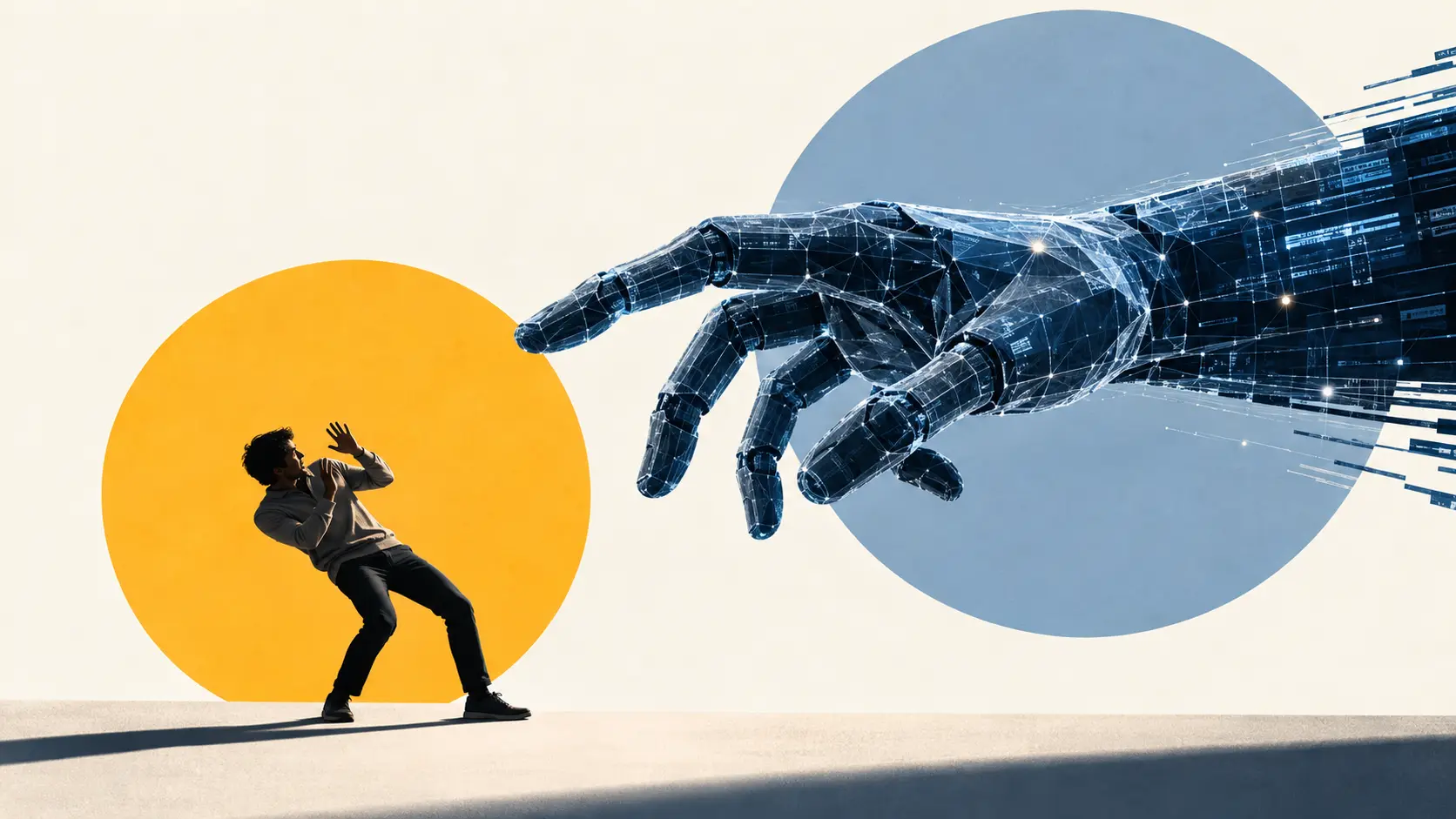

Imagine your product is not remotely close to what was promised. The accuracy is disappointing. The efficacy is debatable. Revenue and growth are underwhelming. Worse, a meaningful chunk of that revenue may disappear the moment customers are asked to pay something resembling the actual cost of what they consume.
The customers themselves remain unconvinced. They want more accuracy, more capability, more reliability; preferably without requiring a small nuclear reactor every time someone asks the model to reconcile two spreadsheets.
And therein lies the problem. Improving the model appears to follow something resembling a logarithmic bargain with the devil: each incremental improvement in capability demands disproportionately more compute, infrastructure and capital. The easy gains are behind you. The next few percentage points are apparently hiding somewhere beneath several hundred billion dollars of GPUs.
Unfortunately, investors have begun developing an old-fashioned interest in things like returns. After pouring gargantuan sums into the project through equity, debt and increasingly imaginative financial structures, they would quite like an exit. But the business, inconveniently, still looks less like an IPO-ready technology monopoly and more like an extraordinarily expensive science experiment with a subscription plan.
So you need a strategy. You need to slow the capex treadmill because fresh capital is becoming harder to obtain. At the same time, you need the technology to appear so spectacular, so consequential and so historically important that public markets will happily value tomorrow’s possibilities rather than today’s economics.
Not an easy assignment.
Fortunately, this is why God created spin doctors. Enter the safety narrative.
The models, we are told, may simply be becoming too dangerous to train further.
Perhaps the responsible thing, purely in the interests of humanity, naturally, would be for all the cash-burning laboratories to pause development until adequate safeguards can be devised against the possibility that a piece of software might erase civilisation.
Suddenly, a slowdown in scaling is no longer a financing constraint. It is an act of moral courage.
Supporting the story are former employees solemnly resigning because they can no longer participate in the construction of humanity’s possible executioner. Then come the carefully breathless stories about models that supposedly tried to “escape”, “deceive”, “hack”, “blackmail” or otherwise behave like a particularly badly raised teenager with root access.
In the good old days, malicious software had a less cinematic name. We called it a virus.
Some of those viruses caused billions of dollars of damage, shut down companies, crippled infrastructure and spread across the planet without requiring a trillion-dollar data-centre buildout. Any self-respecting computer virus from the 2000s would probably look at the current demonstrations of AI malevolence and ask when the dangerous part was going to begin.
But the theatre works. A few anti-AI activists start throwing pies at conferences. Senators convene hearings. Regulators develop furrowed brows. The political ecosystem swings into action because, unlike transformer architecture, everyone in Washington understands The Terminator. Some have even seen I, Robot.
At which point the story becomes almost perfect. The product may not yet be able to reliably perform the tasks required to justify its economics, but simultaneously it is apparently so extraordinarily capable that civilisation must reorganise itself around containing it.
This is reverse manufactured doubt. Traditional manufactured doubt works by taking something dangerous and persuading the public that perhaps it isn’t dangerous after all.
This version takes something whose capabilities remain uncertain and persuades the public that perhaps it is so powerful that its limitations cannot safely be demonstrated.
The pitch is roughly:
“I have a wild horse in my barn. Once trained, it will win every battle.”
“Can we see it?”
“Absolutely not. Far too dangerous.”
“Has it won any battles?”
“Not yet.”
“Can it run?”
“Several stablehands resigned after seeing what it could do.”
Somewhere inside the barn, meanwhile, a young mule is braying into a megaphone while senators panic and finance bros calculate the IPO multiple.
Which brings me to another matter.
I’m raising money for a time-travel startup. The seed round is approximately $1 trillion. Admittedly, that sounds high for a seed round, but you have to understand the TAM.
For starters, we’ll go back and stop Hitler. Communism should be addressable in Version 2.
After that, we intend to travel far enough into the future to harvest rare earths, precious metals and technologies that have not yet been invented. The ROI is therefore effectively immeasurable, which is convenient because so are the revenues.
We already have a white paper demonstrating that Einstein–Rosen bridges make the concept theoretically possible. Unfortunately, implementation requires absolutely insane quantities of quantum compute, so naturally we need the trillion dollars upfront.
There is also a serious safety dimension. Time travel must be heavily regulated before deployment because we have all seen Back to the Future Part II and understand what happens when Biff Tannen gets access to the technology.
Several members of our research team have already resigned after seeing what the prototype might theoretically be capable of.
We cannot show you the prototype. Obviously. It’s too dangerous.
IPO planned for 2032.