
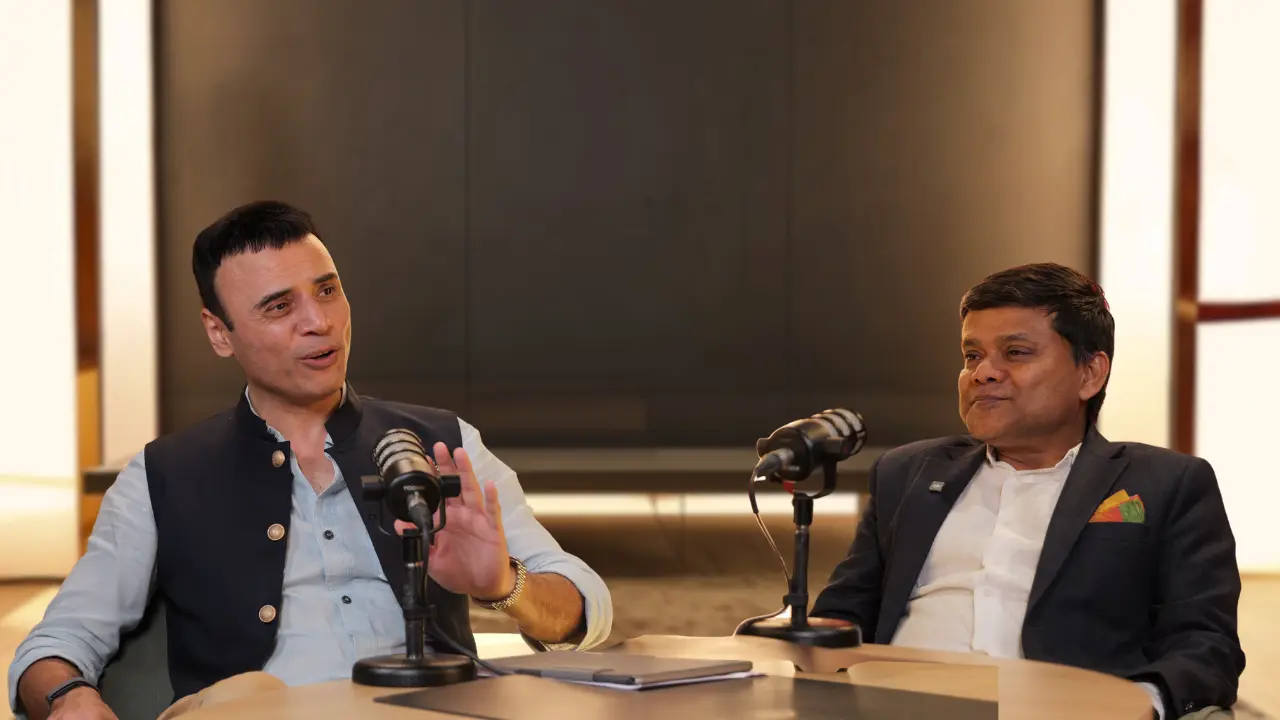

Dr. Somnath Baidya Roy, atmospheric scientist and professor, explores what energy security means for India and why it extends far beyond producing enough electricity in a conversation with Fahad Moti Khan. He explains how energy systems depend on the ability to generate, store and distribute energy reliably, while balancing security, sustainability and equity. The conversation examines India’s dependence on imported fossil fuels, the shift towards renewables, the role of weather forecasting in managing a more renewable grid, and the potential of geothermal, solar thermal and fusion. Dr. Roy also discusses geoengineering, the need for a sovereign fusion ecosystem, and why India must invest in scientific talent, private-sector innovation and affordable clean energy for all.
Fahad Moti Khan: Dr. SBR, welcome to the One Big Future podcast. I have to tell you I’m extremely excited about this conversation. Energy is a fascinating and misunderstood or understood very little as far as the domain is concerned. In the course of researching for this podcast, it was quite a fascinating journey and with you here we’ll all sort of unravel it together. So welcome to the podcast.
Dr. Somnath Baidya Roy: Yeah thank you, happy to be here Fahad and I’m looking forward to our chat.
FMK: There are things that are very obvious. I mean the electricity that we use to power our homes, the petrol and the diesel that we put in our cars, also the gas that we use to cook our food and so on and so forth. These are forms of energy that we know about but the universe of energy is much bigger and brighter and wider than this. Just wanted your perspective on what the universe of energy entails?
Dr. SBR: Yeah I mean like you’re absolutely right I mean when we think of energy we think of some very specific things but it’s so much more than that. Basically energy is the fuel for work. Anything that you want to do, any change, any kind of growth that’s fuelled by energy. And because our ultimate source of energy is the sun. That’s where it all came. Now it exists in many different forms. You have mechanical energy like the wind and the waves. You have chemical energy which is in fossil fuels. You have radioactive energy. So in many different forms they are transformed from one form to the other depending on how we want to use them. And because of this energy affects every aspect of our life.
FMK: Actually there’s a line that I had read which says energy is the nation’s physical capacity to act.
Dr. SBR: So like I mean obviously when we are talking about the energy system right I mean we need to be able to access that energy. And so there are many different technologies depending on what form of energy you want to access right. I mean so if you want to have a like access to the energy that is in the wind so in the form of wind turbines. So you take that mechanical energy that turns the turbines and converts it into electrical energy and that is something we use to power our homes. On the other hand if you are interested in driving a car for example I’ll come back to this very common example that what we are doing is we are harvesting the energy that is in fossil fuels and basically through chemical combustion which is a chemical process and through that we are converting that into mechanical energy that’s turning the wheels. So there are so many different processes by which we are able to access that energy. Now once you access that energy I mean and so you are a harvester you have to transport that energy to the consumer. And so that’s where energy distribution comes from and that’s why we see the power grids which distribute electricity to the guy in our neighbourhood who is carrying a LPG cylinder on his back. So this is all part of different types of distribution channels. And now once that energy reaches you the problem is that one important thing is that perhaps you don’t want it at that point right. I mean so or another problem is when you need energy perhaps you don’t have it at that point. So that is why this simple distribution from the source of origin to the source of energy to the consumer it’s not a very linear thing. That’s where the concept of storage comes in so that we are able to store the energy and use it when we need it.
FMK: It is remarkable that this awareness about energy and like for example you gave the example of windmills. We’ve been using windmills for centuries actually if you really think about it I mean earlier we were not generating electricity with it. We were trying to sort of run turbines to plough or to irrigate our fields. In Holland for example they used to use windmills to irrigate fields from that.
Dr. SBR: Yeah so like I mean what you’re talking about that’s a prime example of energy conversion. You have mechanical energy that is blowing horizontally. You pull it down. We capture it using the blades and then you transfer the energy and then it turns some other stones, grinding stones and other kinds of things to grind your crop. Now we have taken the same basic principle but what we are doing now is converting that mechanical energy into electrical energy and so that’s where I mean so one of the challenges is that every time you convert energy from one form to the other or even one direction to the other you end up losing something. So the challenge for us is basically how efficiently we are able to harvest that energy.
FMK: Understanding this so there are some forms of energy that we understand very very easily right for example when we talk about solar most people would know about hydro I’m sure most people have heard about. But there are other forms right now and there are things that are in experimental stages, there are things that are in early stages and there are things that are pure theory. So would love to understand from you in the experiment what exists today that we are harnessing at a commercial level. What is in experimental levels and what is the future and this could be extremely theoretical but just to understand the universe that says 100 years down the line what forms of energy there will be looked at. So we start with what exists and move on.
Dr. SBR: Yeah actually I mean there’s nothing fundamentally new because like in some form or the other in nature these kinds of conversions are all happening and we are now learning to tap more and more of them. So if we look at initially like when primitive human beings are using fire so that thermal energy just heats up right and then like today we are using electrical energy basically where we are taking either mechanical energy in wind turbines or chemical energy from fossil fuels and converting them to electrical energy. There are many other forms of energy which are slow because as I said first you have to be able to access the energy you have to be able to store and you have to be able to transfer.
FMK: Dr. SBR my question was more the thing is that there’s some that we understand like I said that the fossil fuel we understand, coal we understand, what’s it called nuclear more or less people understand at least the fission part of it hydro people understand, what is it called solar people understand, wind people understand. So this is the gamut that we have at this point of time where the majority of the bulk lifting is being done by these forms of energy. What is currently in the experimental stage which is looking very very promising and should say in a decade or so be available to us and as we march forward there are realms of energy that are purely theoretical right now but would become extremely important as we grow as a civilisation.
Dr. SBR: Yeah right actually what I’ll say is they seem theoretical but actually not because they are all practical these are things that are happening in nature. One thing that is catching on more and more is geothermal. So a bunch of countries have gone full-blown geothermal so there is a temperature gradient, there is heat inside the earth surface, inside the core of the earth and so if you are able to access that energy by simple I mean like a heat pump we can pull that heat up and that can power your or warm your home especially very important if you are in a cold climate. So that’s geothermal we are not talking about you have not mentioned the oceans that’s two-thirds of the earth’s surface so waves and tides again like we have been using this energy in primitive ways but now what we need to do is access those energies and convert them into forms that we can use. Another we talked about nuclear it’s very interesting so nuclear energy nuclear reactions are happening all across the world all the time and we have been using nuclear fission for a long time for 100 years now.
FMK: I think everybody has seen Oppenheimer now.
Dr. SBR: Yeah so we all know what that is but some people looked at the sun and said hey there’s a different kind of reaction that is happening in the sun and let us access that and that’s fusion. So basically in nuclear fission traditional nuclear fission is we break one atom into multiple parts. It’s a splitting so fission and fusion is when two different atoms put it together into a different material and the energy that is released. So I think there is a lot of work going on now in terms of fusion from time to time you may even hear of I mean tabletop fusion right. So I don’t know we are not there yet. That’s probably something that we are going to see.
FMK: Absolutely we talk about fusion in detail subsequently in the podcast. There’s also this whole thing about terrestrial sort of energy and I mean at cosmic levels people are talking about harnessing energy like by putting orbital sort of solar panels and so on and so forth. Those things are also in the realm of conversation at this point in time.
Dr. SBR: Right I mean I don’t want to sound fabulists but there is for example there is a company in the US which promised to give you sunlight on demand. So basically putting a giant mirror in the space or a series of them so if you want to get a sun tan at three in the morning apparently they will be able so this is technically possible I mean it’s obviously going to be very expensive. But physics allows for it. It’s actually very simple, like physics wise, very simple technology.
FMK: India at this point of time is self-sufficient as far as everyday energy is concerned. Our requirements are concerned not on the fossil side at least on the electron side where we are sort of generating and sort of distributing electricity. But there’s a difference between self-sufficiency, energy sufficiency and energy security. Would love to get your take on what the distinction is?
Dr. SBR: Actually I think I’ll have a slightly different take on how you or people look at energy security. Right. So the traditional definition of energy security is first the simplest thing you have enough so that you can meet all your needs. Right. So that’s one thing now you take it a level further and add another layer. I mean okay you have enough right now but is your system robust enough to absorb shocks like say for example in our 80 percent of our oil and I think more than 50 percent of our gas comes from outside.
FMK: 88 percent of our crude over 50 percent of our gas and 26 percent of our coal surprisingly is sort of imported so that is that is where we are as far as and so and what is worse is that it’s it accounts for 28 percent of our import bill so it’s a massive massive pressure on x-checker as well but yeah you’re right about the fact.
Dr. SBR: Right, so like I mean even on paper it may seem that we have enough to get by but the thing is that recent events are clear examples. You can see that a small conflict in the middle is small or big whatever it is but it’s actually small. Yes. In terms of the world has seen bigger but you look at the impact right I mean so that’s the thing that is your energy system robust enough to absorb these shocks. The shocks could come from geopolitical events or it could come from some natural disaster also. Correct. I mean and as I said it is not just the when we are looking at energy we are looking at a so we are not just looking at how we produce energy we also looking at how we are storing energy and how we are distributing. That’s correct. So I mean 10-12 years ago there was a very simple thing. I think a tree fell on some transformer and about a third of the country didn’t have power for like a day or two or something like that. So that way our grid is stable enough to handle those kinds of natural events. So that’s something.
FMK: Which essentially means that obviously the security would entail that our ability to sort of have materials or the ability to produce energy that that has to be secured and it should be shockproof whether it is geopolitical events or natural events at that point of time our ability to transmit this energy that we have either produced or sort of bought that should be always secure .
Dr. SBR: And increasingly the ability to store that’s very very important. But I want to go a little bit beyond this. I mean I think this is so because if you recall we started the conversation that energy is so much bigger. So we are talking about a system. So for example World Energy Council has a very interesting concept of trilemma right and so they measure so you have like it’s not a dilemma. So there are three things that we are looking at. So first is energy security. That is something that we discussed whether you have a robust system to produce, store and transmit energy right. Whether that energy is sustainable is right. I mean you can kind of fuel our entire country with coal fuel power plants but like the air pollution and global warming. And then finally the third is equity. Is this equitably distributed? So I think we need to look at all three of these because we are again talking about energy as a system and not just a sector. So that’s why I keep on thinking whenever I’m thinking of any kind of intervention I’m thinking of these three things.
FMK: So basically right form, right place, right time, sufficient quantity and affordable that that would sort of be a framework.
Dr. SBR: And equity equity of course everybody has at least the basic needs right because if you are not producing or consuming if your energy system is not sustainable right, which is something that we see we are dealing with climate change we are dealing with air pollution. So we are talking about environmental disturbances. If your energy distribution energy system is not equitable then we are talking about socio-political disturbances. So there are three things that are going to destabilise our energy system and so these are where the concept of this trilemma has come from.
FMK: Right, the format that we’re looking at is there should be adequacy, there should be affordability, there should be reliability, there should be diversity, autonomy and technology. We have to be on top of all of these things for us and clean and clean of course. Now that’s a very interesting question that I have. I mean there’s always going to be this debate between price and availability of energy and environment. How do you see this battle sort of playing out and how do we sort of balance this in such a way that we do not sacrifice on our growth and our needs while we take care of the environment at the same time. How do we balance?
Dr. SBR: Yes obviously that’s a million dollar question right. I mean I wish I knew the answer to it but one thing I’ll say is that you are transforming the energy system to meet these three goals, it should not be ideological but it should be strategic and pragmatic. A rapid decarbonisation could lead to price volatility, destabilisation of the energy system. So you need to do that in a phased way so that you are able to achieve all the goals and it’s going to be like a multi-pronged approach.
FMK: And actually if you look at this misstep that has been taken Europe did this. Europe tried to sort of adopt green energy too fast. They in fact gave up on their nuclear energy system as well Germany did and it led to I mean the current energy crisis that we are witnessing in Europe is partly because they or is that a wrong example to give?
Dr. SBR: No I mean I don’t look at Europe as a monolithic because you look at France it had a took on a different track but Germany is a good example but in general so basically that’s what I’m trying to say is that you need a phased and pragmatic not an ideological approach. Rapid decarbonisation is going to destabilise the system if that is the case then you just go slow.
FMK: So there’s a very interesting line that I read somewhere that’s not my own which says that for India to get to energy security we have to move from imported molecules to domestic electrons and I quite like that line and I think there’s truth to it right?
Dr. SBR: Yes and no I mean because as I said that let us be pragmatic. So right now I mean we are importing all of our molecules but because we have over reliance on certain sources that’s why if there is a problem there which is basically in the Middle East that is affecting us disproportionately. If we distribute so we do not. I’m not talking about today. You have to be completely self-reliant, grow your own food and make your own energy. I’m not saying that because the world doesn’t work like that, what is the point of trade? So obviously you are going to buy things from other people but and but that’s very common it’s actually common sense diversify your sources buy from a lot of people so that if there is a and diversification if this is something that I’m sure you do when you are managing your investment portfolio you are looking at your retirement fund you are diversifying so you diversify. So what I’m saying is that it should be strategic not that we don’t have to force ourselves into this kind of self-reliance in the long run. Of course if we are able to develop the technology so that we are able to produce all our own electricity then so be it.
FMK: So my my limited point for us that that while this dependence would continue we can’t overnight change our transport ecosystem and and our cooking ecosystem but increasingly we’ll have to double down on trying to sort of create a system which relies more on stuff that we have the capability even theoretically have the capability of generating rather than depending on import. We will have to depend on imports to some extent but increasingly we have to move in that direction. Would you sort of agree with that?
Dr. SBR: Yes but this this requires a nuanced answer right as I said that like sure if you generate everything domestically and that’s super expensive right then that’s not a good idea right because remember energy system like it affects everything so I mean if your energy costs are very high and then people may not have enough to buy food so what is the point so what I would say is it’s a mix we need to do this in a phased manner strategic manner reduce our reliance on and generally reducing reliance on fossil fuels is something that is good thankfully you talked about China’s bet on renewables and but India has made a huge bet on renewables too if you look at the last 10 years today we have like I think of almost 25 percent of our installed capacity and from time to time we generate about 10 percent of our energy from renewables huge yeah that’s a huge and this happened in 10 years China probably did it faster but we have done okay as well.
FMK: Yes right the Kardashev principle talks about how the growth of civilisation is directly tied to energy and how energy is going to sort of take you to like energy is that there is at the root of civilisational growth and that brings me to a very very interesting theoretical concept if we sort of draw the analogy of energy with money we are human beings there’s a certain amount of money that we need to survive right and there’s always a chance of surplus so assuming I need x dollars to survive but I have a few million dollars lying bank account right if you ask most individuals what would you do with that million dollar that you have in your bank account they’ll have some kind of plan I’ll buy a house and I’ll do something like this and so on so forth the next phase for us after we achieve energy security is energy supremacy when we have a surplus how does that surplus help us move forward in as a civilisation yeah did I did I sort of
Dr. SBR: yeah yeah sure I mean it’s an interesting concept I think like the scale itself kind of takes a a linear view I feel so basically the amount of energy that you can harvest right that kind of governs the scale of your like accomplishments right I mean so so a developed economy developed would have access and be able to harvest more energy and certainly you have energy that is available to us in the earth then you have energy that is available to us in the space or even beyond so actually
FMK: I could be sorry sorry could we just just note for the audience the very fascinating sort of no scale that that that is there so it it has a three four level kardashev has three four level this thing so it says at level one we would harness the entire energy of this planet right planetary energy we are on 0.73 of that scale it’s a logarithmic scale so we’ll reach one after a million more times of energy that that we generate today and it predicts that at that point of energy we would be able to control just about everything on our planet so cyclones and earthquakes and everything else it’s a theoretical scale like I said so that is the projection at level two we control the power of our sun right so all the energy that that our star generates we have the ability to control that power and then level three goes into galaxy and so on and so forth so it’s a very fascinating science fiction concept but but at least till one we are talking about things which are viable yeah yeah
Dr. SBR: two and three I mean as I said I don’t want to be fabulous I want to be so even getting to one I mean obviously big energy so we need and indeed people thought in the 50s and 60s in the US if you see that people thought that energy would be soon so abundant it would be too cheap to metre right like actually putting a metre and measuring your how much your consumption would be expensive compared to how cheap it was
FMK: I think most of it was based around the the viability of fusion they thought that they’ll get fusion very quickly right and there’s a popular sort of quip that goes around that fusion is always 10 years away so so that’s that’s how it is yeah
Dr. SBR: yeah tabletop fusion I mean we’ve read so many things about it so but again as I’m saying that if we look at it as the as a system and from a system perspective and we again go back to this trilemma concept what is the point of big energy if it is so polluting that the earth does not survive sort of
FMK: for for the for the purpose of this particular discussion let’s assume that that as as a nation we’ve we’ve reached a stage where we can create sustainable energy clean sustainable energy and we have abundance of it right so we multiply it by say 10 times right the idea is for people to understand how does this energy when people think about energy they think okay my car fuel will become cheaper or it’ll be easier or my AC bills will come will be low but there is a bigger application to this right now I mean it has impacts on water for example health food security, irrigation so I want to just understand how excess energy if you have cheap excess energy clean of course how does it help across realms that we don’t usually associate with energy right.
Dr. SBR: there are two ways to look at right so like most things I mean probably more than two so one is that obviously when you have this kind of this level of surplus energy it’s too cheap to metre let us say in that case that allows you to go into and affect every other sector that we are interested in so for example if you are talking about water if you have cheap energy the main thing that is preventing us from accessing the water in the ocean for drinking is that it’s too expensive desalination so now you have abundance of water the same thing could be said for food the same thing could be said but on the other hand so you are assuming that when we have that level of energy our knowledge has also moved that far or at that rapid pace what if it doesn’t what if tomorrow and so then we end up being tomorrow suddenly by some magic we end up with a lot of energy and we don’t know what to do with it and then we become lazy bums so you need to say for example I mean I think now people we know that like many people living beyond 100 120 30 many people are saying ageing is actually it’s not I mean you can easily be managed
FMK: If Brian Johnson has his way we’ll live forever right
Dr. SBR: So so but that involves growth in medical sciences and our knowledge of biology right so all of these things have to go hand in hand I think suddenly if you have too much of it could be too much of a good thing right and knowing ourselves we might blow it off.
FMK: Dr. SBR you are fundamentally a scientist and weather is a topic that is very close to your heart and weather has a massive and nobody can deny today that there is a climate change event that we are witnessing it is manifesting itself in sometimes expected and sometimes unexpected ways would love to hear from you what what role understanding the weather anticipating the weather and and whether it by and large is going to play in in the energy ecosystem.
Dr. SBR: Right I mean so yes I’m a trained I’m trained in atmospheric sciences I work on regional climate amongst and other kinds of things that affect weather so now weather affects I mean if I look at the energy system and from the beginning we’ve been talking about harvesting, storing, distributing so basically and especially as we go more and more into wind and solar and other kinds of renewables like hydro as well so we are talking about weather affecting the supply of the energy right and on the other hand where we talk about the consumers temperatures are going up so people are turning their ACs on more frequently so obviously we that we utilize.
FMK: So a little more and how do we sort of mitigate so one thing is of course how weather impacts it. What are the ways in which we can sort of use our knowledge of weather to mitigate some of these things.
Dr. SBR: Ah right I mean so obviously I’ll talk about weather. Weather is the small scale variability. Climate is obviously the long-term variability in or changes in trends and patterns and weather is the small scale variability. The rainfall that we had today it’s more of a weather phenomenon and when we talk about global warming that is a climate phenomenon. So now I mean one crucial part here is basically as I said that weather governs both your supply and your demand. So the key thing I think one of the key challenges especially for India is accurate weather forecasts because that allows you to forecast your demand properly. It also allows you to forecast how much you are going to generate. So for example if your weather forecast for tomorrow it’s that it’s going to be very hot right now then obviously the power producers and the distributors would be prepared for that. On the other hand, if it’s very windy tomorrow, then I know that if I’m a wind power producer, then I know that I’m going to generate more. So the challenge is matching this one very simple example: let me tell you that you turn your lights on in the evening when it’s dark but if you are fully solar powered then there is no sun at night. So what do you do? So that’s where now and people say that oh this is why weather forecasting is not that important because we can have storage right whenever there is ample plenty of wind or solar then I generate I store it in a battery and then I discharge but even to know when am I going to charge my battery and when am I going to discharge my battery for that purpose you need to be able to forecast the predict the weather right and this prediction happens at multiple scales at very small scale like we are talking about the electricity spot market. Billions of dollars are traded based on how much we are going.
FMK: Most people don’t realise that that is what the power companies do though they charge you on a fixed cost basis for them that cost is variable and it is a traded commodity so most power companies are buying power at variable rates from whoever the producers are.
Dr. SBR: Yeah. And so you are always trying to game that so small I mean differentials that you accrue that kind of leads to large profits at the end of the financial year. And now not only that very small scale let us think of season ahead next year things like that we are talking about the futures market right so right now that so for example if you have access to weather forecast for next monsoon right so you could already sell your power because that I’m going to generate more or you can plan already buy in the future if I’m going to generate less. So this weather forecast for energy is extremely important not only to match the demand and supply but also for the survival of the power sector. So what happens is that as and when renewables penetrate the grid now as I said that our installed capacity now in renewables is pushing 25%. At times 10% renewables are being generated and if you look at our plan 275 gigawatt by 2030. So we are going to talk about 50 to 75% of our grid running on renewables. If you do not have an accurate weather forecast by that time then we get into trouble.
FMK: Correct. And this brings me to another very interesting question. So there is not a lot of people would know about this field of study called geoengineering where where you can literally make changes and with climate change and other things upon us geo-engineering is getting more and more prominence now some aspects of geoengineering are still theoretical or experimental but some like carbon capture and so on so forth are already here would love to get to hear from you about geoengineering and certain aspects of it and what does it entail?
Dr. SBR: So I mean a very interesting question geoengineering but I have a confession to make here that first if we want to solve the climate change problem the global warming problem the answer is we have to reduce our emissions it is like the statin that you take for your heart when you reach a certain age like me and that’s what I thought I mean and that’s what we need to do continue to reduce the emissions but I am looking at all the as I said like I want to be pragmatic I want to be grounded I’m looking at like how would emission reductions lead to actually mitigation reduction in climate change and I’m looking at the time scale and I think the rate at which we are going and the rate at which we are supposed to or we have to make those kinds of reductions we are nowhere near and so I have and that was my position that only emissions nothing else but now I am kind of started to think of how do we mitigate? By mitigate we mean to reduce the impact of climate change while the emissions cuts go on and we develop mechanisms to adapt but we want to reduce the impact of climate change as well using geoengineering.
FMK: Quite contrary before we get to this aspect of it rather than cutting down on emissions we are backing a bunch of technologies that are actually increasing the amount of emission and heat into the environment like for example data centers before that cryptocurrencies so the whole mining of cryptocurrencies was a very very power intensive thing thankfully the impact of cryptocurrency was limited so you only had a few million rigs going from there to there currently we are talking about investing 8 to 10 trillion dollars into data center ecosystem across the globe so global north global south it doesn’t matter no country at this point of time is not planning data centers and these are massively polluting ecosystems. So yeah I mean geoengineering might just become a bigger requirement than it was anticipated.
Dr. SBR: Yeah. So I mean I am open to so any kind of when you go to a doctor the doctor just does not give you a pill. The doctor also tells you to start working out and watch what you eat. So we are talking about a whole multi-prong approach to solve this problem and geoengineering has probably its place in it. I am not fully sold but I am open to it and I have started talking about it with my colleagues. So what geoengineering is is a form of intervention, a human intervention where we reduce the impact of climate change. How do we do it? There are many different ways. So one option is just capturing the carbon dioxide that is in the atmosphere through it could be clear air capture open air capture just like massive pumps that pump the carbon dioxide and compress it into coal or something like that. There are geoengineering mechanisms enhanced rock weathering so where through chemicals kind of you weather the rocks they absorb the atmospheric carbon dioxide. One interesting thing is that I have a friend who actually has a startup and this is what they are doing that they have some trials in India and they got like they very well known they are based in the US so those the byproducts actually go into the soil and increase the soil fertility but we don’t know whether when they are washed down into the water what will happen so we are now looking at what the impacts are that and then you have like much bigger scale interventions like say for example one is what we call stratospheric aerosol injection again if you recall that like most of the science that we do we already know right so this idea came from looking at volcanoes people saw looked at the time series of temperature and saw that when volcanoes emit.
FMK: Actually the super volcano like Krakatoa when they burst the temperature came down with a couple of degrees which is a remarkable number having said that it also killed over a million people or whatever that number was but it blocked out the sun so badly for about a couple of years
Dr. SBR: Several years long yeah and so that’s where this concept of stratospheric aerosol injection comes and the challenge is as you were saying that it’s very difficult to control because in the stratosphere we inject artificial aerosols that create like a scattering layer that scatters the sun away so less radiation comes into the earth and it’s cooler. So you have one thing then also you have like marine cloud brightening you put like some particles in marine clouds and allow them to reflect more sunlight away. So we have those kinds of things and also from there you can
FMK: Both these solutions fall under the solar radiation mitigation domain of…
Dr. SBR: These are all sort of like solar SRM. You can also think of like people have talked about like giant mirrors right that reflect some of the sunlight away so that less sunlight comes in I think those are kind of like a little bit.
FMK: alternately we give Elon Musk enough time he’d make sure there are enough satellites that the sun is blocked out
Dr. SBR: That’s a but so there are also like other interventions that we can do even though they don’t fall into the category of geoengineering is basically like nature-based solutions
FMK: Very realistically how much hope do you have with geoengineering I mean at a given enough of a time scale absolutely because like you correctly said most of these solutions require enormous amount of energy and there’s a chicken and egg problem right so when you generate energy there’ll be emissions and you will be using the same. So we’ll essentially have to get to the utopia of 100% clean energy to be able to sort of do this at scale. But what is the time frame where these solutions start becoming effective for example marine cloud brightening is still a conceptual experimental concept so what’s the time scale according to you that we’re looking at
Dr. SBR: I hope to see something in my lifetime I mean because clearly emission reduction is not going to give solely emission reduction is not going to give us the relief that we need it’s very very clear.
FMK: China has done this mirror experiment around the solar artificial sun. No, not that that’s their fusion of this thing in the Gobi Desert , they basically put together what they call these tiny 27,000 tiny mirrors, right? And these are called heliostats. And these heliostats are like sunflowers so they basically mirror the path of the sun. So that they can always be focusing that and the energy from the reflection from all of them goes and lights up or heats up molten salt to about 570°. Please don’t hold me to the number but somewhere in the vicinity of 575 80° it heats up the molten salt and they have these insulated tanks where once the salt is heated they store that salt in an insulated tank and as they need the energy they heat up water and use turbines to generate energy. And solar panels are expensive and they need whatever. But this seemed like a brilliant experiment to me and they’re using it at scale.
Dr. SBR: Actually, we’ve had these kinds of things for a long time now, for decades. So when we think of solar, mainly we think of like a solar panel, right? And where you have solar radiation hitting that light energy like that photon gets converted to electricity. So that’s what we think. So this is called solar photovoltaics. So a photo is like light converted into electricity. But what you are talking about is a slightly different concept. It’s called solar thermal. So basically the whole idea is like using parabolic mirrors or something you concentrate on. Many of us have like as children we’ve had a magnifying glass with which we concentrate energy and burn holes in a paper. Right? In the US there were several solar thermal plants. The whole idea was to concentrate solar and then heat up some sort of material. You can directly heat up water to create steam and just generate like instead of that which does not solve the storage problem. So here you are basically melting like some sort of a material and it could be salt, it could be anything with a high specific heat that can absorb a lot of energy. So yeah, I mean so we’ve had these concepts for
FMK: I think the brilliance is not the physics of it the scale of it they’ve done it at a very very large scale so that’s the thing and as India we are a sunrich country so most parts of the country have access to sun for a majority of the year from that perspective and we have a Thar equivalent a Gobi equivalent in Thar from that perspective so these are some of the things that we should and can look at right right
Dr. SBR: I mean so this is again about scale like and whether we can go up to that kind of scale where the financial returns make sense. So that’s something the reason solar thermal did not take off actually the plant solar PS1 2 3 4 Spain had four of these they’re fascinating actually you can see them from the space so and now obviously the Chinese one is even bigger so it’s they were expensive right so I think that was the challenge right and but on the other hand if you look at solar PV we are struggling to get efficiency out of it 32% is the maximum that that’s actually a very high number I would say. So we are struggling to get that efficiency. So definitely like these are very very promising things that we need and also they degrade I mean they have a lifespan of what decade or something and especially in a place like India where you have high pollution right cleaning is expensive so there those challenges are also there especially in India what happens is we have pollution and we are also humid so the pollutants actually stick this was not an issue in like many of the Chinese and the Spanish and the American solar concentrator plants because a strong wind would blow them away but in our case so we need to like so that’s why I mean perhaps this is something I totally totally sort of but again it will come down to like whether we can afford it or not.
FMK: Sure. Yeah. Dr. This is I mean though fusion has been a very very challenging subject like I said that every decade it’s a decade away however rapid strides have been made in fusion and if you look at all the other forms of technology or energy sort of generation available to us fusion has to be the holy grail right if we manage to crack fusion we literally have the keys to unlimited power. Now, India as a country is one of the participants in it, which is the fusion experiment that is happening in France. However, countries like China, countries like the US have a whole bunch of their own initiatives outside of what they’re also participating in, but they’re taking all that knowledge and sort of coming up with their own solutions. There are solutions around laser there are solutions around traditional tokamaks and cryogens and all that stuff I’m not a technical person but from what I read and so forth do you think that beyond just ITER it is extremely important for us to be looking at our own sovereign fusion ecosystem
Dr. SBR: I mean as I said like if we want to take on the issue of climate change and energy security of course we need to look at all the options that are on the table and fusion is one of them in the sense that probably the most powerful option yet so far away right so I mean there are major challenges the first thing I will say is there an appetite for any form of nuclear energy in India so there is that hurdle that you will have to overcome again we were talking about mental blocks and so that’s something that we have
FMK: But unlike fission fusion is a safe form of like it is a much safer way to
Dr. SBR: But most people don’t know that right I mean so that’s one thing that you need to so people would probably go more for the small scale modular fission reactors and I think there’s a massive push that is happening for and there are also people talking about that correct but fusion is a very different ballgame no the challenge for India is like obviously because of ITER and other things we have acquired a lot of knowledge But do we have the ecosystem right? I mean for fusion
FMK: We do have two initiatives that are going on. Aditya and SST1 are the two initiatives that are underway but they are small scale compared to say for example in US so this is a bigger question right scientific research and industrial production are seen as two separate things in India whereas research commercialisation is a way of life for most modern countries so there’s a thought process change that is required and we both would agree to that. But I’m just saying that keeping be that as it may given that so we recently heard about China making significant stride in the direction of fusion they did have a tokamak that worked for about 5 minutes with a net gain so to speak so my question is how should we approach this fusion like you correctly said that it’s the holy grail if you manage to sort of anyone in the world manages to sort of get past that gain of more than one we have solved more or less the energy requirement of the world in one fell swoop so what should we be doing at this point?
Dr. SBR: I mean so first as I said that we have to make a commitment right that this is what we are going to do like a national mission or something like that something that we’ve done in like quantum and other kinds of technologies renewables we’ve done it so that’s very very important number one. Second is likely to have the best and brightest coming into this sector. Now energy is not a glamorous field. Most of our best students like I can tell you about IIT Delhi. Most of our best students would rather work in IT or financial consulting than do classical engineering like in energy. So that’s one thing I have seen that slowly changes. So that’s one thing that we are not able to attract the best and brightest. However…
FMK: Could I let us pause you here for a second? Is it because I mean it is not even close to boring, from that perspective, I could understand with no offense meant to accountants, accountancy being a little boring, but the thing is you’re talking about science here. So is it because of lack of opportunities, money, career, so to speak, or why are people not sort of coming into something as fundamental as energy?
Dr. SBR: No, I think it’s a mixture of a lot of things, but in general, traditional engineering and because this is seen as traditional engineering or coming out of mechanical engineering, chemical engineering, these are not just seen as glamorous. I mean so that’s something that needs to change. I think I would connect energy with the big bold future. That is a messaging that needs to go that you are at the forefront of something brand new that is happening being at the vanguard of something new was associated with IT starting in the ’90s two three decades back but now once if how to do it I don’t know but if that happens then I think we will be able to attract but I will also say that we are a big country packed with smart people so what if a third of our engineers go and become consultants. We have the remaining other two-thirds. So that’s one thing bringing the right kind of people in and then one way to do it is I think you had mentioned the private sector also right we do not have an ecosystem around fusion. So when you even if you make scientific breakthroughs you would need advanced materials you would need precision engineering obviously you would need AI so there are so many other kinds of things that you will need
FMK: few things that I could think of right one of course was that if research becomes the compensation in research becomes competitive enough I mean it’ll never be consultant level but thereabouts we could and so when it comes to sort of grants and your fellowships and so on so forth if we have a whole academic push towards it we would be able to encourage a bunch of people. The other point that you said that even if one individual companies and though I think that we do have size of companies that can individually also invest in this but it could also be a joint because it helps everyone right for example if there are automobile giants and consumer goods manufacturers if they get cheap energy it helps all of them they become the eventual consumer and makes them competitive. So creating even a joint ecosystem to be able to sort of add value could actually be looked at rather than sort of depending on one individual company research is helped by the government academic institutions come in and the industry at large and there is precedence for this I mean there are multiple technologies that have come about because a bunch of companies came together and said okay let’s solve this problem together.
Dr. SBR: So if you are saying we should pay scientists more I would say absolutely I’m all for it but that’s a point I will come to in a moment but before that I just want to finish what I was saying is that when we are talking about the fusion the ecosystem building that around fusion we are talking about very interesting things like advanced smart materials and other things which has applications for other sectors as well right so once you develop this ecosystem that’s the best part of it is that it’s like a rising tide that lifts all boats so that’s what you do and now who is going to contribute to that who is going to build that I guess that’s one thing in India we have always relied on the government and see one thing we always say this that we should not but if you look at like in the US like 100 120 years back the government invested a huge amount of money in physics right I mean and from which they got nuclear power they also got nuclear bomb. So that amount of money was invested or NASA for that matter
FMK: I mean so many of our modern technologies came because there was this push to go to moon and they had to sort of go above and beyond to create technologies that did not exist so
Dr. SBR: Yes and but on top of that like in parallel to that US private enterprise has always been into this taking risks innovating building new things right so I feel that that is something that is lacking here if you look at our big enterprise people with money if you start playing it safe we have a huge market and if you make pennies on the dollar because of the size of the market you can make a lot of money if that’s all that you want then obviously there will be no innovation.
FMK: I understand so going by the current sloganing that is happening the tagline here is make energy sexy again.
Dr. SBR: I mean your words not mine but so one thing I will say this also we talk about US being innovating but if you look at I think that has changed significantly even if you look at beyond the IT revolution after that what nothing US economy is driven by these private equity firms what do they do a bunch of rich people get together if you are making some profit they buy it from you they squeeze every ounce of profit from it and then they so that’s why US has stopped innovating and I think that’s where Chinese have come Right. Certainly they have been copying and this is what the Japanese did also I mean they took existing technology and made that better. So to the extent that in the 80s ’90s Japanese technology was like right there at the top and China it has started happening like if you just look at the electric vehicle market. So essentially I think obviously the government intervention in this field, like as I said the national mission for fusion, something like that is required but we also need our private sector to step up to the plate.
FMK: Absolutely and there was very interesting perspective that I came across that said that there are times so inherently we are resourceful people if you see the history of how we have done things what we do is we tend to do the same thing in a very very cost effective manner whether it is molecule generation or going to space or multitude of other things so we have that distinct advantage of being optimal in our research costs across the board it’s like this thing also we don’t have to even if we start looking at individual problems right because a fusion reactor is going to be literally hundreds or thousands of different parts right even if we stake claim to making a bunch of those parts so that we play a role in the larger ecosystem is a good start I mean for private enterprise.
Dr. SBR: I think there are two things we need to do first is basically we need to stop just solving process bottlenecks and we need to build products so that’s one thing so we have to go beyond that and second I think it’s very important that we need to stop seeing our people as just cheap labor right I mean when I spent like two decades in the US I came back and I was like so there are so many people and there is so much intellect there how can I harvest that and put it to use instead of treating our people as the cheapest form of underpaid labor
FMK: you’ve hit the nail right on the head so as you do know that I run a venture studio and we work with founders and we worked with founders across the globe when I interacted with the talent here both scientific as well as entrepreneurial what I realized was that intellectually they are no less than anybody else on this planet and if we create an ecosystem for them to thrive most times they can’t take the risk because we don’t have a framework for them to be able to take risk if we just provide that framework and I’m not talking theoretically because we practice this it just the entire output changes the body language changes often times talent being constant the outcome is a function of confidence and aspiration and it is extremely important sorry I got a little philosophical here but it is extremely important that we create an environment of aspiration and give people confidence the scientists and the kids that we have to be able to go and do their moonshots it’s okay to fail just go ahead and try and
Dr. SBR: absolutely I mean so as the way I see it that sure if our best and brightest go abroad to US Europe whatever we have plenty here right because the size of our country and then of course you have to provide them with a basic safety net so that they can take this risk right one thing that we have been doing is investing in these IITs NITs and other kinds of things. These are building the centers of excellence. But I think that we need to expand this and perhaps we also need to think that investing money in nursery schools in primary schools the return might be even higher if you can do that at scale
FMK: Also I mean and I’m a huge prop so I flirt with physics and why I love the subject and if a bit you’ll realize that physics is at the core of everything that we innovate or we create and so forth Right. So I personally think that India should push physics and maths more rigorously at primary education level so that kids who are growing up grow with interest towards science and don’t see that as a burden. It has to be made interesting enough you have to create a job framework around it and so forth but we have to double down on physics and maths.
Dr. SBR: Uh that’s yeah on top of that one thing I would add is like somehow integrate doing things by hand into the curriculum so that people from very little children they come up with different things like problem solving if you are playing Gulli Danda in some village somewhere you figured out a way right to dig out like that I have actually played Gulli Danda have you ever no I mean I have seen I mean I was always I think yeah so not I’ve seen people play so I have never done it myself but we’ve all solved problems with our own hands but somehow we never got credit for it in our system. So that is something that we need to integrate.
FMK: Now we come to the most interesting part of our conversation where so let’s assume that we are in a utopian state where resource is not a problem talent is not a problem policy support is not a problem and intent is all around if you were to make a framework for India to essentially get to energy supremacy and I use it not in the reference of competing with others but security and beyond what would that framework with what would you change if you were given the discretionary power to sit down and create a solution framework what would that be
Dr. SBR: I’ll tell you I look at it slightly differently in the sense as I told mentioned earlier that I am looking at the whole system in a system context and I’m looking at that trilemma I’m looking at energy security I’m looking at sustainability and I’m looking at equity if today you give me a ton of money and tell me that I could do whatever I want I would say I would buy a solar panel that can light like two bulbs, one fan, a fridge and a TV and give it to every family because the impact like with a light bulb I’m increasing the time that is available for a little kid to study physics and math right I mean if I buy a fridge then I don’t have to spend time every day buying food I can preserve food and I can eat fresh food or at least not rotten food every day so and obviously if you have a TV or a mobile phone charger then you are happy. So this is something the first thing that I would do because I’m looking if you look at where the different countries are placed in this trilemma scale we are in the bottom 25%. We are competing with other South Asian, Sub-Saharan, African countries in my lifetime. I hope from that bottom 25 we go up to the top 25 where we have cheap energy for all in a clean way so that we don’t have to trade that off like energy or health so there is no tradeoff and everybody has access to the basic thing that they need so this is the problem I think we need to solve and just getting energy security itself I mean there are formulas for energy security I think that is not going to solve our problem that’s not going to take us forward forward. If compared to
FMK: the point of equity that you keep making that it is only energy security or it is the right form of energy security if the lowest common denominator the last person in the country also has access to it without
Dr. SBR: Very very important, like, yeah, we have to feed people and improve their quality of lives so that now they have the time and energy to invest their intellectual prowess in actually making building things correct and that’s what we want.
FMK: Absolutely in agreement with you sir. Thank you so much for taking the time and speaking to us. This was deeply enlightening and I’m sure everybody who will watch it will gain from this. Thank you sir. Thank you.
Dr. SBR: Thank you for having me. It was really I mean I was looking forward to it and it ended up being far more exciting than I thought it would be. Thank you so much.
Watch the full podcast here.