

BlackRock CEO Larry Fink told a Mumbai audience on 4 February 2026 that the next 20 to 25 years could be “the era for India”. Speaking at a JioBlackRock event alongside Reliance Chairman Mukesh Ambani, he described India as the market he is most keen to back with long-term capital.
Eight months later, Blackstone President and COO Jonathan Gray told The Economic Times that the firm would like to double its India exposure from about $50 billion to $100 billion over five years, an ambition that depends on finding suitable businesses. In the same week, Hyundai Motor Group committed $15.5 billion to India from 2026 to 2032, covering manufacturing, research and development and local suppliers.
The growth data supports the mood. In October, the IMF raised its forecast for India’s growth in 2026-27 to 7%, up from 6.4% in July. The ADB has also moved to 7%, and the World Bank to 7.1%. The economy grew 7.8% year on year in April to June 2026.
Kyunghoon Kim, who heads the India and South Asia team at the Korea Institute for International Economic Policy, put this run in perspective in a post on X. By his count, the economy contracted 5.8% during the pandemic, rebounded 9.7% in 2021 and then grew by more than 7% in each of the next four years. That makes five straight years above 7%. By his calculation, average annual growth from 2021 to 2025 was 7.83%, the second-best five-year average in data going back to 1960 and just short of 7.89% from 2003 to 2007.
That pace has held through turbulent geopolitics, fragile supply chains, growing economic isolationism and, now, the risk that El Niño poses to a monsoon-dependent economy, which the ADB lists among its main risks alongside West Asia tensions. It is little wonder the world has noticed.
These are not isolated votes of confidence. From semiconductors and pharmaceuticals to renewable energy and data centres, India is positioning itself as a destination for capital seeking new markets, resilient supply chains and emerging technologies. The attraction is clear: a large domestic market, a growing industrial base, digital infrastructure and a government increasingly willing to back strategic sectors.
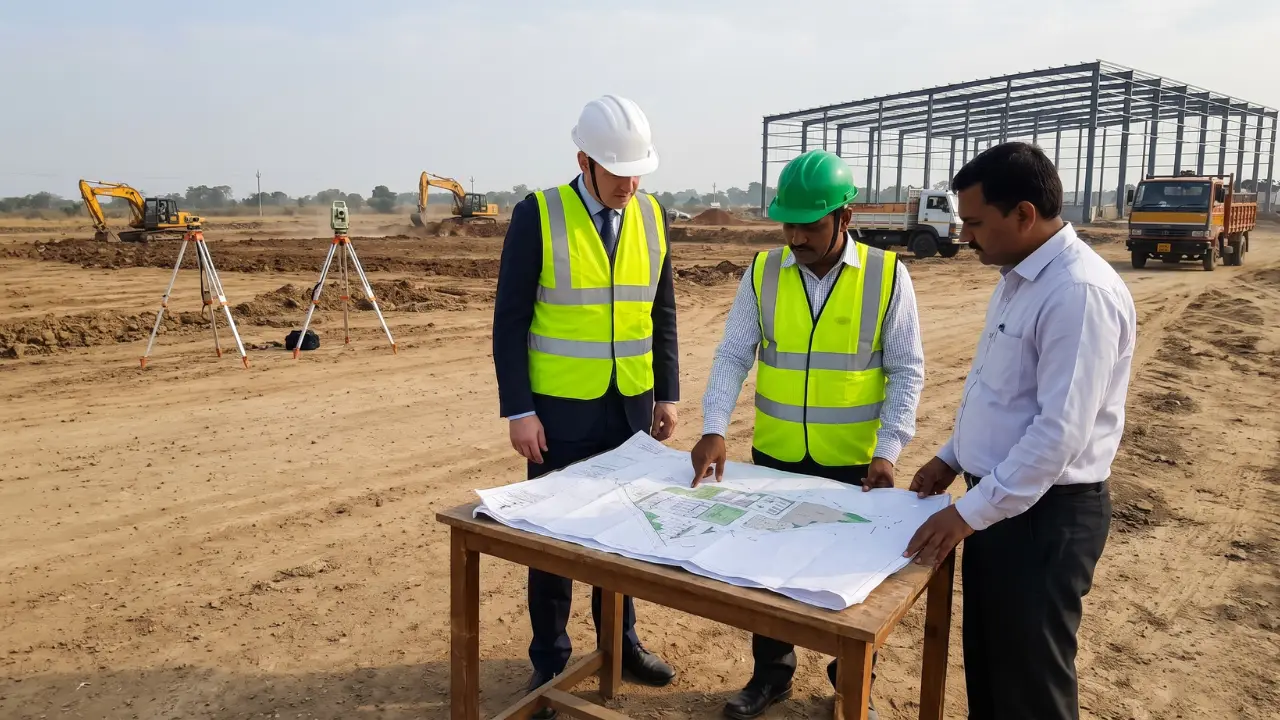
But announcements are only the beginning. A commitment must become a construction site, a construction site must become an operating facility, and that facility must become productive enough to compete in global markets. Each step depends on something less visible than an incentive or a headline deal: the government’s everyday capacity to make things work.
Scale raises the stakes. Kim notes that India’s GDP was just over $1 trillion in 2007 and is now approaching $4 trillion, so the same 7% growth adds far more output than it once did. Sustaining it will take more than favourable forecasts and investor confidence.
India Knows How To Deliver In Mission Mode
India has repeatedly shown that it can mobilise resources and coordinate complex projects when a national priority commands political attention. Its record in space exploration and nuclear science reflects deep scientific and engineering capability, and targeted industrial policy has begun to move semiconductor manufacturing from aspiration towards commercial production.
Under the first phase of the India Semiconductor Mission, the government has approved 12 manufacturing projects with investment commitments above ₹1.64 lakh crore, and five companies, Micron, Kaynes Semicon and CG Semi, have begun commercial production. In July 2026, the Union Cabinet approved a second phase, Semicon 2.0, with an outlay of about ₹1.28 lakh crore.
These are meaningful steps in an industry that needs specialised infrastructure, skilled workers, technological expertise and coordination across institutions. Yet mission mode has limits. A project with a clear objective, dedicated leadership and close monitoring can command concentrated administrative attention. An economy of millions of businesses, thousands of factories and countless routine transactions cannot run the same way.
What Gujarat’s Semiconductor Cluster Tells Us
The chip packaging cluster at Sanand, Gujarat, shows what routine delivery can look like. In a May 2026 report, ThePrint visited two of the three packaging facilities operating there, run by Kaynes Semicon and CG Semi alongside Micron’s. It described a single published incentive policy that applies to every investor, regular coordination between companies and government departments, quick subsidy payment and a commitment to uninterrupted power and water.
Officials and companies meet every 15 days to resolve cross-departmental problems, according to the report. A senior CG Semi official, speaking anonymously, said the company had budgeted for a year’s wait for its subsidy and received it in a month.
These may seem like mundane administrative details, but they decide whether a capital-intensive project runs on schedule. Chip facilities have exacting requirements: equipment that shuts down if voltage dips for even milliseconds, water in sufficient quantity and quality, and roads, worker housing and trained people nearby. An investor does not judge a state by its announced incentives alone. It also needs confidence that infrastructure will work after the inauguration ceremony and that problems can be resolved without prolonged uncertainty.
The same report shows why delivery must be judged more widely. Residents of villages bordering the cluster told ThePrint that their water has become harder since industry arrived, and one shopkeeper said it worsened after Micron began operating. An official of the Gujarat Industrial Development Corporation acknowledged the complaints but said the cluster draws on a separately allocated supply that does not affect drinking water for nearby villages. ThePrint noted that the question of water quality, rather than quantity, remains open.
The goal cannot be to deliver projects at any cost. It must be to build industrial capacity while managing environmental pressure, protecting essential resources and making sure local communities do not carry disproportionate costs.
The lesson from Sanand is therefore not simply that one state has attracted chip investment. It is that predictable rules, clear accountability and regular coordination can make a material difference to investment outcomes, provided they stay answerable to the public. Sanand is one cluster seen through one report, so it is an illustration, not proof.
It also shows how far routine delivery still has to go. ThePrint reported that during the last monsoon, Micron took a mosquito problem at its facility directly to the Prime Minister’s Office. That anecdote points to the real challenge. India’s next economic task is not only to attract the world’s capital but to build a system that converts it into sustained growth, by making execution a routine feature of governance. Not every factory can rely on the Prime Minister’s Office to resolve a local problem. Not every business should need access to a senior official for a routine approval. And not every investment should require a bespoke arrangement between a company and a state government.
The practices that make missions succeed should become part of the ordinary functioning of public administration.
The Next Test: Can India Build The Infrastructure Behind The Investment?
India’s ambitions in artificial intelligence and cloud computing are driving interest in data centres, which need large amounts of electricity, sophisticated cooling and dependable grid connections. On 14 October 2026, Reuters reported that India is preparing a dedicated data-centre policy. Minister of State for IT Jitin Prasada said the government wants to stop rising data-centre power demand from pushing up electricity bills for other consumers, but gave no details on scope or timing. Reuters also noted protests by residents near planned Amazon and Google sites over power and water use; both companies deny wrongdoing.
This is a fundamental test of industrial planning. Attracting a data-centre operator is one task. Ensuring that the electricity system can support it without compromising reliability or imposing unreasonable costs on other consumers is another.
The same principle applies to manufacturing. An industrial park is of limited value if transport links are inadequate, workers cannot reach the site efficiently or suppliers face repeated delays. Renewable capacity cannot deliver its full economic value without enough transmission. A factory cannot compete if water and power supplies are unreliable.
Infrastructure policy must therefore move beyond counting assets created or projects inaugurated. It must measure whether assets work as intended, connect with the wider economy and deliver reliable services to businesses and households.
That takes coordination across levels of government. The Centre can set national priorities, provide incentives and invest in strategic infrastructure. But states and local authorities often control the conditions that decide whether an investment succeeds: land administration, local roads, water supply, electricity distribution, worker transport, law and order, and enforcement of environmental rules. The quality of these institutions can be a competitive advantage or a constraint that erodes the benefit of otherwise attractive investment policies.
Ease Of Doing Business Must Reach The Smallest Businesses
The most revealing test of India’s business environment may not be whether a global corporation can negotiate a large factory. It may be whether a small manufacturer can do routine business without needless friction.
Large companies have legal teams, compliance specialists and consultants. Micro, small and medium enterprises rarely do. For them, an administrative delay can mean blocked working capital, missed orders or an inability to expand. Consider a small supplier waiting for a GST registration, for an input tax credit issue to be resolved or for a legitimate refund to arrive. A delay that looks minor to the administration can be serious for a firm with thin margins and limited cash.
India has made considerable progress in digitalising public services and simplifying parts of tax administration. The next step is to ensure these reforms produce predictable outcomes: applications processed within reasonable timelines, clear reasons for rejections, accessible grievance redressal, and prompt resolution of legitimate claims.
The wider consequences are large. A big manufacturer rarely works alone. It depends on component suppliers, logistics providers, maintenance contractors and other smaller businesses. If those firms struggle with compliance costs, delayed payments and limited access to working capital, the benefits of large investments are less likely to spread through the domestic economy. Hyundai’s own plan points this way, as it includes developing local suppliers and raising parts localisation.
This is why ease of doing business should be measured not only by the number of regulations removed or the speed of a major investor’s approval. It should also be measured by the time and cost of routine compliance, the predictability of tax administration and the ability of smaller firms to join expanding supply chains.
A country that wants to attract global manufacturers must also make it easier for domestic businesses to become their suppliers.
From Investment Announcements To Institutional Capacity
What, then, should India prioritise? Five things stand out.
First, institutionalise what works. Clear responsibility for approvals, coordination between departments, time-bound processes and effective escalation should be standard features of administration, not exceptional arrangements reserved for strategically important investors.
Second, track projects beyond announcement and approval. The relevant questions are whether money has been deployed, construction completed, production begun and promised jobs or supplier opportunities created. Separating announced investment or an MoU from actual spending and operating capacity would help policymakers and citizens judge outcomes. Blackstone’s $100 billion, in its own president’s words, is an ambition that depends on finding suitable businesses, which is exactly the distinction worth tracking.
Third, compete on the quality of industrial ecosystems, not only on subsidies. Reliable electricity, water security, transport connectivity, skilled workers and predictable regulation can matter as much to investors as financial incentives. Public support should be judged against the capabilities it helps create. States should also make full use of relevant central schemes and benefits, focusing on implementation and outcomes.
Fourth, keep deregulating. Outdated legislation, duplicative compliance requirements and unclear administrative processes impose costs without matching public benefit. Reform should remove unnecessary friction while retaining safeguards for workers, consumers and the environment.
Finally, build the domestic capabilities that let investment create lasting value. Skills development, research partnerships, local supplier networks, and technological learning determine whether India becomes merely a place for production or a source of increasingly sophisticated products, processes, and intellectual property.
None of this can be achieved through monitoring alone. It needs capable public institutions, adequate infrastructure, well-trained people and coordination between the Centre, states and local authorities. Political attention can start reform, but institutions have to sustain it.
Delivering The Next Phase Of Growth
Global investors are offering India a significant opportunity. But capital is not an end in itself. Its value depends on what it produces: competitive industries, productive employment, stronger domestic enterprises, strategic technological capability and rising living standards.
India has shown it can mobilise resources for ambitious national goals. Its next task is to make effective execution a consistent feature of economic life, from a semiconductor facility in Gujarat to a small manufacturer waiting for a tax refund.
That would also change how states compete. Rather than relying mainly on incentives and headline announcements, governments would be judged on whether businesses of every size can operate reliably, workers can find jobs, infrastructure can support production and public resources are used responsibly.
The world may be ready to invest in India. Whether that confidence becomes a durable path to economic development will depend on India’s ability to deliver, not just on the day of the announcement, but every day after.
***
Source note: This article draws on the reports linked above. Figures are as reported on the dates shown there. Growth statistics for 2021 to 2025 are economist Kyunghoon Kim’s calculations, as reported by Business Today on 17 October 2026.