
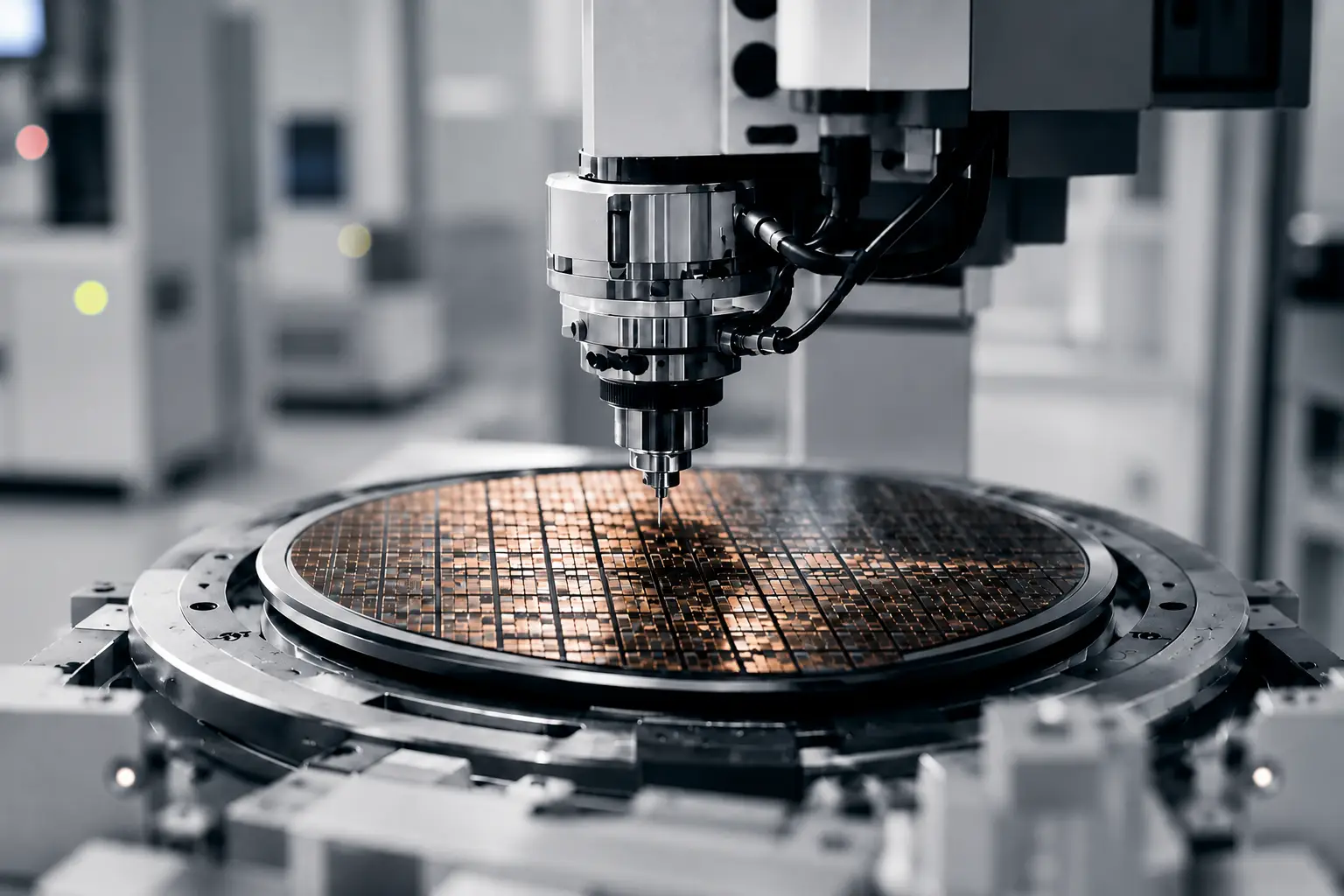

India has approved a ₹1.28 lakh crore (approximately $13.3 billion) expansion of its semiconductor programme alongside a ₹62,500 crore (approximately $7.3 billion) mobile phone manufacturing scheme, making it one of the country’s largest technology-focused industrial policy interventions to date. The announcement shows that New Delhi is now focusing not just on attracting chip factories but also on building a larger electronics ecosystem. The real test now is whether India can translate incentives into domestic capability across research, design, materials, manufacturing, and talent development. Those capabilities, rather than investment alone, will determine India’s long-term competitiveness in the semiconductor industry.
What Is Changing?
As reported by Reuters, the Union Cabinet has approved Semicon 2.0 with an outlay of approximately ₹1.27–1.28 lakh crore, along with a separate ₹62,500 crore scheme for mobile phone manufacturing over five years. The government has positioned the initiative as the next phase of India’s semiconductor strategy after the launch of the original India Semiconductor Mission in 2021. As reported by Economic Times, Semicon 2.0 includes a six-pillar roadmap aimed at strengthening semiconductor manufacturing, infrastructure, ecosystem development, design capabilities, and supply-chain depth. The move also comes as governments around the world are investing heavily in semiconductor capacity amid growing concerns about supply-chain resilience and technological dependence.
Why Does It Matter?
The first phase of India’s semiconductor strategy was about proving that fabrication, assembly, testing, and packaging projects could be established in the country. Semicon 2.0 signals a shift towards ecosystem-building and value-chain depth.
Semiconductors have become the foundation of modern AI systems, making access to compute capacity an increasingly important determinant of technological competitiveness. Countries that lead in semiconductors do not do so because they manufacture chips alone. Long-term competitiveness depends on networks of equipment suppliers, materials producers, design firms, research institutions, and highly skilled technical talent.
India already possesses significant strengths in semiconductor design and engineering services, with many global chip firms maintaining large design and R&D operations in the country. The challenge now is connecting those capabilities to domestic manufacturing so that more value is created within the country. According to government estimates cited by The Hindu, the programme is expected to generate around 60,000 direct jobs and 150,000 indirect jobs, reflecting the wider economic impact policymakers hope semiconductor manufacturing can create.
What Happens Next?
Government notifications are expected within weeks, after which companies will begin applying under the new schemes. Existing semiconductor projects approved earlier will continue progressing toward commercial production, while new investments are expected to be announced under Semicon 2.0. The next phase will reveal whether semiconductor investments can catalyse the broader ecosystem that the government is targeting. The real indicators will not simply be the number of factories announced, but whether suppliers, advanced packaging firms, research partnerships, and design-intensive investments begin clustering around them.
What Should India Do?
The strongest semiconductor economies are built around interconnected capabilities rather than standalone production facilities. The priority should be to deepen the manufacturing ecosystem. Semiconductor incentives can help attract factories, but long-term competitiveness will depend on developing domestic capabilities in chip design, packaging, materials science, equipment servicing, research and workforce development.
India should use this phase to strengthen technical education, industry-academia partnerships, and semiconductor R&D. It should also encourage domestic participation across the value chain. If Semicon 2.0 succeeds in creating capability, it could establish the foundations of a durable technology ecosystem for the country. Over time, that could strengthen India’s position not just as a consumer of advanced technologies, but as a contributor to their development.