
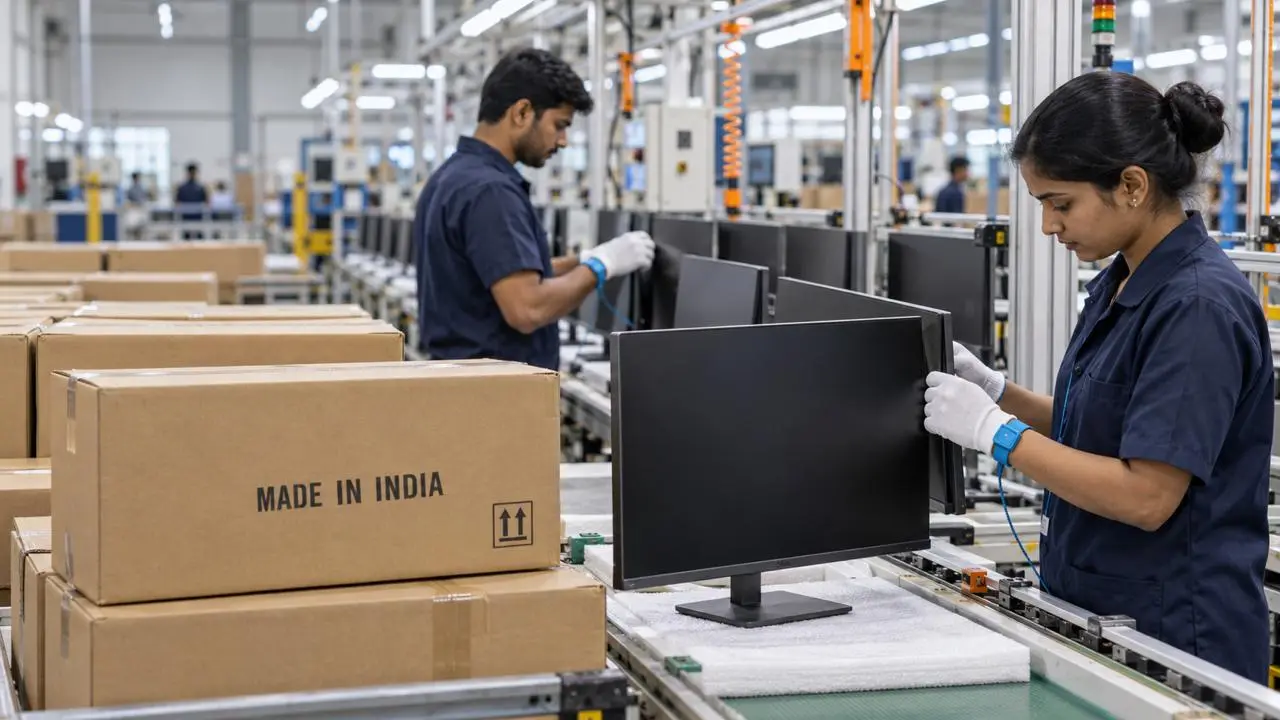

For years, China sat at the centre of global manufacturing. Its dense industrial clusters, tight supply chains and export machine made it the default choice for companies everywhere. Then, geopolitics sharpened, costs rose and supply chains snapped more than once. Suddenly, relying on one country looked risky.
That unease gave rise to the “China Plus One” idea: companies keep a foothold in China, but build parallel capacity elsewhere. India emerged as one of the most visible contenders in this transition. It has a huge domestic market with rising disposable income, a vast workforce, growing industrial capacity, and a government actively promoting manufacturing.
Southeast Asian economies such as Vietnam, Thailand, Malaysia and Indonesia moved early and have attracted significant investment by creating business-friendly ecosystems.
Southeast Asia’s Early Lead: How First Movers Captured The Opportunity
Southeast Asia’s success in the China Plus One shift has been driven by a combination of geography, policy decisions and execution. Countries in the region identified the opportunity early, developed industrial zones, improved logistics networks and created trade-friendly environments to attract global manufacturers.
Vietnam has emerged as one of the clearest examples of this transformation, pulling in major manufacturers from Samsung to Apple suppliers. Southeast Asia has also benefited from rising investment flows.
Chinese outbound mergers and acquisitions in Southeast Asia increased from $1.1 billion in 2022 to $7 billion in 2023, highlighting the region’s growing importance in global supply-chain restructuring.
FDI trends show that both India and Southeast Asia are attracting fresh investment, although Southeast Asia has built greater regional momentum. ASEAN received a record $225 billion in FDI in 2024, with inflows rising 10% as countries including Indonesia, Malaysia, Singapore, Thailand and Vietnam recorded increases.
In 2025, India also saw a strong rebound, with FDI inflows rising 44% to $39 billion. Southeast Asia continued to gain ground, becoming the largest FDI-recipient subregion in developing Asia, while Malaysia recorded a 51% increase in inflows and Thailand 30%. The figures suggest that India is participating in the diversification of investment across Asia, but is competing with a Southeast Asian manufacturing network that has already attracted investment at significant scale.
The region also benefits from comparatively predictable investment and trade procedures, as well as low land, capital, labour and logistics costs, which further reduce friction for investors. In contrast, India’s layered bureaucracy, unpredictable administrative regulations, and uneven state-level implementation create bottlenecks infamous for testing even the most sophisticated corporate legal minds. For companies operating complex global supply chains, reducing administrative uncertainty can be almost as important as reducing production costs.
India’s Biggest Strength: Scale, Market And Industrial Ambition
Despite Southeast Asia’s early advantage, India cannot be ignored in the China Plus One transformation.
Government initiatives such as Make in India and Production-Linked Incentive (PLI) schemes have attempted to transform India from a consumption-driven economy into a major manufacturing destination. According to government data, the 14 PLI schemes attracted investments worth around ₹2.40 lakh crore and generated more than 14 lakh jobs across sectors.
Apple has expanded iPhone assembly in India, Foxconn has increased its manufacturing footprint, and Tata has entered semiconductor-related partnerships with ASML, which plans to hire its first engineers in India. These developments indicate that India is moving beyond traditional low-cost assembly and attempting to build a broader manufacturing ecosystem.
Industry leaders have increasingly identified India as a significant beneficiary of supply-chain diversification. Foxconn Chairman Young Liu has said India is likely to become an important global manufacturing centre, while Flex CEO Revathi Advaithi says production shifted to India has performed well, although becoming a genuine China Plus One hub will require end-to-end supply-chain cost competitiveness.
The Manufacturing Challenge: From Policy Announcements To Ground-Level Execution
While India has made progress, attracting investment is only the first step. The larger challenge is converting announcements and incentives into fully developed manufacturing ecosystems.
One major challenge is implementation. While PLI schemes have attracted significant interest, incentive disbursement has been slower. As of early 2025, only $1.7 billion of the $23 billion allocated under PLI programmes had been disbursed. This highlights the gap between policy ambition and on-the-ground execution.
Regulatory complexity remains another challenge. India’s federal structure means companies often have to navigate different procedures, approvals, and implementation standards across states.
Geopolitical tensions and escalating trade wars complicate India’s positioning for investors. An increasingly erratic US administration, known for daily changes to tariff policies, further drives investors to prioritise long-term stability over marginal returns.
The Next Big Test: Moving Beyond Assembly
India’s progress in electronics assembly represents an important milestone, but the bigger challenge is creating complete manufacturing ecosystems. Assembly operations capture only a portion of the value generated in global supply chains. High-value components, advanced manufacturing capabilities and supplier networks are critical for countries seeking long-term industrial strength.
The next stage of India’s manufacturing journey will depend on its ability to develop domestic component production and reduce dependence on imported intermediate goods. Building deeper industrial capabilities will determine whether India becomes merely an assembly destination or a comprehensive manufacturing hub.
Infrastructure And Global Integration: Strengthening Manufacturing Momentum
India has been investing in infrastructure and connectivity to address some of its historical disadvantages. Projects such as the East Coast Economic Corridor aim to connect industrial clusters with ports and transport networks, reducing logistical barriers for exporters. India’s participation in initiatives such as the Supply Chain Resilience Initiative (SCRI) with Japan and Australia, along with its Act East policy, also aims to strengthen integration with Asian production networks.
India has completed its 2,843-kilometre Dedicated Freight Corridor network, making it the first country in the world to run routine double-stack container trains powered by electric overhead wires at this scale.
The Road Ahead For India
The China Plus One strategy is not simply a competition between individual countries. Modern supply chains are built across networks of suppliers, logistics providers, component manufacturers and assembly centres spread across multiple economies. Countries that integrate effectively into these networks will most likely gain the greatest advantage.
Southeast Asia retains an advantage because of its early preparation, proximity to China, established trade networks, and relatively smoother investment processes. Vietnam has become a major electronics hub, while Malaysia, Thailand and Indonesia have strengthened their positions in sectors such as semiconductors, automotive and electronics manufacturing.
India has also made meaningful progress in select sectors. Its market size, workforce, policy support and infrastructure investments provide a strong base for future expansion. The country has already built capabilities in electronics, pharmaceuticals and auto components. The next step is to deepen component manufacturing and connect these capabilities into a highly integrated industrial network.
Southeast Asia may have captured the early momentum, but the opportunity remains open. A key factor will be whether India can turn sector-specific gains into an integrated value chain that can compete at a global scale. Its place in the next phase of global manufacturing will depend on how effectively it converts industrial ambition into sustained execution.