
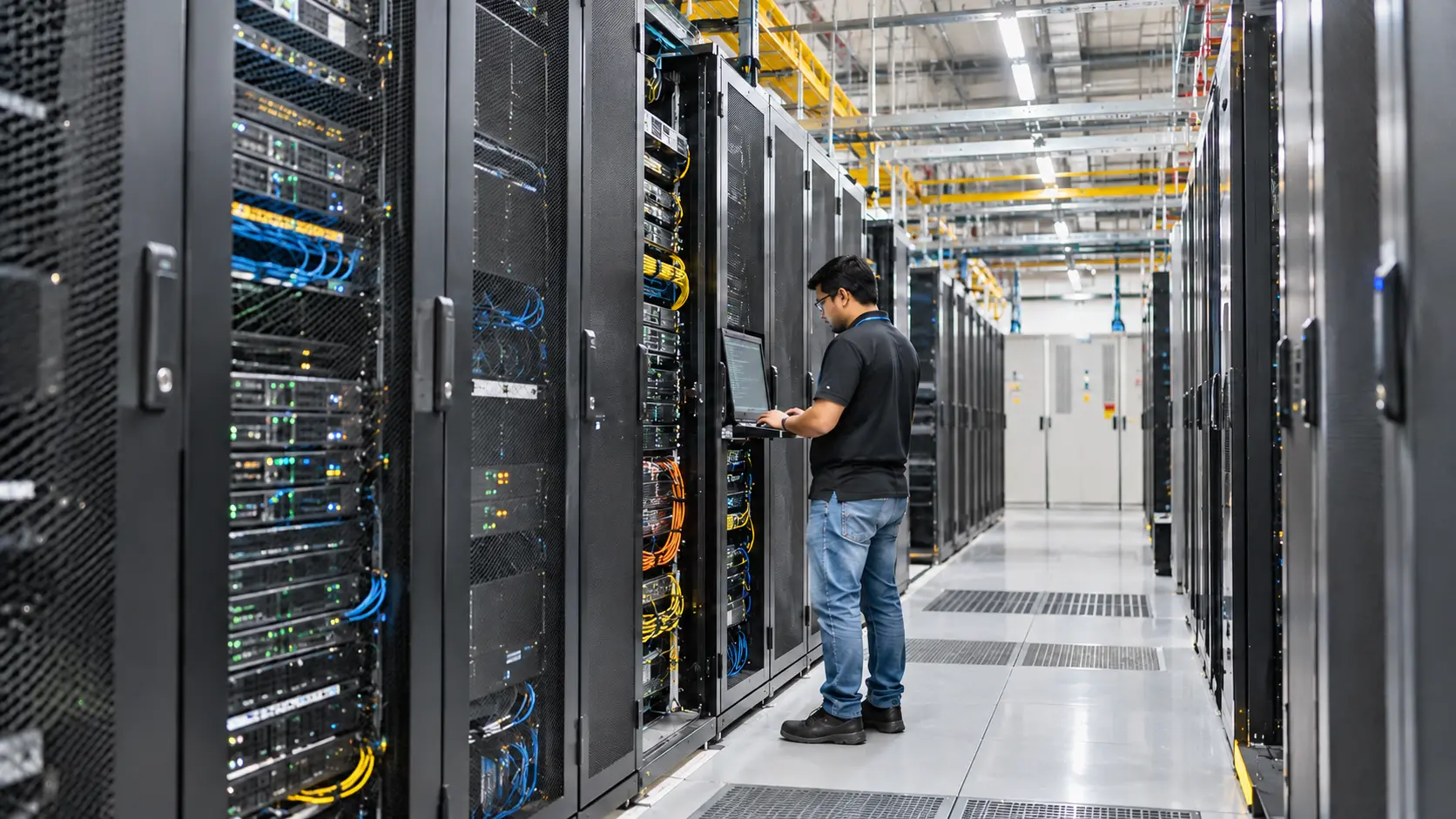

Within three days, C-DAC signed two separate MoUs addressing different parts of India’s advanced computing infrastructure.
On September 19, it signed an agreement with Bharat Electronics Limited to pursue sovereign data-centre opportunities using a fully indigenous and integrated technology stack, with BEL as system integrator and C-DAC providing domestically developed technologies.
On September 22, C-DAC signed a separate MoU with NLC India Renewables to explore renewable-powered data centres, alongside solar, wind, energy storage, high-performance computing and AI infrastructure.
Together, they highlight two constraints that will become harder to separate from India’s data-centre expansion: how much underlying computing technology India controls and how reliably it can supply the electricity advanced computing requires.
Neither agreement yet shows how those constraints will be solved at project scale. No site, computing capacity, power requirement, investment, customer or deployment timeline has been disclosed. The key development is what it would take to turn these capabilities into operating infrastructure.
A Sovereign Stack Is Not Yet A Sovereign Supply Chain
The BEL-C-DAC partnership targets sensitive national infrastructure and other strategic programmes. C-DAC already has some of the core technologies needed, including Indian-designed servers, its own operating system, and computing systems built for high-performance workloads.
BEL adds another layer by integrating, testing and producing these technologies as complete systems that strategic customers can deploy.
But domestic system design is not completely hardware-independent. C-DAC’s systems are designed and integrated in India but still use imported processors and advanced chips from companies such as Intel and Nvidia.
India can gain greater control over computing architecture, software and operations without controlling every critical hardware component. Deeper sovereignty requires progress upstream in processors, accelerators, memory and other critical components.
Renewable Power Has To Become Reliable Power
The NLC India Renewables partnership addresses a different constraint.
India’s installed data-centre capacity has increased from 375 MW in 2020 to around 1,575 MW. The Central Electricity Authority estimates data-centre power demand could reach about 17 GW by 2031-32. AI and high-performance computing drive that growth.
That makes electricity infrastructure part of the data-centre challenge itself.
NLC India Renewables brings solar, wind and storage capabilities into a partnership with an institution developing HPC and AI systems. But powering data centres with renewables requires more than adding solar or wind capacity. Advanced computing facilities need continuous electricity, while renewable generation varies throughout the day.
An operating project would need to combine renewable generation with storage, grid supply or other reliable power sources. Cooling, grid connectivity and cost would also shape the eventual design.
The MoU identifies several of the required pieces, but not yet how they would work at project scale.
Two Different Constraints, One Infrastructure Challenge
The two agreements are not parts of the same project. They address different constraints facing the same broader system.
The BEL-C-DAC partnership targets technology dependence by increasing domestic control over strategic computing systems. The NLC India Renewables-C-DAC partnership targets energy dependence by exploring how renewable generation, storage, and a reliable electricity supply can support increasingly power-intensive computing.
Progress on the first could reduce dependence on foreign technology across parts of the computing stack. Progress on the second could ease accommodating large new computing loads without relying entirely on conventional power.
Without progress on both fronts, India could keep adding data-centre capacity while remaining dependent on imported critical hardware and increasing pressure on its power system.
From MoUs To Measurable Progress
The next milestones will show whether either agreement moves beyond intent.
For BEL and C-DAC, that means a named programme or customer, a defined technology architecture, clarity on which parts of the stack are domestically controlled, testing and certification and an actual deployment.
For NLC and C-DAC, that means a site, data-centre capacity, power requirement, renewable generation and storage plan, grid arrangement, investment and construction schedule.
Building more data centres will not reduce dependence on critical foreign hardware by itself, nor will adding renewable generation automatically provide the continuous power advanced computing requires.
India’s sovereign-compute push will ultimately depend less on how many MoUs are signed and more on whether domestic technology and energy capabilities can be converted into infrastructure that works reliably at scale.
***
Source Note:
This article is based primarily on Bharat Electronics Limited and C-DAC materials on their September 2026 sovereign data-centre partnership, including the proposed indigenous technology stack, system-integration roles and focus on strategic infrastructure. Details on the separate NLC India Renewables–C-DAC MoU and its focus on renewable-powered data centres, energy storage, high-performance computing and AI infrastructure are drawn from APAC News Network and NLC India materials. Context on C-DAC’s indigenous Rudra servers, BOSS operating system and continued reliance on imported processors and accelerators comes from C-DAC’s technical and product documentation. Data on India’s installed data-centre capacity and the Central Electricity Authority’s estimate that power demand could reach about 17 GW by 2031–32 are drawn from Press Information Bureau and CEA-linked government disclosures.