
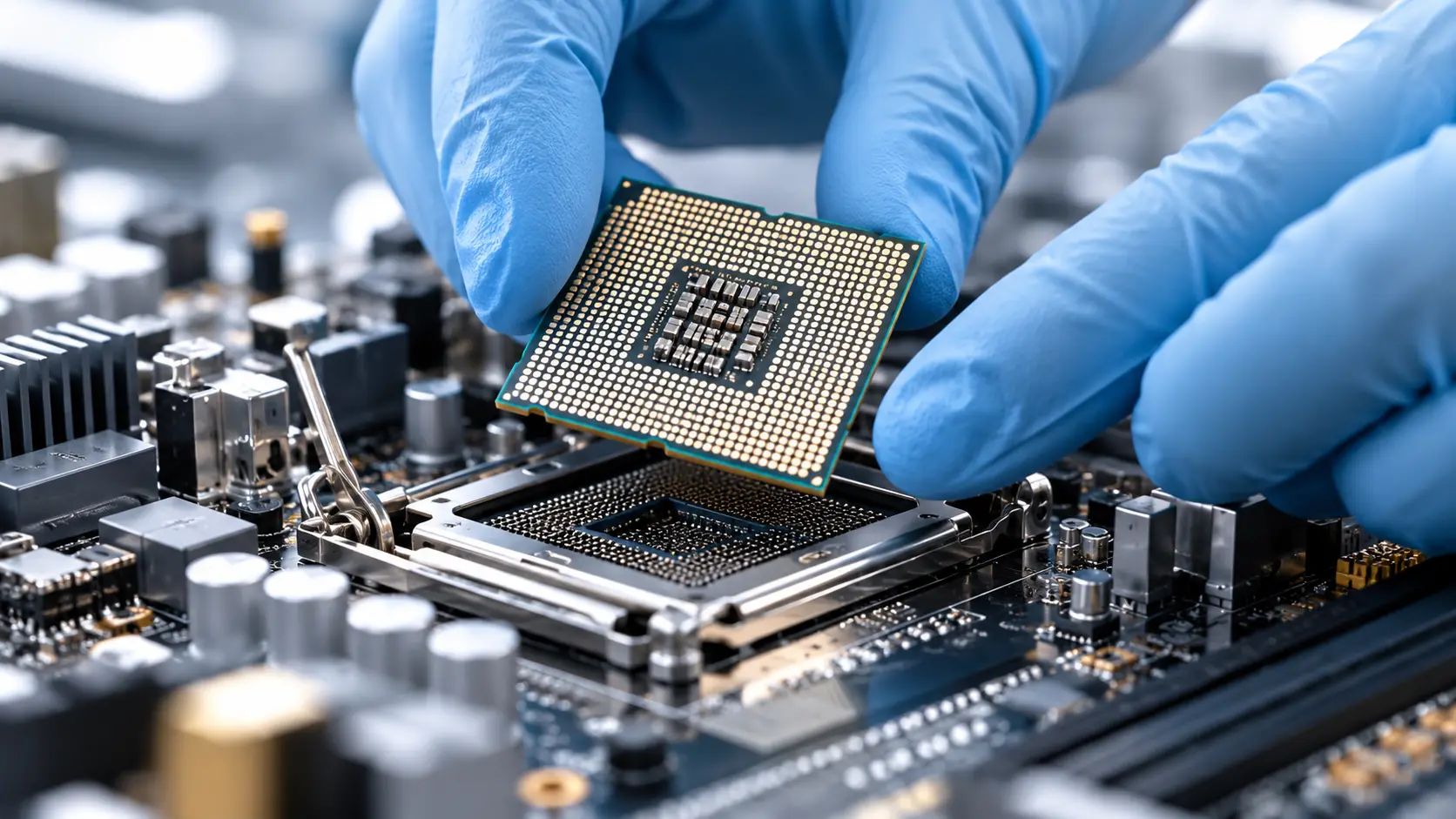

Semiconductors sit at the core of modern manufacturing. From the smartphone in your hand to LLMs, satellites, automobiles, medical equipment and rockets, modern economies increasingly depend on them. As semiconductors become even more critical for powering traditional as well as frontier manufacturing industries, building domestic capabilities is no longer simply an industrial opportunity for India; it is a question of technological resilience, national security and economic competitiveness.
At SEMICON India 2026, more than 500 companies from over 20 countries are showcasing technologies. The scale of participation reflects India’s growing importance as a potential semiconductor manufacturing and technology hub.
India’s semiconductor demand is rising rapidly. The domestic market is projected to reach USD 110 billion (INR 10.53 trillion) by FY2030 and exceed USD 200 billion (INR 19.15 trillion) by FY2035. At the same time, India spent nearly USD 150 billion (INR 14.36 trillion) on semiconductor products between FY2017 and FY2025, with imports growing at a CAGR of around 23 per cent. If this trajectory continues, annual semiconductor-related imports could approach USD 240 billion (INR 22.98 trillion) by 2035.
India’s dependence on overseas semiconductor supply chains matters because semiconductors are produced through one of the world’s most complex and geographically distributed supply chains. No single country controls the entire value chain. Different economies dominate different stages, including chip design, fabrication, semiconductor equipment, materials, memory and advanced packaging. Taiwan, for instance, accounts for more than 60 per cent of global chip production and 90 per cent of advanced-chip manufacturing. Such concentration creates vulnerabilities when geopolitical tensions, trade restrictions or supply-chain disruptions affect critical production centres.
India’s semiconductor journey has therefore evolved from building strategic capabilities to developing a broader domestic ecosystem.
India Is Building Its First Layer Of Chip Manufacturing
The Government of India launched the Semicon India Programme in December 2021, with an outlay of ₹76,000 crore, to establish a domestic semiconductor and display manufacturing ecosystem. The programme created dedicated support for semiconductor and display fabrication, compound semiconductors, silicon photonics, sensors and ATMP/OSAT facilities. The Design Linked Incentive (DLI) Scheme also sought to strengthen India’s semiconductor design capabilities.
The programme has since translated into 12 approved semiconductor manufacturing projects, representing cumulative investments of more than ₹1.64 lakh crore.
These include:
- 1 silicon semiconductor fab
- 1 silicon carbide fab
- 1 gallium nitride Micro LED display fab
- 9 ATMP/OSAT facilities
Five of these facilities have now commenced commercial production. Importantly, all five are in the assembly, testing and packaging (ATMP) segment rather than wafer fabrication. The distinction between ATMP and wafer fabrication matters. Packaging and testing are essential parts of the semiconductor value chain, but a wafer fabrication facility or ‘fab’ is where semiconductor devices are manufactured on silicon wafers. India’s most significant fabrication milestone is therefore still under development.
Tata’s Dholera Fab: The Biggest Step Toward Fabrication
The centrepiece of India’s semiconductor ambitions is the Tata Electronics semiconductor fabrication facility at Dholera, Gujarat, representing an investment of INR 91,000 crores (US$11bn).
The facility is being developed to manufacture semiconductors on 300-mm wafers, with a planned capacity of around 50,000 wafer starts per month. Tata Electronics is developing the project in partnership with Taiwan’s Powerchip Semiconductor Manufacturing Corporation (PSMC).
Tata Electronics has also entered into an agreement with ASML, the Dutch semiconductor equipment company, covering lithography technology, local talent training, supply-chain resilience, and R&D infrastructure.
The Dholera project is significant because it moves India’s ambitions beyond assembly and testing towards actual semiconductor wafer fabrication. The facility has not yet entered commercial production, with construction and development continuing. Tata Electronics CEO Randhir Thakur said the Dholera fab and Assam packaging facility were progressing according to their commitments to the government.
Assam: Building Scale In Advanced Packaging
Tata Electronics is simultaneously developing a major semiconductor assembly and testing facility in Jagiroad, Assam, with an investment of approximately ₹27,120 crore.
The facility is planned to have the capacity to process up to a whopping 48 million chips a day, making it one of the largest semiconductor packaging facilities in the country.
While the Assam facility is not a wafer fab, its scale is strategically important. Advanced packaging is increasingly critical to semiconductor performance, and a large domestic packaging capability can connect India’s fabrication ambitions with downstream semiconductor manufacturing.
Together, the Dholera and Assam projects give Tata Electronics a presence at two different but complementary stages of the semiconductor value chain.
Micron: India’s First Major Commercial Milestone
One of the most visible milestones so far has come from Micron’s facility in Sanand, Gujarat. The US-based memory-chip manufacturer has invested approximately ₹22,516 crore in an ATMP facility handling DRAM and NAND products. The facility has a stated capacity of around 14 million units per week.
Its commercial operation is significant because it represents the entry of a major global semiconductor company into India’s manufacturing ecosystem and provides India with operational experience in large-scale semiconductor packaging and testing.
Other projects, including facilities being developed by CG Power and Industrial Solutions with Renesas, Kaynes Semicon and other companies, are also contributing to the emerging domestic OSAT ecosystem.
Building The Ecosystem Beyond The Factories
The development of semiconductor manufacturing is not limited to constructing fabrication and packaging facilities. A semiconductor ecosystem requires a network of companies supplying specialised materials, equipment, gases, components, technology and services.
This is increasingly visible in Tata Electronics’ partnerships announced around SEMICON India 2026. The company has signed 16 MoUs, the highest at the event, with companies such as Nexperia and Besi from Europe; JSR, Fujifilm, Sumitomo, Sojitz and Enomoto from Japan; Kellington from Malaysia; Ascendas Firstspace from Singapore; and Indian organisations including L&T Semiconductors, Inox Air Products, the Semiconductor Laboratory and Gati Shakti Vishwavidyalaya.
The partnerships span different parts of the semiconductor value chain, from equipment and materials to industrial gases, logistics, infrastructure, research and talent development. This is important because a fab cannot operate as an isolated facility. Its competitiveness depends on the ecosystem surrounding it.
The Next Challenge: Depth, Not Just Capacity
India has crossed an important threshold: semiconductor manufacturing is no longer only an aspiration, and commercial production has begun. Yet the 12 approved projects represent the beginning of a much greater effort rather than the completion of one.
The next challenge is to build the supporting capabilities that allow semiconductor manufacturing to become deeply embedded within India. That means expanding domestic capacity in specialised materials, semiconductor equipment, industrial gases, advanced packaging, components, research and highly skilled talent, while continuing to strengthen India’s existing advantage in chip design.
The measure of India’s semiconductor success will therefore extend beyond the number of plants announced or the value of investment committed. It will depend on how much of the wider value chain can be developed around those plants and how effectively India can connect its strengths in design, engineering and talent with increasingly sophisticated manufacturing capabilities.
India has begun building the physical foundations of a semiconductor industry. The next phase will determine whether those foundations develop into a genuinely integrated ecosystem capable of supporting the country’s technological and strategic ambitions.
***
Source Note:
This article is based primarily on the Government of India, the India Semiconductor Mission and company announcements on India’s semiconductor manufacturing programme, approved projects and emerging fabrication and packaging capacity. Additional context on commercial production, investment, supply-chain partnerships and project progress is drawn from Tata Electronics, Micron, BusinessWorld, The Economic Times, Hindustan Times and Asia Pacific Foundation of Canada.