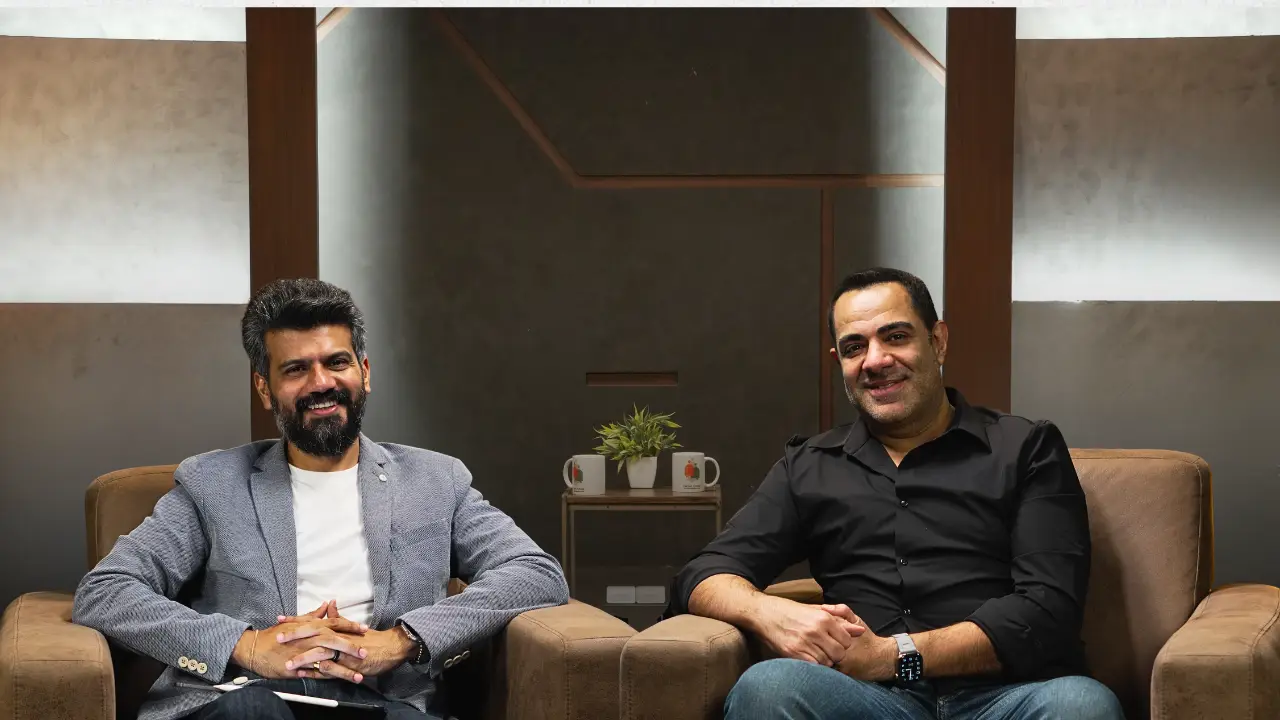

Nikhil Rajpal, Co-founder and CEO of Qubo, discusses India’s journey from a software-led technology economy towards becoming a product nation in a conversation with Nikhil Chawla. He explains why Qubo chose to build hardware, software and AI in India, designing connected devices around Indian homes, families and security needs. With nearly three million devices shipped and around 80% of revenue coming from smart security products, Qubo is expanding into connected appliances and aims to eventually go global. Rajpal reflects on the challenges of building hardware, learning from failed products, the need for patient R&D and growth capital, and the evolving manufacturing ecosystem. His larger ambition is to see more Indian product companies built for the world.
Nikhil Chawla: Hi, hello, and welcome to the one big podcast. I’m Nikhil Chawla. And today we are talking about technology, entrepreneurship, Indian innovation and the future of our connected homes and cars. And my guest today is someone who has spent years making homes and cars smarter. Hello, Nikhil. Welcome to the one big podcast. Before we start, I wanted to understand with so much technology around you, how do you manage every day? I mean, are you always under the surveillance cameras that you make the dash cams? Are you being monitored all the time, living in a big boss house?
Nikhil Rajpal: First, thank you for having me to be here and speak with you. Look, I’m a tech geek. I love technology. Of course, of course. You know, so I’m not worried about gadgets in my house. In fact, you know, I was looking last week and I found almost 40 devices hooked up to my mesh router. It’s a lot, but between phones, iPads, laptops, TVs, everything’s connected now.
NC: How many were the Qubo devices on those 40?
NR: I think 12, 10 to 12. Air purifiers also.
NC: Oh, yeah, absolutely. You know, with the smart locks, doorbells, cameras, dash camera, I’m guessing your house probably knows more than you do about yourself.
NR: That is probably true. Everybody in my house is smarter than me, so that’s not hard. Devices know more as well.
NC: So, I mean, jokes apart, there’s a fascinating story about how you got into this business. I still remember very candidly sitting in that room in Saket and talking to you about it and saying, a lot of people have tried building a tech company in India, especially in a software, hardware ecosystem. And you said, yeah, I know what you’re talking about. And I said that, do you take it as a challenge? How do you think you’ll drive it from here? Because you said, we’re not just trying to build hardware, not trying to import something and put a label on it. We’re trying to build an ecosystem of software applications, everything in-house, because you were also very importantly worried about the data privacy of Indians.
NR: You know, first of all, I remember that. And, there were a few people very early on, kind of almost believed in us enough to come talk to us. But the reason we did this was at that time we were seeing connected devices come alive. Things like Apple Watch are happening where, you know, devices just with intelligence connected to the net became way more powerful than they were. But nothing was happening in India in-home devices. So that was the origin of the thought. Now, as you said, there were two paths. One, buy a ticket to Shenzhen. And there’s nothing wrong with that, right? There’s a good way to scale businesses. And China’s great in hardware. But, the problem with that is we wanted to build something long-term. Something for India, which solves for Indian use cases, works in Indian homes. Our homes are very different from the U.S. or China. Our families are very different. So we wanted to solve for the Indian use case, the Indian environment. And you can’t do that by picking something off the shelf. So that meant we had to make the investment to build the product, build the hardware, build the software, build the platform. And that’s why we made the bet. And one thing to say you want to do it, another thing is to do it. And for that, I think a lot of people have conviction. But I was lucky to have, partner, co-founder, Ujwal Mujal. Who also had a similar vision. And the money came from there. Consumer electronics is not for the faint-hearted. So, lucky in that sense.
NC: Also, big investments. You just can’t build an ecosystem without big investments and somebody who’s trusting you in doing that.
NR: But, you know, not as big as you think. And it can be done. A lot of this is about, as you said, having the conviction and the vision and the belief that you can do it.
NC: I mean, a lot of people are not sure why the name Qubo. What’s the story behind that?
NR: Interesting you asked. Now that I think about it, we literally wanted to sound younger version. Not go with Eero. So, we put names on a board. So, it had to be four letters. What sounded cool.
NC: So, was it something to do with four letters matching with Eero?
NR: Not really. What sounded cool. And the first name we picked up, actually somebody already had a copyright on it. So, we had to go back and change it. Yeah. And I won’t go around which one that was.
NC: Now, you shared more than a million devices. Do you remember the moment when you actually felt, realised, okay, this is no longer a startup, you built something. Really, something big.
NR: Thank you for pointing. I love counting these numbers. It’s almost three million now. So, we’ve grown really fast. I still think we’re a startup and we should remain one.
NC: And why is that?
NR: You’ve got to think like a startup, be paranoid like a startup, be nimble like a startup.
NC: And pay salaries like a startup.
NR: Yeah, and equity, but also equity like a startup. So, it’s both pros and cons. So, yeah, but I think we’re getting a lot more recognised now. Yeah. I don’t, when I go to meetings, I don’t have to explain in detail what Qubo is. You’d find people around the table using it. Maybe not there, but getting there.
NC: No absolutely, because if my parents or my grandparents can take a decision without asking me, being the tech geek in the family, and bought a Qubo camera on their own. So, I know it’s a household name. And they’re making sure that they wanted something that is Indian, made sure that it’s not like the data is not being sent to Chinese servers. All of that was very important for them. And they did their own research. And, of course, the ratings obviously helped. Talking about ratings, we’ll talk about when you said three million units have been shipped for Qubo devices, what is taking what in terms of share? What are your best sellers?
NR: I think if you step back and look at Qubo, while we have a lot of products, we are fundamentally a camera company. The bet we made was that video is increasing everywhere. So, video plus AI can solve a lot of security problems and that’s where we built competence. Building cameras, building AI, video AI on top of that. So, in that sense, we do security cameras, dash cameras, doorbell cameras, and other products. These camera products are probably 80% of our revenue right now. And that continues to be the largest market, right? And so, if you ship 100,000 devices a month now, I would say 50,000 is security cameras, 25 is dash. Okay. And then the rest is the other.
NC: You also have a very interesting camera. A lot of people are aware of it who have a baby. It’s like a baby monitor that you have. And it’s very cutely made so that the baby is not scared of it. In fact, keep looking into it. So, how did that thought come across? It’s not a new product. You’ve been building it for years now.
NR: So, that’s an interesting story. Give me a minute. So, back to that Indian situation. So, what happens in the West is not what happens with babies in India. In the West, babies are normally in a separate room. In India, babies are at home with parents, grandparents, nannies. Never alone, right? Never alone. So, you’re less worried. So, what you’re worried about is are they okay? Isn’t I taking care of them? So, we said, how do we solve that? So, we built things like a baby cry alert. And a virtual cradle. So, the baby doesn’t fall off the bed. So, to do that, we built a model in India, trained in India. I still remember we had audio of Alia Bhatt playing from a movie. Raazi, which was crying a lot. To train it to say it should recognise a baby and not an adult. Right? So, real stuff is being done here for India.
NC: Interesting insight. So, let’s talk about the Indian consumer. Are Indians still buying smart devices because they are cool? Or are they buying it where they think the technology is solving my everyday problems?
NR: I think not. I think the initial adoption may have been for looking cool. But when you ship 3 million devices, we are one of the players in the market. It’s not for cool. It’s because you are solving real problems people have of staying connected to their homes, Connected to their families, Security and accidents proof. It’s only then can you scale something in India. Otherwise, it stays a novel thing.
NC: That is so true. Now, dashcams also have become like really, devices that are now very prevalent. It’s not like one of 1,000, 10,000 cars would have it. And I was seeing some numbers on Amazon. You are the highest rated dash cam maker in India. How was the journey? What made you decide that? We have secured homes. We have secured babies. Now, we should have dash cams in the cars. And of course, you have a portfolio which is very diverse. You have connected dashcams. You have 5G and all of that. Live dashcams. What was the journey? And how did you decide that you have to get into this space also?
NR: So, a couple of questions in there. Let me take the first one on why dashcams? We live in India. We know how we drive. How people drive. There are the accidents, the fights. And if you are from Delhi, you know. But I grew up in Delhi. So, I think the need was obviously obvious. I think what wasn’t there in the market was awareness that products like these exist and can solve such problems. And it’s an interesting story where, when you do tech, you have to be a little bit you have to take bets. So, when I started off, we did a consumer survey for dashcams. We had an agency, we did market research, all that good stuff. And the answer came back, there is no need. So, in fact, I was ready to launch. We delayed it by two years. Yeah. But then we went with the gut again and said, let’s just do it and see what happens. From the day it launched, it was a massive hit because the need was there. I think what we were able to achieve in those two years was bring the price points down to a point of three to four thousand rupee entry where people started adopting very fast. And then we also spent some money and energy trying to create awareness around it. So, I think from the day one, it took off. In some ways, we were lucky enough to create the market. Even today, we have over 40% market share. A lot of other people have come and joined the market. So, that was genesis. I think your question about a range. Look, as I said, we started with something entry level. But we realised as the market quickly matured, you need all kinds of products of different quality of resolution. Cars have front, back, inside. So, that was a natural evolution of building more products. I think the next big move is now connected dashcams. And we launched one last year and we’ll be launching a lot more where you can see the feed sitting at home. And then suddenly, the dashcam becomes a lot more than simply a recording device.
NC: You also mentioned the next big thing. I think the next big thing really already happened a few months ago when you showed us the AI cameras that you’re building and already launched in the market. You have to train AI models. What was that training process? What all have you taught that AI cameras can do? You can talk about certain features that are very specific to India.
NR: So, I think this is what you teach the camera. Teaching that, in fact, in this case, is not that hard. Person detection models exist. I mean, this is for a while. The real challenge is how do you get a model which detects a person accurately. A tree moving, a fan moving does not move or trigger for them. And most importantly, make it work on a very low-end, low-cost device. So, if you have a lot of computers available to you, a 10,000-rupee product, very easy. A 2,000-rupee product, very hard. So, that is where a lot of the engineering went to solve for India. We didn’t invent person detection. But making it work on a very small footprint, compute footprint product, hardware is the real innovation.
NC: You also have this pet detection and all of these detections and also package detection. Sure. And I think you gave us a demo at the launch where there were alarms firing off if somebody was moving on those lasers and all of that stuff. How long did that training of AI models take? Because I think they were very specific to your cameras. Not like, obviously, these models are available. But you said you fine-tuned them for the Indian market.
NR: So, I think, great question. So, when you launch a new feature, there is some work to build the first version. Which is, I think, 60% of the work. The real hard work is solving for edge cases. Where you have to field trial it, make sure errors don’t happen. Because if errors happen, that’s when people lose confidence in the product. It’s a safety product. So, a lot of the work was testing it in different conditions of lighting, location, environment, to make sure we accurately deliver those alerts. And that’s, honestly, an ongoing process. And we will keep on working on it.
NC: So, do you think, right, a lot of people say that everything is AI. You know, your ACs have AI, your washing machines have AI. Is it, like, just a buzzword or actually people are implementing it? A lot of companies are just selling it for the sake of it.
NR: I know. I think people are, as any new technology, it gets a little bit hyped. I think true AI is something you don’t even need for every use case. People are confusing it with connectivity, right. But using it for the right problems, right use cases, I think is very powerful.
NC: Now, you have had a long career in consulting, you know. Be honest about it. Does all the McKinsey and strategy building experience actually help you in running a consumer business? Or does the consumer eventually humble the consultant? Your story. Tell us your moment or strategy that really helped you build this.
NR: Look, I think consumers are always, you learn a lot when you build something. You learn by doing, by failing. I think consulting at McKinsey, for me, 20 years ago, was a great starting point because you learn some of the basic fundamental skills. Problem solving, working hard 15 hours a day on weekends.
NC: Message for GenZs.
NR: Yeah. But that’s what we did, right. So either way. So you learn problem solving skills, which I think are very transferable. But working in McKinsey, advising British Petroleum is not relevant at all for building a startup. This is what you learn by doing, iterating, failing, failing fast. So yeah, the skills are transferable, some of those ones. But otherwise, it’s all fresh, all new.
NC: You mentioned failing. Is there any product that you wanted to launch, but you felt that, you know, can’t do it?
NR: Well, I think more than that, we launched things and they failed. Our first product failed. So, you know, this is how hardware is in India. Building anywhere in the world, that’s okay. I think the first product we built, we took two and a half years in stealth to build it. We launched it, I remember, September 2019. And it failed dramatically. It failed not because the electronics failed, not because the software failed. It failed because the plastic failed. It could get scratched.
NC: Are you talking about that home setup where there was a piano black finish and there was a screen and then that camera?
NR: It was an over-engineered product.
NC: I know. There was too much happening in that product.
NR: It was an engineer’s dream, not enough practical experience. We launched it. I have it. It was a great product, but we didn’t sell enough of it. But having said that, the two and a half years, all the software components, the hardware engineering we did, is what then helped us launch the next 10 very quickly. We succeeded. So as I said, you’ve got to do this, you’ve got to make your failures, you’ve got to learn on the job in this hardware business.
NC: Okay. You built multiple technology businesses and created significant enterprise value. What is the one lesson that you learned the hard way, the wish you knew you were building your first company? You just mentioned one of those products, but one lesson for the company.
NR: It’s a lesson for the company, a lesson to myself, a lesson to everybody. And it’s something I think people, everybody knows. But till you make the mistake, you don’t learn it.
NC: Till you burn your hands in it.
NR: And this is one of those lessons you learn, you really internalise after making a mistake. It’s end of the day, every business is about people. And the first few people you get on board are critical. If you get somebody who doesn’t fit the role or the job, you’ll end up building a large team under them, and then take years and years to undo that. And they may be great people, and everybody they’ve hired is great. Just the right fit, the right mindset for the job. So I think the only lesson is, it’s all about, everything in life is about people. So make those choices very, very carefully.
NC: Brilliant, thank you. Now India wants to build more technology products for the world. You know, just not make in India, but make for the world. So what is stopping these Indian companies from becoming those global consumer tech brands? When do I see? Like a Nest camera, you can still see in India, people would import it and use it. I have used it myself. And if I go abroad, I would not see a Qubo camera yet in a house in London or somewhere in Europe. Not even talking about the U.S. market, because they have their own players. When do you think that can happen?
NR: I think, look, that’s a great ambition, and I have that ambition for Qubo. But we’ve got to learn to walk before we run. There’s no technological reason we can’t do this. I think in general, there are not enough product companies even building for India. And I think we all have a great opportunity, because unlike if you live in Italy or Sweden, at least the home market is big enough here. That you can build, you can try, you can scale, you can get your cost economics down, and then go outside. So I think there’s a huge opportunity for Indian companies now, hardware and product companies, because of our home market, it gives you enough scale to experiment and to build. So we must, and I’m pretty sure ten years from now, you’ll see many global product companies from India. I mean, if you can launch rockets, we can, I’m sure, build cameras.
NC: That’s for sure. Now, since your main core business is the domestic market, how are you placed in terms of the metropolitan cities, the tier two, tier three cities? Where do the numbers come from? You can talk about some numbers.
NR: Yeah, I think when we started, almost 80% was tier top ten cities, as you would imagine. Today, it’s probably 60% from outside the top ten. More than half and I think, if you think about why, it’s really, we are selling connected products. It’s the dispersion of broadband and Wi-Fi in India. And as that spreads, along with that spreads, you know, awareness, information, and we’ve kind of followed that. So I think I was talking to somebody, and I love making this point, but it’s interesting for me. We get, we don’t get, but we get, we can, when people share videos with us online of dashcams, we can then see their locations, right? So we know that we can see from the back, only when they share it. But I’ve seen dashcams from Baramulla, to Kanyakumari, to Kanla, to Kohima, right? So, you know, that’s the reality of how fast technology is getting adopted in India. Interesting. And Baramulla.
NC: I swear, I can’t imagine somebody using a dashcam there and sharing footage.
NR: Yeah. It’s all on Amazon, all on YouTube. People love sharing.
NC: So, after spending so much time around technology, I mean, when you get home, do you actually switch everything off? I’m sure you’re not switching off your phone, but are you still the guy checking cameras, locks and gadgets and everything? Are you always fiddling?
NR: I’m always fiddling. Not with our products. We design them to tell us when what matters, so we don’t even look at them. But yeah, I’m a tech geek. I’m always fiddling. Even when I’m, you know, doing my workouts, I have connected cycles, data everywhere. So yeah, I love, I love this. That’s why this is not a job for me. It’s like having, you know, going to play.
NC: That brings me to the question, your favourite piece of tech in 2026?
NR: It’s my connected bicycle.
NC: Yeah, I want you to hear more about that. How does that work?
NR: So, I’m a cyclist. I pretend to be one. 40,000 kilometres in the last 10 years, two accidents.
NC: It’s not pretending then.
NR: Metal plate here from that, right?
NC: Oh God, sorry about that.
NR: That’s okay. That’s part of it. Every cyclist gets one. It’s not if, it’s when. So, even that world has evolved so much. These days, you can do virtual cycling in a very real environment, race 10,000 people. All you need is a connected bike, which measures your data as well as creates the terrain down to you. So, you could be sitting here racing in the alps and that’s what I do.
NC: Wow. What is this product and how long have you been using it? So, the app is, there are multiple of them. Wahoo, there’s Roovy, there’s Zwift. And so, those are the platforms and then you can buy connected bikes and a lot of them around.
NC: And you’ve been using these connected bikes for how long?
NR: Three, four, five years. Post-COVID, there’s a boom. All startups fund it.
NC: Of course, of course. I was recently invited to this smart gym with just a mirror and one pulley machine. And I was like, wow, this is brilliant because you just pay one time fee and it has 10,000 exercises and there’s a virtual coach and whatnot. I think that’s one thing that a lot of people will be adopting now because you don’t have the time to go to the gym and all. So, you just work out from home and it’s like a virtual coach always there for you. And it’s realistic, right? So, the cycling thing I was telling you about, I could be riding in Italy in one of the big mountains and there’d be multiple hundreds and thousands of people doing it. So, you have virtual races. So, it’s pretty awesome.
NC: I just want you to understand, five years from now, what do you want Qubo to be known for as a great electronics Indian brand, a global technology company, or something much bigger than either of these or both of these things?
NR: I think I just want to be a great smart devices company in India and hopefully go global, which is solving a lot of unique problems. I don’t have bigger aims than that, one step at a time. But just be a great smart devices company.
NC: Like you said, walk before you run. So, what exactly is your ecosystem of products right now? And what do you want to add? At present, what are you all making?
NR: I’m glad you asked that. So, today, almost 80% of our revenue comes from what I would broadly call smart security devices. Cameras, dash cameras, smart locks. The next bet we’re making is, just like AI can transform security, AI and connectivity can also transform appliances. So, we launched air purifiers three years ago as an experiment. And surprisingly, within a few months, we came in the top five. It was the first smart connected purifier. It would come on its own depending on the AQI outside. You leave the home, it switches off. Basic stuff like that. But nobody had done it. Now, this year, we’re trying to extend that logic to other products, like smart room heaters, robo vacuums, and maybe even water purifiers next year, where you get a unified view of not just security, but also the environment within your home.
NC: Yeah, so you mentioned about connected homes, the Qubo home that we see in the future. What has taken so long and why hasn’t it worked till now? Because connected devices have been there forever. It’s not something new, right?
NR: I think, look, you know, you have these phases of hype, failure, reality. I think smart homes went through that, where the hype was this utopia, where your fridge is ordering for you, and that’s not going to happen. That’s not going to happen, right? And then people try to sell full ecosystems, which is very hard for people to adopt. I think what is working and why it’s working now is, people that come to Qubo, we’re not the only ones, there’s enough people around the world doing this, who are selling point products, individual products, who solve individual needs, but still work together. So that way, you’re not forced into an ecosystem, into a big utopia. You buy what you need, you solve a problem, but slowly over time, if you look at homes today, you know, our TVs are smart, our watches are smart, our routers are there, now you have cameras, and slowly, slowly more appliances. So it is building into this smarter home, which over time with AI, will not just do what you want, but also anticipate your needs and act, like our purifiers. I mean, it’s not AI, it’s basic logic, but they switch on when you come in, switch off. I wouldn’t call that AI, but it’s basic logic. But slowly and slowly, it starts adding up.
NC: You can easily sell it off as AI.
NR: But slowly, it starts adding up, right? And that’s where this connected home is really step by step getting built, in India and around the world. Rather than this one shot, I will make everything work in a beautiful way. It’s step by step.
NC: Of course. You also mentioned, when we can build rockets in India for the world, why not for other technology products? What do you think is the support of the government or the way that the last 10 years have transformed you to build this company, and the next 10 or 5 years would help you take this global?
NR: Yeah, I think, the first good news is, a lot has changed in the last 7 years. 8 years, right? And I entered the hardware space 10 years ago, and I’m also a software guy from before. IT services software. There’s nobody building. There’s no support for it. In fact, there’s active discouragement. If you don’t do it, you can’t do it. You can’t fight China.
NC: Exactly, what I said. When I asked you in the beginning when we met, I said, can you compete with the Chinese players?
NR: That’s a fair question, right? Especially in consumer electronics. Because of the scale. So, I think now we’re at a point now, there’s lots of things getting built. There’s general encouragement and motivation, driven by some successes, government posture, funding, lots of things are happening at the same time. Not enough. A lot more needs to happen, but you can see the changes, right? As I said earlier, and you repeated, you also suggested, if we’re building rockets, drones, consumer electronics cannot be that hard. I think it’s also a lot about, do people have the ambition to build it? We went through a wave where most people wanted to build startups in sharing economy, in software, in beauty, in consumer. I don’t want to say it, but this is hard work. But now I think great engineers, great people, with the right backing are jumping in. And I think we’ll see a lot more happening now.
NC: Do you think the global companies going with China plus one strategy has helped India? Because when Apple decided to make in India, not just in China, when such global companies start making in India, does it help the smaller players in a way? The ecosystem obviously evolves with it.
NR: Yeah, I think you said it. It’s the ecosystem. Some of these things need multiple parts to come together. Even if you start manufacturing for Apple, there are downstream suppliers get built, manufacturing gets built, people wake up to the opportunity, funding happens, then multiple things are kicking in. And I think you’ll see a lot more happen now.
NC: So that’s something that you said that has helped in China plus one strategy. What more can be done in terms of policy level, in terms of support from the government, or when you want to really make India for the world?
NR: I think the government is creating more structures, a few funds out there. We’re also supporting deep tech companies, government supported. There’s some regulatory and tax changes that need to happen. And I think I won’t get into that. I’m not the expert either.
NC: But does your field of work get PLI from the government or not?
NR: No, not yet.
NC: Do you think you would need it? Because I was talking to somebody, he’s like, I don’t need PLI. I just need that the parallel economy, which is ruining my business, should not exist.
NR: No, I don’t. So I don’t need PLI. I need parallel products to stop. That’s what he’s mentioning.
NC: These products that are not tested, are in the market, and not available.
NR: I want R&D incentives. Today there’s no incentives from the government for R&D in a very direct fashion. So building hardware products takes time. Building IPs, hardware. You need patient capital, and the government is the best patient capital. Look at China. All the big AI robotic companies.
NC: They just did a robotic Olympics.
NR: Where did all those companies come from? Who was backing them? So, that’ll help. That is one part of the Government’s side, but I think there is more, now there’s enough VC. Earlier there was no capital, now you have enough early stage capital and enough deep tech funds at the seed in early stage You’re seeing these companies sprout. There’s still not enough or any frankly growth capital available because you know capital chases certainty. People are at the growth stage maybe where Qubo is uh people are still not sure how big companies you can build out of India. So there are not enough growth funds chasing tech product companies. I think that should also and hopefully will change the next few years. There’s definitely enough early stage capital.
NC: How big is Qubo in terms of numbers and when you say capital and everything
NR: This year we’ll be close to 500 crores in revenue right? So far it has been funded by the Hero Group but our ambitions are bigger and we want to go global and we want to do more categories. Of course, Hero can fund it but it will also be good to have other sources of capital.
NC: One thing that I loved when you mentioned about, it was still like a room where it was full of dreams. I asked you something that you will be able to manufacture in India because the thing is if you’re still importing from China or any other country and just labeling it and building software it still doesn’t serve the purpose, what are your manufacturing capabilities? Where do you do that? and what were the challenges to start the manufacturing?
NR: I think that luckily manufacturing wasn’t the hard part given some of the ecosystem things you mentioned earlier there are very large capable manufacturers out here in India now, you can partner with if you have the design and the product. So we have two partners, one in Andhra Pradesh, one in Noida. People who cut their teeth on building mobiles, headphones. So for us it was actually very lucky that we were able to work closely with them. Of course we have a dedicated assembly lines and floors and our own people managing it but we had great partners who helped us scale and are helping us scale pretty quickly.
NC: So Nikhil, my last question to you that I ask each of my guests is one big dream for India. One big dream for India in terms of your personal level and for Qubo.
NR: I think one big dream from India for me would be that we become a product nation. I know a lot of other people have the same idea but fingers crossed I think we’ll get there with enough momentum, now people, now mindset, now enough case examples that we will become a product nation. We need our own product. We need our own product companies in the world. We shouldn’t be buying global and that’s the reality it was five seven years ago is changing so that’s my dream at least amongst many for India that we become a product nation and similarly for Qubo. If we can sort of contribute to set an example it will be awesome. One of the ways I often look at companies from China to learn, if you look at Xiaomi, how they grew is that they acquired 50-60 companies or more, maybe. Even the smart home space because no one company can invent something. So that is the same way vision I have is that we’ve built the platform, we build the ecosystem. I would love to have more startups to work with to partner with. Xiaomi had Viomi, Guami and all of that. So I wish there are more Indian companies who come up like that who we can work with into our ecosystem because I don’t believe we are the smartest people around and we can’t build everything. So we’d love to work with more Indian startups.
NC: That’s a call for all the startups out there listening to Nikhil right now.
NR: Would invest in them as well.
NC: This should be your one big dream that you can contact him and reach out to him. Maybe you get acquired or kind of partnered with Qubo, why not? One big dream for you Nikhil personally other than going to cycle around the world, you’ve done it virtually
NR: I’m going to change up my life, my dreams live more to my son than myself now. He’s 16 so I don’t think that’s something you want to go here, that I didn’t plan for
NC: Got it thank you so much lovely talking to you Nikhil.
Watch the full podcast here