
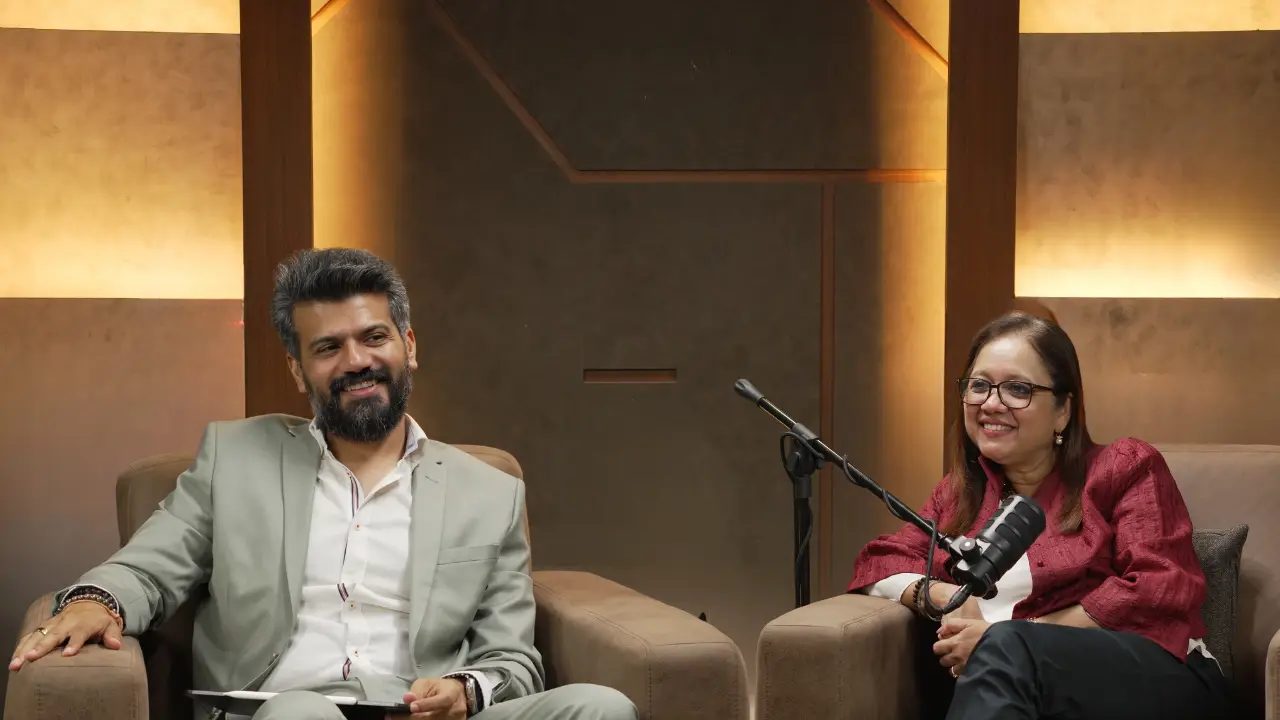

Kalpana Ajayan, Regional Head, South Asia at Women’s World Banking, discusses how India’s financial inclusion journey is moving from opening accounts to ensuring meaningful usage in a conversation with Nikhil Chawla. She explains how Jan Dhan, Aadhaar and mobile connectivity have dramatically expanded access, while millions of accounts remain inactive or underused. The conversation explores why women still face barriers to credit, digital payments, insurance and financial products, and how gender-aware design, trusted last-mile agents and better financial literacy can close these gaps. Ajayan also discusses the gig economy, climate-linked financial risks and her ambition for a UPI-like infrastructure for credit that could unlock greater participation and growth.
Nikhil Chawla: When we talk about financial inclusion, the conversation can very quickly become about policies, bank accounts, digital payments, and numbers. But behind all of that are very real experiences of people trying to save, borrow, insure themselves or simply access the formal financial system. And to help us unpack that, I am joined by Kalpana Ajayan, Regional Head, South Asia at Women’s World Banking. Kalpana brings more than 25 years of experience in financial services, having worked across institutions including Citibank, HSBC, and Edelweiss across banking, strategy, distribution, and customer experience. Thank you so much for joining us Kalpana and it’s absolutely an honor to welcome you to One Big Podcast with me.
Kalpana Ajayan: It’s indeed my pleasure to be here Nikhil. Thanks for having me here.
NC: Thank you for taking out the time and commuting to our studio. As you were mentioning that I was just looking at your elusive career and I saw that you’ve been in financial institutions for over 25 years and your journey must have seen from checkbooks to what used to call it UPI and digital payments today. So what have been your learnings? What has been your experience over the past 25 years? And what led you to change from the biggest financial institution you’ve worked with to Women’s World Banking today?
KA: Thanks. interesting question. Yes, I’ve been a retail banker all my life and the switch to the development sector is now about 4 and a half years old. two parts to it actually. One is in terms of what are the changes that I’ve seen as a banker over the last 25 years. I think what’s been possibly most exciting has been the confluence of digital and technology. Banking always had fairly advanced technology but the use of digital technology to make it accessible to the lowest common denominator of the customer. The speed so that was a given but the speed at which the adaptation happened across the levels was very exciting to see from the sidelines. As to my journey into this I’ve always been interested in working in the development sector but I always contributed as a volunteer in my previous organizations. I would go and mentor the CEOs or help develop strategy etc. in my previous roles but never had the courage to kind of jump into it. I think post-COVID realization etc and when this opportunity presented itself I kind of grabbed it with both my hands and it’s been such an exciting journey the last four and a half years.
NC: Interesting. So you’ve spent several years looking at financial institutions not just as a banker but now somebody who’s really talking to the policy makers building policies and bringing about the change now that you’ve seen what happens on the ground after seeing both sides of the system what is that one big challenge that you think is there that is hiding in plain sight like we all know that but we it’s just hiding right there in terms of financial inclusion in India
KA: Yes of course Women’s World Banking I mean the organization that I’m a part of has been in the space of financial inclusion and specifically for women for almost 50 years. That’s a big and the origin is very much New York but Indian as well because one of the co-founders of our organization is Ela Bhatt, Ela-ben as we know, SEWA and so very micro finance and India in its root. There was an activist from Africa, a Wall Street banker and an activist from India. These were the three co-founders of Women’s World Banking. So in that sense we’ve always been very focused on financial inclusion and given that we are Women’s World Banking the focus on women has been equally high. Now one of the things that I realized being a banker and entering this space is that when you’re a banker and you’re looking at it from a supply side you’re I have worked in only multinational banks in this country not so many not so the Indian banks Indian banks yeah and so you look at it from inclusion from a very broad what what is called a priority sector lending it’s a tick mark And government insists and we are one of the few countries where inclusion is mandated by the government. So an x percentage of your business has to be from the priority sector. But when I moved from development into the development side our team here and globally consists of a lot of people from the industry. One of the big problems that we quickly realized is that how do you make this attitude shift of looking at inclusion as a business case opportunity rather than just a tick mark priority sector lending. Now as a banker if you show me the money I will follow the money and so therefore how do you bring this awareness and and so all the work that we do is in the service of what we call as women-centered design principle it’s our IP and basically it’s very very simple whatever you design be it a product, be it a service, be it a distribution channel whatever it is it is of course in the service of the end consumer the woman that is left out of the formal financial system. But equally it has to make business sense for the institution that is involved in the delivery of the product or the service. So it has to be scalable. It has to be commercially feasible. Only then will the solution not be just a CSR activity but actually something that is replicable, sustainable and becomes part of core business. This is the big shift and the big trend that we see and so as we interact more and more with institutions the financial side this is something that we we constantly bring to the table and I’m happy to say that a lot of our solutions not just in India but across the globe have been accepted by these institutions and are actually part of their day-to-day business which is the success.
NC: Before we go forward, I want to go backward. When you mentioned that it’s been there for 50 years and three people came together to bring this about, what do you think was the reason that they thought this is needed and also how many countries is it presently operating in and what are the changes or policies that you think were made in India but have been used globally?
KA: Specifically Women’s World Banking history. Yes. so these three women actually met in Mexico in a women’s conference and very quickly they realized at that point in time and it’s it’s it’s possibly very telling Nikhil that even now credit and availability of credit was considered one of the biggest barriers for women’s development.
NC: It still is to be honest.
KA: So we still possibly nibbling at the edges and there’s still deep work to be done and so for institutions like us we do see the big role that we can play in that but broadly that was the idea like how do we make women more visible because one of the big issues when it comes to credit as you can imagine is that you need collateral. How do I as a lender take the risk on you as the borrower? I have to have something. and so this whole collateralized lending and globally women don’t have property in their name. be it South America, be it Africa, be it India or Indonesia. and so therefore can we look at other forms of guarantee or provide the instruments that will help the risk appetite of a lending institution to include these women who are otherwise invisible. They don’t have any credit history. They are doing informal borrowing. Their savings is possibly under the pillow. They are savers. They are big. They are , but they are not in the formal institution. So how do I bring about that visibility? So these were the kind of problems. and primarily in the first 40 years I would say we were working with mostly the institutions that worked with this segment which is what we in India call microfinance institutions MFIs. So a lot of the work in the first 40 years were with that of course with some of the banks as well but in the last 10 years at Women’s World Banking in 2017 when we came up with the 10-year plan strategy plan the vision was that, 1 billion women at that point in time we’re outside the formal financial system and how can we as Women’s World Banking bring in a 100 million into the into the system was the dream but I’m happy to in 10 Yes. So by 2027 is when we were supposed to bring in 100 million but I’m happy to report that as of 2025 we have actually hit 118 million women and about 76 million men. So whenever you design for women men are included but the vice versa is not true. That is true right and so that’s been the exciting journey and of course we’ve moved much beyond credit to include of course savings as we mentioned how do we bring her the formal savings payments Nikhil is a big area and so we completely product agnostic it could be savings-led it could be credit-led solution it could be a payments-led solution and increasingly resilience which is like insurance or pension All of these are ways in which you can bring the woman into the into the formal financial system. This has been our journey.
NC: But I also asked you that were there any things or learnings or policies that were made in India and that were used globally later on by you as an organization.
KA: So one of the big exports I would say in the last few years has been something that you possibly have also heard of which is the whole digital public infrastructure DPI. So Women’s World Banking has always been an affiliate member of multiple groups in G20. One such is called the Global Partnership for Financial Inclusion GPFI. And Women’s World Banking has been an affiliate partner of GPFI for many years. When we had the India chair in 2023 when India took over the chairman we were very active in Indonesia. We have a very large presence in India. We do a lot of deep work in Indonesia as well. And when the chair moved from Indonesia to India and we we took over one of the big things was of course DPI and in that specifically the work that Women’s World Banking has done with Jan Dhan accounts in this country was taken as a case study for used by the G20 countries and so it is a I mean we are very proud of the that achievement because it then led to what is the how does the how do you bring about inclusion. Rapid inclusion, acceleration of inclusion using digital public rails. That has been the success of India. What would have taken you 47 years or 46 years, we did it in six years. Because of the Jan Dhan, Aadhaar and mobile, the what we call the JAM trinity, right? JAM trinity. We’ll get there. We’ll get there.
NC: So when you look at India today, how would you describe the state of financial inclusion and what do you think has solved the basic access problem or are we sometimes mistaking having a bank account which is actually being used for it’s like you mentioned Jan Dhan like the number is huge right and more percentage of women are there right that’s right but how many are actually using it it’s very easy to open an account are they actually going and operating themselves are is it being operated by their family members husbands fathers what not Because what happens in India is that yeah first access we get it done and then we don’t get that access later on. We just open the account and it’s just being operated by somebody else. What are the numbers? What is the actual state of affairs?
KA: That’s a good question and in fact a relevant question. because when you look at inclusion globally, there are a few indices that matter globally and are considered standard. One of them is called the Global Findex and India is one of the few countries where we actually have what’s called an RBI Financial Inclusion Index. In all of these when you are defining inclusion really there are typically tends to get looked at from two vectors. What you rightly called access accounts opened in India’s case thanks to the Jan Dhan directive by the government overnight crores of account got opened what is the status right now something around 57 cr accounts exist, that’s about 570 odd million accounts and 55% of those accounts are women account holders now this is a massive story right so The entire approach of inclusion which is opening account for which you need to have a branch so, physical presence. and then that necessitates people to be deployed. Now this would have taken you 47 years to hit 57 cr accounts. What we did was turn inclusion from banking to infrastructure. by building Jan Dhan accounts and a very important one is the Aadhaar enabled biometric. So the whole KYC earlier you had to show up at a branch to show your face and show multiple identities then they would open an account is now as simple as that’s it your thumb impression and you’re able to open an account. So it has to go hand in hand. Along with this whole mobile phone right the digital enabled transaction this has been the oil right in terms of enabling this level of inclusion to your point around what is the state we were at 25% in around 2014 2015 in terms of inclusion we are at 80% in just six years we are now at 89% by the Global Findex. So this is massive. I mean this is so singularly what India has done has moved the global index by several several percentage points kind of catapulted and so on 100 on 100. However, I may have an account. Am I using it? The inactivity ratio in India is pretty high, close to 30% almost 28 to 30% whichever way you look at it, so 30 so what is the Jan Dhan? Why did the Jan Dhan account become very successful? This usage of the Jan Dhan account is equally critical and this was proven at the most critical time in in in our country’s history which was during co during co yes right that whole direct benefit transfer game changer right that 500 rupees month on month to a woman in a remote village in this country made all the difference to that family. Yes, for you and me it may not be significant but for them it was highly significant. and so really the usage of Jan Dhan accounts really went up because of DBT but then what is usage is it just removing that 500 rupees cash from ATM and then using it that’s not really usage because a Jan Dhan account for just for by way of explanation also has many other benefits. It has an overdraft limit. It has a micro credit. It has a micro pension. It has so many other things associated. Nobody, no bank or no bank official is talking to the men or the women than customers because they are just coming. It’s a cash in cash out operation and that’s where they make the money and that’s what it was doing. So our intervention was about how do you make them more aware that this is a full-fledged savings account. This is not just for your DBT. And how do you therefore make use of it? And our endeavor was on twofold. One is on educating the women who are the consumers. But equally the what we call as the banking correspondent who is your last mile delivery person even they are not fully aware of all of that right and so our exercise on Jan Dhan we called it Jan Dhan Plus and it has been quoted by the government even and we worked on several million accounts with very large public sector banks and we continue we just finished the activity with NABARD and the 33 regional rural banks and the whole idea is that this is a proposition that is interesting in itself Could we build better communication and capacity building around it to ensure that there is proper usage? And then you go to work at a policy level. So how does it get tracked? Are banks being held accountable for not just opening the account precisely the point that you made, but are people actually using it for what it is meant to be used for? Are they buying the micro insurance? Are they buying the micro pension? Are they getting an overdraft? Can all of these be the KPIs of banks? And so that’s what we actually did working with DFS also fairly closely and the one policy one that I’m particularly proud of is a big learning from the Jan Dhan exercise was that women trust women, shouldn’t come as a surprise of course but the so therefore the banking correspondents were mostly men like 55% of Jan Dhan accounts are women right can you guess what the percentage of banking correspondents Just take a wild guess.
NC: I hope it’s 50%.
KA: It was 8%. Only 8% of banking correspondents were women.
NC: More than trust. I think it’s apprehension to go and talk to a man.
KA: And given the social and the…
NC: They don’t want to go there.
KA: The context, the constraint that they find themselves in, they are not precisely. Absolutely right. So therefore we were one of the few organizations that were actually called into what was called a BC committee banking correspondent committee and our recommendation was can we at least aim for 30% women correspondents bare minimum yeah bare minimum and it was not a mandate but it was it was a recommendation and several banks have actually started implementing state bank of India Canara Bank a lot of banks have actually implemented it so I’m very particularly proud of this because banking correspondence or versions of it exist in every every geography where outside of the the brick and mortar branch you need to have other delivery mechanisms to to reach the women where she is absolutely and so this work on banking correspondents we actually transferred to Africa we did a lot of work in Nigeria and that’s been taken as like a something that we should look at from a policy perspective here I must commend actually our funders some of our large funders like Gates Foundation etc do a lot of work on agents across the globe and you they also help in ensuring that this cross transfer of knowledge happens across geographies
NC: Before we move to the next one I wanted to understand when you said 8% was the number. What is the number right now has it changed?
KA: 23, I think which is not bad I mean getting there because you said 30 yeah but it’s also from bank to bank I’m I must say I’m not entirely sure of the broader one because it’s primarily driven through what are called corporate banking correspondents I have a view of each bank wise from their annual reports. And I think it’s hovering around 20 plus something right now.
NC: You also mentioned something like people like you and me don’t know what is happening at the tier 2, tier three city level. So I want to make it very relatable and ask you why should someone sitting in Delhi, Mumbai, Bengaluru like you and me worry about digital exclusion happening somewhere else in India? How does it affect me and you or the country overall?
KA: It’s a very good question. It gave me a lot of pause. When we were talking earlier as well about this particular question, right? When it is a problem of an individual, that then leads to lack of access to appropriate products, credit, maybe lacking digital skill, consumer protection. This is from an microindividual level. Right? I take it up at a higher level at a macro level. What does that actually then mean? If there is not enough credit flowing in or savings flowing into the formal system, how would banks lend? How do I make savings into capital that can be deployed? Because only when capital is deployed does the economy grow, right? Talent, how do I have participation? All of this then leads up to a larger economic issue. Now India is a growing country. We are constantly talking about our 7 and 8% growth because it’s a rare kind of percentage in the global scene where growth is so muted right for the last few years actually Nikhil. Yeah. So we are one of those things that stand out from a growth perspective. So growth is assured. Now but how will the growth happen if 50% of your population is kept out of the opportunity to participate in this growth right and here I would include youth as well I would say youth and women when you don’t have access to capital to grow your business entrepreneurship comes naturally again to women but I don’t have a digital or a credit footprint how do do I access credit? Hhow do I run a formalized business? etc etc right? So all of these if this percentage is ignored if this massive opportunity where growth exists is and which is contributive growth to the larger economy is ignored the growth of the country’s economy is under threat isn’t it? So it’s a must if you one statistic for you 70% of our GDP is actually due to internal consumption we are not a very large exporter right, our growth comes from internal consumption now therefore for the economy to grow I need everybody to contribute to the local consumption and for for me to contribute to the local consumption I need to earn more and if I’m going to be kept perennially outside of these opportunities to earn more and to run a business or to in any way contribute. You can imagine the impact broadly on the global economy I mean on the Indian economy.
NC: Interesting. So now that we mentioned that more than 50% you said is like not even accountable and they’re not even part of this economy. We’re going to talk about the huge expansion of the gig economy now because these delivery workers, drivers, freelancers, all of these people or the platform workers and you can see they’re expanding like how Swiggys of the world, Zeptos and Delveries and whatnot. Does that traditional banking system actually work for people like those who are not getting an income monthly because it’s very sporadic. It’s absolutely irregular, not like a predictable monthly salary. How does it work for them?
KA: No, it’s a real problem that you touched upon unemployment or shall we say we spoke about growth. But growth without participation which is growth without employment is possibly what you’re seeing now. So it’s a very real problem and we have a huge population. And so the whole demographic dividend and what was contributing to the growth is coming to possibly not be as much of a dividend, possibly a liability. So what are the alternatives really? So the alternatives really are entrepreneurship which is why the country, the prime minister and the government all of them are talking a lot about MSME. And when we talk about MSME and nano micro entrepreneurs is the segment that we focus on. This whole Lakhpati Didi and these schemes that are being talked about what are these really nicely it’s really about can you can you contribute to the economy by becoming an entrepreneur in two ways one is actual contribution in terms of revenue and tax but the other part is that these entrepreneurs become the engines of employment if a woman starts a business she’s running a business from a home mom and pop store outfit from her home tomorrow when she’s growing, she’s able to employ two more people. That’s at a micro level. Blow it up, right? That’s the larger opportunity and why there is emphasis on entrepreneurship and MSME in this country. Having said that, gig workers are a form of entrepreneurship. You own your time. You’re on a platform. You decide how much you want to earn, how much you want to get out of that, right? So, and gig again has to be seen in a nuanced way. Gig is not the only gig that we know is not the Blinkits and the Zeptos. The gig if you take it to a slightly higher order are the content creators such as yourself who have the freedom to do what you want with what your time with the available time that you have which is also termed as creator economy now because it’s a very huge number. And so you have this very nuanced gig. The big one on the gig definition of course is finally you’re seeing some action. You had to agree on what is a gig. Yes. And then finally you had to agree so platform non-platform and then you also had to then agree on therefore what are the benefits like certainly no benefits for from a we are we don’t have too much of a social security in this country very little except if you were to look like a Jan Dhan proposition etc where there are things that you can buy. Now the government is state government and health is a state matter. So you’re seeing some social security is getting layered but the fact to be called out that gig is without any kind of a social security and ensuring that there is some sort of a social security and it’s not being prescriptive. It’s saying the government along with the platform or with any other kind of an aggregator need to provide a social security to a gig worker is something that we are picking up again and again right it’s a conversation that needs to be had.
NC: Are there any additional barriers for women especially in gig worker economy because this is overall we’re talking about but for women there are many other things that they might face a problem they might have a bank account they might have but do they feel included do they have the same kind of access to these loans and credits and other things as the gig worker.
KA: So one of the work that we did very interestingly we did it with one of the largest platforms in this country Urban Company we did some interesting work with them and where we realized in terms of barrier to earning more income is actually mobility n right so having a two-wheeler is able to get her two more jobs in a week two more which is big for them eight in a month our calculation was close to about I think 6,700-odd rupees she’s able to earn in a month. This is based on the research that we did with them.
NC: With or without mobility?
KA: With mobility she’s able to earn 6,700 odd rupees per month. That is substantial and so for her to get a two-wheeler that’s a loan she has to take. Is it affordable? Is she eligible and the three social norms? Which comes in the way of driving, and all of that, right? We worked on all aspects. We did a pilot in multiple cities and and and working with these kind of platform providers is also very important because can they can financial institutions lend to these women based on platform right I mean can that be one of the considerations from an alternate credit mechanism right I mean etc you can see the fund flow you can see their income all of this the platform can also make it visible So it’s it’s more and more about bringing the visibility of these women for the credit providers. And you are able to do that through digital means. The entire thing is one platform. It’s nuanced and each one requires very distinct approaches but I think it needs to start with the awareness that it does require intervention and what sort of an intervention will make most sense from a demand and from a supply side. so having driving camps for the women. Okay, as simple as that to bring the confidence, build the confidence and ensure that there’s affordable loans from the supply side was one such combination that we did and it worked. The take up was high, the women were comfortable and more importantly tangible results in terms of the number of jobs and the income going up. One example of what is possible on gig. So there are multiple ways in which you can do work from a gig economy. We in India Women’s World Banking believe that that’s a segment that we certainly need to focus on. Digital financial literacy is a very important element. and she is comfortable using the platform to get her jobs but it just stops there. How do you kind of expand? So there is comfort with digital plat with digital technology but how do you extend it to other things digital? Yeah. a product other products that she can kind of and one of the things that we also realize therefore is for women the way you do the digital financial capability building as we call it is very different. You can’t just assume by sending a WhatsApp video she’s going to learn Nikhil. It won’t happen that way. So our experience has been that women typically call it learning by doing. Which means you sit next to her and you teach her a couple of times she’s very comfortable. Then she doesn’t need you and me. She’s very comfortable. And we’ve done this. We’ve seen this happening again and again when it comes to payments and other things that we’ve done the work that we’ve done. So you’ve got to have contextualized keeping her barriers in mind and design solutions and that solution could be product distribution and other capabilities that you need to be doing.
NC: So India’s digital payment infrastructure DPI is something that we have really taken pride in globally. We have seen that a lot of countries have adapted. But where do you think it has really cracked the digital payments in India? really cracked the code on financial inclusion of India especially in rural India or is it simply more transactions and more accessibility but has it really cracked the code and do you think at the grassroot level is it really working and changing bringing the change?
KA: I would certainly say yes. But is there an opportunity to do more? I would certainly say yes. Because I think the earlier point that we made about access versus usage and it boils down to the same thing. So because what we must realize is payments is not just from a UPI is not just providing payment infrastructure it’s actually making her visible because through digital finance these payments she’s building a digital financial record her own identity in a way she identity record tomorrow I am a lender and I will show you that and as a merchant say for instance I’m using I can show you very clearly This is my turnover. This is my cash flow, right? You’re building a credit track record, right? Which is so important when it comes to financial participation, right? And so payments are not just to be seen as in that narrow light of just providing payment. It actually has a much larger role which is to provide her visible make her visible, because it happened to us when we were working with some of the largest apps in this country for a project that we did on payments. We came up with a report two years ago called UPI for her and it was with NPCI and when we did the research we said 200 million women is based on GSMA data 200 million women actually have smartphones and have access to the internet but are still not participating. So look at the opportunity size. So when you talk to payment companies and you say where is your what’s your next big opportunity? Is it this geography? Is it this is it this state? Is it this segment? I would just say one thing. Where’s your next opportunity? Women. That’s it. Now the point is that it’s a segmented one. It’s not all women. So we have nuances in the way you look at women. So we did the study and we came up with a persona and we had fence-sitters who are okay but they need more use cases. So typically we did something for merchants with them. We had another segment which was very risk averse. For them we came up with what are called smaller wallets where you don’t expose your entire banking you create a smaller wallet in which you decide you want to only put 500 rupees and you want to expose that so there’s a there are products around that okay so that’s your you’re nudging them to enter the the space right so you you got to think about solutions that make that’s relevant so when we were working with these merchants some this is a very big names in the T pap in the world and they Even though we have penetrated class 2, class, tier two, tier three towns. Women are still in tier 2, tier three, but she’s invisible to you. Why? Because she’s not on the high streets. She’s running a small mom and pop shop from her home, not on the main street, but from, so clearly she’s not visible. So that whole exercise was very shall we say illuminating to say that this is where the opportunity size is and I think the government is also going about it in a very sensible way recently with the MDR rates they’re keeping these because they realize that there’s a larger social inclusion perspective that the payments UPI is providing and so keeping them because you need to make it affordable keeping it free all of those are barriers for her to enter right and so by keeping ing all of that I think it’s a very sensible kind of approach that even the government is taking right now saying that maybe we should have MDR rates for merchant rates for where you pay for the transaction like you pay for your credit card and debit card for higher order merchants not really for these small merchants etc there has to be a nuanced segmented approach when it comes to this kind of social issues yeah
NC: I’ll give you a personal example. I was buying corn off the road which they kind of roasting and all and I went there and I said do you have UPI? She said I don’t have the vendor next to me has it and I’ll ask her but you have to transfer five rupees more because she’ll cut five rupees off me. So I said why don’t you have it? She’s like because the one that I had was run by my husband or brother or somebody and I never got the money right? So that kind of problem that we see nowadays is something that we really need to understand that these are the problems they don’t want to be there and also then the part that way she said give me five rupees more because she’ll cut it and that’s been happening throughout the day. So all of those things is something that really I think
KA: Such a beautiful point you make because again and again when we speak to women and we speak to women across the world is that in terms of what she looks for, what a woman looks for in a financial service and for her to participate the first thing she asks for is confidentiality. She doesn’t want everybody else to know what is there in a savings bank account. She doesn’t want it. So even if you give her a pass book, she’ll say keep it in the branch. I don’t want to take it to my house because she doesn’t want to reveal all of that. Second is confidence. In terms of so therefore the last mile, the person that she trusts the most is the banking correspondent who tells her how to use it and all of that security is very very critical which is hygiene for you and me but for her it’s absolutely important and the last one I would say is visibility. I’ll give you a funny example. in terms of designing a product keeping a woman’s need in mind versus what you think as a technology company to be a this is like a topofthe- line I’m going to make it completely frictionfree you’re not you don’t need to give me OTP for a transaction I’ve solved the problem for you that’s not the way a woman thinks when we went back with this design principle to the woman she said no I need to know I need to have visibility of I need to know and I need to have control. So control is the fifth element. She needs control over her transactions. To your point about having a QR code in a husband’s name or a brother’s name rather than having it in her name, that agency that she needs to have is very important when you’re designing products for her. So when we went back with his insight to the technology payment companies say oh okay that’s when the penny dropped for them saying that a lot of that inside out versus outside in thinking right when you’re designing and you’re familiar with technology and all things this is this is such an important insight
NC: Kalpana access to payment is one thing what about insurance and savings credit access to all of that how do you think where is where does the problem lie
KA: Especially insurance, I’ll take that first. more and more you and I are subjected to climate realities. So the intersection between climate and financial inclusion is very very large. And women more than men are more at risk of being financially excluded because of climate.
NC: Explain more.
KA: So when a so if typically when we think about climate we think about very large climatic global warming floods, earthquakes etc. Right? But what is also happening and you and you are already experiencing it is that given the temperature going up so rapidly. I’m a street vendor and I’m a woman. I’m losing two hours of livelihood earning on an everyday basis cuz it’s too hot. Summers Yeah. You can’t Yeah. It’s too hot. I can’t do business. So I’m coming later. I’m leaving earlier earlier etc. etc. This is my lived reality as a woman’s street vendor. This you’re seeing play across the globe. Now, how do you kind of ensure that you have you build up the resilience and you have multiple ways in which you do it. One is a product that kind of takes care of extreme weather conditions on a day-to-day basis. There are products called parametric insurance etc. There are several pilots around the world that are happening. Even in India, it has happened. where you say if the temperature goes beyond a certain percentage or degree you design the product in such a way that there is almost a direct money transfer to her account. One way or second you wave the EMI that she’s paying for the loan. There are multiple ways and you construct that hole. It’s called parametric insurance. Where based on 100 years of satellite etc. And what is beautiful about it is that the woman doesn’t need to claim individually the product is structured in a way that it is between the insurance company and the lender and automatically the lender waves it. So you, I’m a woman who’s taken a loan from you. It’s extremely difficult for me to approach you to wave the EMI because I’ve not earned enough. Whereas if I structure a product in which I tell you that automatically if it is 5° plus EMI for 3 months is waived or 1 month is waived that’s a fantastic benefit for you as an end consumer. So that’s one way of building resilience which is a financial product. Another way is to actually do the capacity building. What are the kind of practices that are there? For instance, I grow some kind of a fruit on a rural farm. My livelihood is severely affected because it perishes very quickly. So can I have a cold storage device at a community level? I can’t afford to have one but at a community level can I work with the community office like a panchayat office etc. build a cold storage which can be used by many all the women in the community so that I can earn so that’s one way individual practice also what are the kind of things that are required can I I’m a I’m a goat farm a farmer in Maharashtra how can I protect the the the goats like can I have some sort of a roof that will ensure that they don’t die etc etc so there are practices that are needed to be provided. So one is product, one is this the big one in all of this is health and what are the kind of products that are relevant from a health point of view because if I fall ill then automatically my ability to earn livelihood. yeah. So these are the various ways in which climate plays a big role when it comes to the immediacy and therefore the need for having products and distribution systems etc. that takes care of the lived reality today. So micro insurance, micro pension all of these play a very very critical role. What is the big solution from the supply side? Now how do I make it affordable which is the biggest cost element in all of this when you’re when you run a business you’ll know the distribution is the and especially in financial product the what you call the financial intermediation that’s the biggest cost right how do I therefore make a design a product which is sustainable for me a lender or an insurance company etc I need to come up with a distribution system that makes it high-touch but low-cost. And so you need to be very innovative in the way you look at the distribution system. And one of the ways that we came up with was the women in the community. They are the best. They are the women from the community who are already possibly doing what’s called a banking correspondent job. Can you make her an insurance sakhi, Bima Sakhi as we call it. Can she talk about these kinds of products? It’s added income for her incremental effort because anyway she’s meeting you along with saying this she’s also telling ABC D and E as well. so you got to figure out you got to crack the distribution cost. The minute you crack that then it makes business sense for the insurance company or for the distributor be it whatever be the intermediation model that you follow. So this is a very important aspect that you need to think through and those are the kind of solutions as I said the women centered design principle right so you got to figure out those kind of solutions. As to credit same problem how is a credit priced right based on my perceived risk I see you a woman unsteady income so therefore I price; no credit history most of the times yeah no credit history uneven income streams no collateral nothing yeah right so therefore you’re a higher risk for me therefore the way I price your loan would be much higher right how do I make it affordable right yeah because it’s a vicious loop and so right now we are seeing thanks to what’s called the self I don’t know if you’re familiar with it but this whole self-help group is a massive movement in this country over the last 20 years in fact Ela-ben is one of the proponents of of self-help group in this country and the government has done a fantastic job honestly for the last 20 years to build an infrastructure around self-help group and a few self-help group becomes a village organisation a few village organisation becomes a cluster that whole infrastructure by which you administer so the framework is there people have been placed capacity has been built but what is flowing through and is that relevant So how the self-help group really worked was that the group of 20 women they are they provide the guarantee right so each one guarantees for the other and so therefore you take a loan of 25,000 and you distribute it among the women each each women does not get more than 25,000 maximum of 25,000 rupees and it’s that whole process through which she’s able to access her first credit. So invariably in the rural market, you’ll find that the first credit is through what’s called a group loan which is through the SHG. Now banks have figured that this is a great what’s called a joint liability group. So they are able to assess your risk not you as an individual but you as a member of the group and therefore I’m willing to take the risk and I’m lending you the money. Excellent. Everybody, every bank has now built its entire rural portfolio based on JLG. Now what next? I am a woman. I have started with this 25,000. I have started building a business. Now I need more. I need at least one lakh. I need working capital. I need money for inventory. Not available. If it is available, it’s at exorbitant rates because again the same problem. You’re willing to take the risk as a group but me as an individual, no risk appetite. So what are the kind of things that you need to build systemically which will ensure that she is a proposition worth lending to right and so that’s got to have a very systemic approach on credit so you got to do multiple ways so are there products that suit her need can I have it affordable what makes it affordable can I have a distribution system that caters to that what are the kind of instruments there are something called credit guarantee And government of India has set up in the under the ministry of MSME credit there are three such institutions in this country. One of them, one of the largest, is what’s called the CGTMSE, Credit Guarantee Fund Trust for Micro and Small Enterprises. What is their role? Their role is to actually ensure that you and the lending institution are actually lending to the customer that needs the money at an affordable rate. Right? And so I’ll say I’ll take the risk of the so you please if something happens if there is a default I’m going to cover that I provide the guarantee it’s a very important instrument right and so these are the kind of ways in which you and so either the credit when it is available your question which is the biggest problem right now credit is available lots of credit is available but is it affordable exactly yeah so it’s at like 24 28% how can I afford it Right? And there is a larger problem in terms of source of cost of funding and things like that but a risk I have to price the risk and so I can’t blame this the supply side as well because so how is it that I make the supply side see her as a credible lending opportunity. This is where alternate credit scoring mechanisms, making her visible, all of these are very very important for me to ensure that they see her as a credible risk. So that’s called responsible lending. I also have to make her responsible for borrowing. So does she know what a CIBIL score is? Does she understand the implication of a CIBIL score going below? One of my happiest moments is when I go and visit these women in interior Bihar and they say, CIBIL score 700 right I mean proud thing right she she’s aware what is the not just the score but the implication of the score right and so you got to build that awareness and the formalization and why should it formalized. Why should I pay a tax all of this has to be explained on this side so you got to work at a systemic level you got to work both on supply side and the demand side and so from a credit perspective I think that’s the largest problem as I said credit is available but how do you bring the various actors together credit guarantee to lenders.
NC: What you said was Jan Dhan Plus exactly what that’s right a plus part
KA: That’s right you bring in everybody to kind of make it work for everyone right that’s when it’ll be sustainable that is when it will be scalable.
NC: Brilliant now you spent years watching India’s banking system evolve and you’ve also seen the change and the paradigm shift in the middle class of India. Now the middle class of India, it’s not just about the bare necessities or making life comfortable. They also want to experience luxury. They want true business class travel. They want to buy a luxury badged car. All of that is happening right now. So what do you think is the biggest financial challenge for the upcoming new middle class in India? And are we talking enough about it? I’m one of them to be honest.
KA: It’s a good question actually. I would say financial literacy I would think is possibly one of the largest. It’s only now it’s part of the school curriculum and even now it’s not fully implemented. When I borrow, do I understand the implication right? Do we know what a credit card interest is?
NC: We all want the Infinias and the most expensive cards but are we ready for it ?
KA: You have many loan instruments but the credit card has one of the highest rates of interest 36% 38% nobody talks about it and sometimes we take personal loans which are lower interest 14-15% to pay the credit card.
NC: I know such people, they bought shoes, expensive shoes on credit cards and then they’ve taken out a loan to pay credit card bills. They’re like right what world are we living in?
KA: So the point is therefore literacy means becoming more aware in terms of what are the instruments available how can I still have aspirations to have aspiration and to have young India have aspiration that’s how consumptive credit grows that that adds to the fuels the economic growth of the country so it’s very much needed but at what point does it become irresponsible and and that will only come when you are financially literate true right And so I think literacy is a very very important aspect. Second of course is the non-traditional products that are now becoming almost stable. given the and it’s a cycle given the lower rate of interest that a savings bank will give you very naturally people are turning to capital markets. Naturally. But do we fully understand the risk of a capital market? Do we understand why a SIP needs to be maintained for X? Do we understand the capital-gains taxation that is involved from long-term short-term? Do we understand all of that? So exposure to capital markets is important but it’s in wealth management we always say it’s about portfolio management. Portfolio management. You need to have a certain percentage. Diversification is so critical. Yes. So all of this is something that we must understand when we have the aspiration to grow and it’s very natural and that is what is fueling this country but side by side we should also know what is responsible borrowing and what is responsible participation in the capital market. I think it is our responsibility to equip ourselves with that knowledge and grow because the opportunity is immense. Yeah.
NC: That brings me to my next question which is is there something we have actually normalized as spenders as Indians how we deal with money whether it’s informal borrowing lack of adequate insurance difficulty getting credit or simply not having the right financial products as we mentioned that it is so important to understand that you think needs policy intervention in terms of the way we deal with money.
KA: I think consumer protection is one area and I I failed mentioning I brought it up but I didn’t complete the point on the Reserve Bank of India’s Financial Inclusion Index. is a one of the few countries which actually has a Financial Inclusion Index but the the thing that is unique about RBI’s Financial Inclusion Index is that we spoke about access and and usage the twin engines but there’s a third element to RBI Financial Inclusion Index which is quality. And what that so all three are equal in fact higher weightage for usage and for quality because yes you bring you open accounts you ensure that they use it but is it being is the product delivering what it is meant to do. So, the point around complaints about quality consumer protection, do you know where to raise a grievance? Do you know how to raise a grievance? Do you know what your rights are as a consumer? All of these are very very important when we take this massive scale of population that is possibly entering the formal financial and a very scary digital financial space as well. How do you actually I think there is a lot of conversation and attention from policy makers and from the ecosystem players but we are one of those who certainly believe that there’s so much more to be done on that front so the normalizing the the lack of awareness normalizing when you actually look at the number of complaints that RBI receives. Women don’t participate enough and by the way that’s global so yeah so why it’s not that women are not using but why are they hesitant so again social norms various ways terrified what the family is going to say. So there are many things that come in the way of barriers so how do you make it okay for you to raise your hand and say I’ve had a problem
NC: No one of my aunts got scammed through UPI and all it took her three months to tell. She was so scared that what will we think of her when I just gave away 50,000 rupees to somebody without even knowing. But I was getting calls and they told me that her son was in trouble and she had to transfer money and whatnot. She couldn’t tell us for 3 months. And then I had to go and talk to people and so many things. But that’s what you exactly pointed out. The fear of coming out and saying and complaining about it. It’s just too sad. Now that brings me to a question. If you could redesign one part of the financial system to make it work better for the way Indians actually live and earn today especially for people with irregular incomes. What would that be?
KA: I think can I have a UPI moment for credit?
NC: That’s a good one. That’s what I want
KA: Because what UPI has done for payments and there are many experiments and pilots by the way. That’s yeah but it’s all being in siloized manner but typically that’s what when UPI took everybody’s talking about UPI now but it took them seven years to kind of to become what it is right it and so therefore I think that’s what is required because I think credit is such a critical fuel for growth of this and especially the MSME segment and so could I have a UPI for credit solution I think that’ll be great.
NC: So now let’s end with the solutions. If you had the government, banks and the broader financial ecosystem sitting around the same table, what are those two or three things that you would want to make financial inclusion more meaningful for the next generation of Indians, especially women I would say in your context.
KA: I would say two things. One is that if you don’t know the size of the problem, you can’t design for the problem. And so in the development sector, we call it the gender disaggregated view of things. So for instance, the RBI Financial Inclusion Index does not have a gender element. And well, so that’s one straight away. One straight away. Yeah. So therefore and we’ve seen this in play wherever we have created a metrics or a tool in which you’re able to disaggregate the data based on gender the problem becomes very clear. We designed a tool for NABARD called the Gender Intentionality Scorecard and we actually showed it right down to the branch. They say 60-70% of my customers are women but less than 23% were actually having credit. Now there’s your opportunity. That’s 40% staring at your face. Could we do something about it? Right? And so and which branch right down to the branch. Right? So if you have to be, the gender disaggregated view is a must from a policy perspective. The second one I would say is what we are hearing again and again and what we are also seeing and also a part of the larger solution is a collaborative approach. so Women’s World Banking can play the role of an ecosystem aggregator of sorts because there is a lot of work there is we are also in a in a in a world right now where there is a lot of political will and that’s very hard to come by women are the most important vote banks and so therefore are able to kind of and and the government re re realizes recognizes and so there is a lot very good political will. Now these are coming together of very important kinds of tailwinds but how do you take it to the next level? It’s only when you have philanthropic capital government and state actors and players like ourselves who can do the ground work all need to come together and come at design and derive solutions. We’re seeing that at play now and I think more of that deeper work around that is possibly what is required to kind of take us to the next level.
NC: I think I’m going to ask you the last question now and that is a question that I ask every guest of mine and that question is what is your one big dream for the country? One big dream for India at a personal level and at an organization level. What do you think?
KA: As I said I think the UPI for credit was my one big dream. I would say that’s a big dream. I think that’s a really big dream and for me personally to be a part of this exciting journey in a country like India I think to see actually the the index move was just is just so satisfying right and to actually actually be a part of solutions that are scalable and and to create that impact at scale has always been my dream Nikhil and I’m living the dream honestly
NC: You’re living the dream to be honest like for the past two decades, crazy. Thank you so much, Kalpana. It’s a pleasure talking to you.
KA: Thank you so much. Thank you.
Watch the full podcast here.