
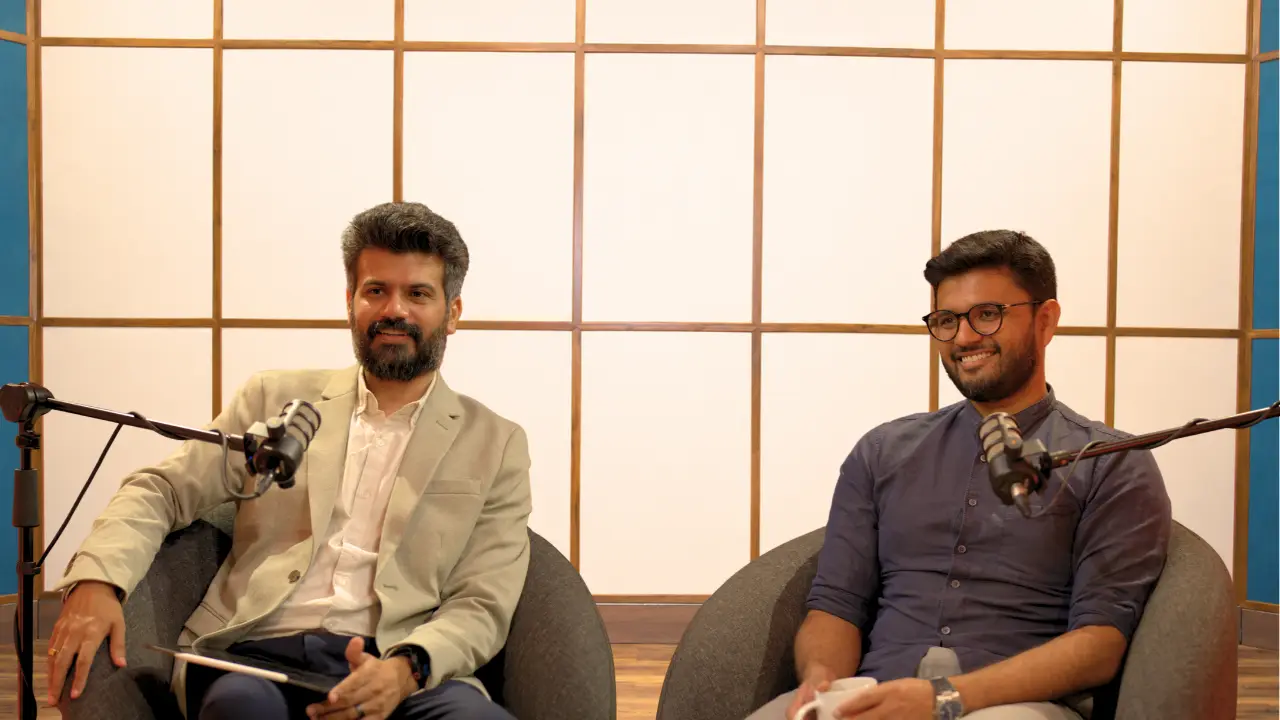

When Akshit Bansal founded Statiq in 2020, electric vehicles were still a niche market in India, and public charging infrastructure was limited. Building a reliable charging network meant addressing challenges in technology, manufacturing and customer experience. In this conversation with Nikhil Chawla, Bansal explains how Statiq developed its own hardware and software, expanded its charging network and worked towards a more integrated charging experience for EV owners. The discussion moves to the wider challenges facing India’s EV transition, including gaps in domestic supply chains, charging economics and the need for electrification and renewable energy to advance together. Bansal also reflects on Statiq’s expansion into international markets and why India must develop the capabilities to build globally competitive technology companies.
Nikhil Chawla: Ask any EV owner what they worry about most. It is the moment the battery drops below 20% and they start wondering whether the next charger will actually be working or not. That worry has held back electric mobility in India for years. My guest today decided to fix it. An electrical engineer by training, he founded Statiq in 2020, when EVs were still a niche and public charging barely existed. He took on the hard, capital-hungry business of putting physical infrastructure on the ground. I am Nikhil Chawla. Welcome back to One Big Podcast. Akshit, welcome to the show.
Akshit Bansal: Thanks a lot, Nikhil.
NC: I wanted to understand: when you leave home with your phone, is the battery at 100%, or do you live dangerously with it below 10%?
AB:I think it is mostly below 10%.
NC: Wow. Why is that? You are providing charging infrastructure for the country and charging everybody’s EVs, but your own phone battery is always low.
AB: I think I am busy solving problems for the world.
NC: That is so nice of you. But what happens if your phone battery is dead or low? People think you can only activate charging through the phone.
AB: You can do it through RFID. We have also launched a feature where you do not need an app or RFID. You can just plug in the car. The charger recognises your vehicle and starts charging. It is called Autocharge.
NC: I would love to get a demo of that and get it installed in my car.
AB: Absolutely.
NC: You were an electrical engineer yourself, right? Why Statiq?
AB: I think being an electrical engineer and starting Statiq are linked. I got exposure to EVs in 2014, when I was leading a team building solar vehicles in college. I realised that India had a lot of cities with high levels of air pollution and a very high oil import bill. EVs were inevitable.
NC: So you knew that, eventually, they would come in?
AB: I thought so.
NC: What about the solar car you were working on? Did it ever make it? I have never seen a production solar car being used. I have tested one of the Mercedes prototypes: an EV with a solar roof that added more range. That is about it, correct?
AB: I think you have put it right. It is good to have solar panels on the car, but they do not add a lot.
NC: Correct.
AB: But they add a lot to the cost.
NC: Of course.
AB: So it does not make commercial sense.
NC: I believe so. You mentioned 2014. Were there any EVs in the country that made you think about this? Or were you just getting news from the Teslas of the world and thinking, perhaps in India someday?
AB: Interestingly, we had a car when I was young that was an EV. It was a REVA, the first Indian electric car. My father had it.
NC: Lovely. That became the Mahindra E2, or something like that?
AB: Correct.
NC: That is great. So, from 2014, you had figured out that this was what you wanted to do in life?
AB: No, I just got exposure to EVs. I had no idea what I would do in life. I was experimenting and doing random things, and I stumbled upon this.
NC: It was 2020, if I am not wrong, when you started Statiq. Why 2020? The world was really pausing because of the lockdowns and the pandemic. The country was shutting down, the world was shutting down, and there was hardly any mobility. That was when you launched Statiq.
AB: We were figuring this out much earlier. I started working on it in 2019 with my co-founder, Raghav. We formally launched the company in January 2020, and, luckily or unluckily, COVID happened right then. Luckily, because it gave us time to do our work while nobody else was doing anything. It gave us a head start, and we used that time.
NC: Were there any lessons from that? You could not really test the market in 2020 because there were hardly any EVs or any mobility. What did you learn from that lockdown period? You were setting up, but were you getting feedback? Were people able to use the chargers?
AB: I think the first lesson I learnt was to survive, which is the foundation of building a company. If you can survive COVID as a company, as a start-up, build a team and motivate them to work, there is nothing like it. That was my learning during that time. We built a product. It was not good, and we tried to test it with whatever we could. But the main lesson was about how to build a company and survive.
NC: True. And hats off to you, because there is one company I can openly and publicly vouch for on camera: if I know there is a Statiq charger, I know it will work. That is one thing I can vouch for.
AB: Good to hear. Also, to tell everyone, this is not paid.
NC: Of course not. I wish I could get free charging for life, but that is one thing I have already requested. What was the hardest part of starting and building this company, spreading across different PIN codes and making sure reliable, fast charging was available across the country?
AB: I think the first thing is having the right resources. It starts with getting capital. Then it is about the right team. The third thing is obsessing over the customer and what they need: understanding them, empathising with them and building for them with the resources you have gathered, which are the team and the capital. That is what we have done. We have been customer-obsessed in building this.
NC: It shows in your app and everything.
AB: We figured out that people need three things. One is a large enough network: they want a charger as close to them as possible. The second is that, if they find a charger, it should work. The third is that it should be affordable to charge, because that is one of the reasons they are shifting to EVs.
NC: Of course, speed matters too. People want charging that does not require them to sit for eight hours. Statiq is one charger that charges your car really fast. It is not like some other service providers that take hours to charge your car. I feel that works in your favour. Why the name Statiq? I love the name. The “iq” at the end also makes sense. Who decided on it? How did you stumble upon that name?
AB: We were randomly scribbling on a notepad, thinking about names. Statiq sounded good, but there is a logic to it. Static electricity is a build-up of charge. You rub your clothes, and there is a build-up of charge. The “q” we put at the end is also a symbol for charge in physics. That is why we used it.
NC: Very Sheldon Cooper stuff. Thank you. Why build your own hardware instead of getting it from elsewhere and installing it? What made you decide to build the whole ecosystem? It is a good thing; I am not questioning it. But it is not a route everyone would take.
AB: It is very hard. It is hard tech. But we realised that, if we wanted to deliver a good customer experience, we needed to control the hardware, because charging starts at the hardware level, then involves software and connects with the vehicle. We did not find many reliable chargers back then. Service support had not been built. The unit economics did not make sense for us either, because once a charger broke down, there was a lot of downtime, and the costs were not clear to us. So it made business sense. We wanted to be customer-focused, and that is why we wanted to build and own the hardware.
NC: Do you remember where you installed the first charger?
AB: I do. It was near Sikanderpur Metro station in Gurgaon, somewhere there.
NC: What is the current number of chargers you have across the country?
AB: We have more than 7,000 chargers across the country.
NC: That is brilliant. From one to 7,000 in seven years. And you are always expanding, right? We were talking about your expansion into different hotel chains and other places.
AB: We are expanding into different countries too.
NC: Wow. Which countries are you in right now?
AB: We are in the Middle East. We have also set up an office in Dubai, in the UAE, and we are exporting our services to Saudi Arabia, certain other Middle Eastern countries and Southeast Asian countries. We have one more office apart from India, which is in Dubai.
NC: Are you facing any geopolitical problems because of what is going on in the Middle East, or is it fine for you?
AB: The market has slowed down, but there is also greater understanding. I think people are now more informed about, and inclined towards, EVs because of energy security and what has happened globally. Dubai is not oil-rich anyway. Within the UAE, Abu Dhabi has most of the oil. Dubai wants to do all the new things, and the entire Middle East follows it. That is what I have learnt.
NC: That is true. Do you think the EV market is still very nascent in the UAE? Whenever we travel there, we see the most exotic cars, and they are not EVs: the hypercars of the world and everything. The G-Wagon is just another car over there. Do you think there is demand for EVs?
AB: There is demand for EVs. Specifically, all the expats living in Dubai are on EVs, actually. A lot of taxis are EVs too. In fact, there is a government push to go electric in Dubai. They are incentivising taxis to go electric.
NC: Wow. Who would have thought? I ask most of my guests this question: when we say “Made in India” or “Make in India”, how much of Statiq is really made in India, and how much are you importing? Are the chargers and infrastructure completely made in India, or is the whole ecosystem still not in place?
AB: We build both hardware and software. The hardware comprises the AC and DC chargers we make. At the component level, our chargers have the highest proportion of Indian-made content in the country. To give you some numbers, our AC chargers are about 85% Indian.
NC: Most of it, anyway.
AB: Yes. And the DC chargers are more than 70% Indian.
NC: In terms of competition, what are they at? Fifty per cent?
AB: Around 50%.
NC: Wow. How did you manage that if the competition could not achieve it?
AB: I think that comes from our deep expertise in engineering. We have figured out the local supply chains and how to engineer a product that fits those supply chains in India while still creating a great product. It has more to do with engineering than anything else, and we have a great engineering team.
NC: Where do you make it? Where is the manufacturing hub?
AB: It is in Manesar.
NC: You are producing chargers in huge numbers. Are the products you install in the UAE and other markets also produced in India?
AB: Yes.
NC: Lovely. So, make Inn India for the world.
AB: I want to touch on that as well. The idea, and my vision, is that we really want to be a global brand.
NC: I have been asking everybody the same thing: when do you see an Indian company on the global stage, where you can proudly say, “I was in the US, the UK or the UAE, and I saw this”?
AB: That is what we want to do. We have already started. I was in Australia last week as well.
NC: Congratulations on that.
AB: We want to enter that market. The idea is to put India on the global map and have it recognised globally for its technology.
NC: When you install a Statiq charger, your logo does not have anything to do with India. Are you planning to add a little tricolour or something, so people can proudly say, “That is Statiq from India?”
AB: We could do that. I have never thought about it. But for people buying in other countries, it is not about India. For them, it is about a great product. If we can serve them with a great product, I think the recognition will follow. Everybody knows where Apple is from, right?
NC: Absolutely. And it is lovely that they now make products in India.
AB: Yes.
NC: What is the hardest part of manufacturing chargers in India? What was the absolute hardest part, where you had to break the mould and get it right?
AB: The hardest part was that this was a new technology that had only emerged in the previous five, six or seven years. There was no workforce, no talent and no supply chain for it. We built it from the ground up. We educated and trained people and sorted out the entire supply chain. I think that was the hardest part.
NC: I want to ask about something I really vouch for when it comes to Statiq: how do you keep all the chargers reliable across the country? I have never come across a Statiq charger that was not working. I can go there with confidence, just as a petrol or diesel car owner can drive to a petrol station knowing they will get fuel. With other chargers, I have always faced problems. I have to call customer care. Sometimes a charger is not working or is damaged, or people have damaged the infrastructure. With Statiq, I know I can reach it, even at 5%, and get charged. How did you manage that?
AB: I think that is our USP. It is a combination of hardware and software integration. First, it is a better-engineered product, so it breaks down less often. But if it does, we know how to fix it quickly, because everything inside the charger is digitised. Our back-end system tells us which part is broken, and our engineer goes there and fixes it in one visit. We have now added AI-based predictive analysis. Based on the history and how the parts are performing, we know what might break down. That helps us address downtime and reduce the time taken to resolve a problem.
NC: So the turnaround time is much shorter?
AB: Much shorter. One-third of our competitors’ turnaround time.
NC: You mentioned something important: you are using adaptive AI and generative AI to predict things. That is very Minority Report: you know an error might occur, and you already have a part ready for it. How long have you been using that, and how does it work? It would be good for the audience to know.
AB: We have been doing it for the past year, so not for very long. But we always had the data because the chargers were digitised. Now we have added intelligence on top of that data. We are making sense of it to figure out what was breaking and where, because there could be issues related to location too. In Rajasthan, some parts break faster than in Himachal Pradesh, for example. We had all this data. We are now starting to make sense of it and figure out what is breaking, where and under what kind of usage.
NC: Are you protecting the chargers from physical damage by the public? You see a lot of government chargers that have been broken. People throw the cables here and there. Some Statiq chargers I have seen in public spaces have CCTV and those systems. Do you work on that? Is somebody monitoring them, or is AI monitoring whether a person using the charger is breaking the wire or trying to steal it?
AB: Vandalism has happened to us in the past as well. But we have now set up CCTV across all our chargers, and there is 24/7 monitoring. It is not AI-driven right now. There is someone monitoring it.
NC: But there is an additional cost and infrastructure requirement, right?
AB: Yes.
NC: How have you absorbed that?
AB: We are absorbing it. I think we are here for the long term, so whatever needs to be done, needs to be done.
NC: That is true. As I mentioned, I have never reached a Statiq charger that was not working. Are you from Delhi?
AB: Yes.
NC: There is a charger in Defence Colony Market. It works, but the MCD locks the entrance at 9 pm, so you cannot reach it. I made a video about it. It was frustrating because I knew the Statiq charger worked. I was at 2% battery, not on your phone, but in my EV, with very limited range. It was already in crawl mode. I reached the site and could see the chargers working, but the area was barricaded. I was trying to find someone, and nobody was helping. I was disturbed that somebody had put so much effort into installing around six fast chargers, and the public could not access them. There were other people waiting too. Has that problem been fixed? This was six months ago. I am not sure, because they barricade it from about 9 pm to 9 am.
AB: Was there a cage around the charger?
NC: Not a cage around the charger. They put up a barricade, put a rod through it and lock it, so you cannot access the chargers. It is in the central park, at the roundabout.
AB: I understand. I am not sure about this exact charger, to be honest.
NC: I have a video of it. I will show you after the show.
AB: We have a team working on the ground to fix any such issues. If we receive a complaint, the team works with the local authorities to resolve it. In fact, we also monitor utilisation patterns at the chargers. If a charger is not being used at night, we can identify that there may be an issue. Our team might have proactively worked on it.
NC: That is great. When you talk about setting up a charger, how long does it take, from the factory to choosing a location and getting all the approvals? You said you work with local authorities. What is the process, and how long does it take?
AB: Manufacturing a charger happens in parallel with finding land. We continuously assess demand and manufacture the chargers. Finding land, getting the agreements signed and setting up a DC charger will usually take four months.
NC: Four months?
AB: Yes.
NC: Is that for public infrastructure? If someone is installing a charger in a shopping centre, is it faster because they want their customers to have quicker access?
AB: Shopping centres are much faster.
NC: of course, because they can take the money, find a place and set it up. When it comes to the government, there are a lot of channels to go through to get access.
AB: I would not distinguish between a shopping centre and a public site. I would say that, if you need a separate electricity connection, that will take time. If the shopping centre already has spare electrical capacity, you can do it quickly, within a month.
NC: Within a month. So one month is the bare minimum to set up a charger, correct?
AB: Correct.
NC: How diverse is your network in Delhi right now? What is the number of chargers in Delhi?
AB: In Delhi, I think we have more than 500 chargers.
NC: Great. Do you have a target for the number you want to reach by the end of the year?
AB: We are looking to go beyond 10,000 chargers by the end of this year.
NC: So you are at 7,000, with another 3,000 to come. Wow.
AB: EVs have really scaled up in the past six months.
NC: They have, no doubt about it. With ethanol and other developments, it has become a no-brainer, to be honest. You have mentioned since the beginning that you wanted greener mobility for the environment. My argument has always been that I do not believe in that. India is not like the Nordic countries, where energy is generated from renewable sources. We are burning coal, so the exhaust has simply shifted from the cars to the factories. We burn coal to produce electricity. I have also seen EV chargers powered by diesel generators. How do you take a stand on that?
AB: I think there are several things to consider. First, India actually has 45% renewable energy. As of today, that includes solar, wind and hydro? That is a great number.
NC: It is.
AB: And any additional energy-generation capacity being installed is renewable. India is leading the International Solar Alliance, so this 45% will go up as a share of the total. Second, we need to work in parallel on using the energy we are adding. We cannot wait until we have 100% green energy and then start electrification. It is a parallel journey. Third, the efficiency of converting energy into motion is much higher in an EV than in an internal combustion engine vehicle. Overall energy efficiency is higher, and we are moving towards more green energy. These things need to happen in parallel.
NC: We jumped straight from petrol and diesel to EVs. Most countries transitioned through hybrids. We did not really get that opportunity. There are some hybrids in the market now, but they are not really mass-market. Do you think that was the right thing? We were already late to the EV market. Or do you think there should have been a transition?
AB: I think whatever the market decides is best for the market. I am no one to comment on that. India has always done this with multiple technologies. It is slow to adopt them,
NC: But then we jump on it..
AB: And then we jump on it. That is what has happened.
NC: What did the funding downturn teach you about growth versus unit economics?
AB: I think it has been important in building the company’s character. Just as hard times in your personal life build your character, they help build character in a company. You figure out what is really important and what you should not do, which is also important. We have learnt that, and we have figured out how to be profitable as a company. As of today, we have broken even, and we are operating profitably.
NC: Lovely. Do you think public charging is sustainable and can be a standalone business today and going forward?
AB: It will be, because utilisation is increasing. The same assets are being used more and delivering more charging. Most of them are revenue-generating assets.
NC: I am not sure about others, but my problem is that I need 15 different apps to charge my car. When can we have a unified app? Does the government need to step in? Manufacturers are trying. Hyundai and Mercedes, for example, have apps that let you see all the chargers. But you still have to load the wallet and do all those things. Yesterday, I found another charger in a shopping centre and had to add money to the wallet. When I tried to start charging, it did not work. I called them, and they said I had to add ₹2,000 first, even if I only wanted a ₹100 charge. As a consumer, I am still unsure which app to have. And you cannot have Statiq everywhere, right? You would agree with that.
AB: I would disagree.
NC: I wish it were everywhere, but there are places where it is not. I was at an office in Noida, and it did not have Statiq. It had another charger. I had to load the wallet, and it was the first time I had heard the company’s name. I am not naming it here. They were prompt: they called me back and explained how to add money. But for a consumer, it is a mess. Can you bring a solution to that problem?
AB: At the beginning, I said we were customer-obsessed and thought from the customer’s perspective. We realised long ago that there needed to be a unified platform.
NC: Acquire all the companies, please.
AB: We are doing it in a smarter way, without that capital outlay. We are aggregating them on the common platform we have built. You can find 70% of all public chargers in India on the Statiq app today. You can find them, get real-time information, book them and make the transaction.
NC: Can you pay through the Statiq app?
AB: Yes, at all of those chargers. It is a very good experience, and the idea is to take it to 100%. It is not just about the app; it is about creating a unified experience. You can be a customer of one platform and do it all. In fact, the Hyundai and Mercedes apps you mentioned are also powered by Statiq at the back end. The charger aggregation technology we have built is not just for our app.
NC: So it is a white-label app that you pass on to others?
AB: It is not white-label. It is a back-end solution.
NC: A solution, okay.
AB: The front end is theirs, but the entire back end is powered by us. We are not restricting this aggregation technology to our platform. We want it on all platforms, so customers can find these chargers through any platform. That is why I keep saying we are really customer-focused.
NC: That is for sure. I agree, because I use the app, and it is one of the best to use. But if I want to charge a Tesla, would it work with a Tesla charger?
AB: No, but we have installed Tesla chargers. The Tesla Superchargers you see are installed by us, almost 60% of them. But Tesla is not open. If they are listening to this podcast, we would love to integrate.
NC: You would love to integrate. You said I can use other charging providers and pay them through your app. Do you get any money from that? If I spend ₹2,000 at ChargeZone through Statiq, do you get a cut?
AB: Yes.
NC: That makes sense. Otherwise, it would not make sense.
AB: We are not a charity. We are a for-profit organisation. Even though we are customer-obsessed, we figure out a way to make money.
NC: Of course. And not to forget, you are a Bansal. I have already asked about the many apps, networks and interoperability. What did taking Statiq to the UAE and other markets teach you about going international? You are also in Nepal.
AB: Yes, we are.
NC: We should consider an international market and talk about it. What did you learn from Nepal and the UAE?
AB: The opportunity for EVs is really big globally. We have seen that a lot of countries need to be energy-secure after what has happened recently. A lot of people are looking beyond China for a “plus one” partner because of geopolitical reasons. India becomes a natural addition to Chinese companies, and we are the frontrunners in India. We realised that this is a very big opportunity for us to go global. But I have also learnt that there are a lot of risks, and you need to be smart about how you win these markets. You have heard the story of the hare and the tortoise. We want to do it the tortoise’s way: win market by market and build momentum. That is what I have learnt.
NC: What is EV penetration like in Nepal, where you have set up?
AB: I am just guessing right now, but it should be more than 50% of all new cars sold today. That is mainly because of the import tax on vehicles. On ICE vehicles, it is usually up to 200%, whereas on EVs it is around 50%. So it is much cheaper to buy an EV.
NC: I think you are the right person to ask this question. I have been meaning to ask it for a while. For perhaps the past hundred years, the world’s vehicles have depended on Gulf countries for fuel. Now, with EVs and lithium-ion batteries, that dependence is primarily on China. When do you think we will have something we can call our own? We have found reserves and so on, but every EV would still be dependent on China in a way, right? Is that true? Have we just shifted power from the Gulf countries to China?
AB: China does not itself have a lot of reserves of all the critical minerals that go into batteries, but it does the processing. It is a matter of when other countries realise this and start building those capabilities. Governments need to invest, push and incentivise industry to do it. China already has scale in battery processing, which is why it is doing it well at a lower cost. I think China does not have a natural advantage in batteries; it has created that advantage. Others need to learn from it. I do not think being the first mover is necessarily an advantage. You need to be the last mover in an industry, or the first to scale. China is always the first to scale. It scales up, brings down costs and improves the technology. That is what it is doing with batteries as well.
NC: I was at the Munich motor show last year. There were four or five German players and 30 Chinese players at a motor show in Munich. I was a little taken aback. They have entered the global market with their EVs; there is no denying that. If India did not have all those restrictions, I think it would have been very tough for Indian players to compete on price with Chinese EVs.
AB: Correct.
NC: I assume you drive an EV yourself. Which one, and why?
AB: I drive an EV6.
NC: Nice. One of the best-looking EVs, anyway.
AB: That is the reason I drive it.
NC: The looks, and of course the range?
AB: Of course, the range, but more the looks.
NC: Let us assume it is 2047, a hundred years of India’s independence. What does a typical highway look like?
AB: Sorry, can you say that again?
NC: It is 2047, a hundred years of India’s independence. What do you think a highway in India would look like?
AB: It depends on the government in power, to be honest.
NC: But in terms of Statiq, what would you want it to look like?
AB: I think it should be noiseless and pollution-free. Tailpipe emissions should be zero. That is what we envision.
NC: Petrolheads are not liking this, but go ahead.
AB: I think they would love it. They are just too attached to the idea of a…
NC: nice sound and the thrill. Let us not get started here.
AB: They are living in their comfort zone.
NC: Sorry, EVs are more comfortable. I drive both. It is just that the thrill is greater in a—
AB: I mean in their heads.
NC: In their heads, of course. But ask any petrolhead: they say EVs are vacuum cleaners on the road. That is what they sound like.
AB: But there will be no choice for them in the future.
NC: So it is a forced transition, which I have always said: it is being forced upon people.
AB: I think every technology has a curve. There are early adopters, then the mass market, then the laggards. Every technology and every kind of adoption is like that. Laggards are always forced to adopt it. I would say that, if you are not adopting a new technology that is inevitable, it will eventually be forced upon you.
NC: Like Ferrari having to make an EV.
AB: Correct.
NC: And it got some great reviews. Let us not go there. What must India build by 2047 to be, as you said, a nation with zero tailpipe emissions? What do we have to do to reach that stage and lead in EV technology?
AB: I think different people have different roles. The government has one role, society has another, and industry has another. I can talk about all of them. The government has a very important role in creating the right environment for industry and for EVs to come in.
NC: Subsidies and so on.
AB: Correct. Whatever it takes to create the right environment for everything, including the supply chain. We should learn from what China is doing as well. As a society, I do not think we have any particular role to play. If it is a great product, we will adopt it. As an industry player, I would say that, if we can provide the right services to society, they will always be taken up.
NC: Do you think India will be exporting EV technology in the next ten years, or, if not then, by 2047?
AB: It could be. I cannot predict the future.
NC: But you have already started taking Statiq global. In a way, that is giving the world power that is made in India.
AB: Definitely. That is true in the context of Statiq, but it may not be true in the Indian context, because India is much broader than Statiq. I would love to see more Indian companies going global.
NC: Like Mahindra. You mentioned moving into Australia. Mahindra sells a lot of cars there. It is big there, not a very small company, and it has a good portfolio of EVs in India. I am sure it will have EVs running on Australian roads and being charged by Statiq chargers. That would be a dream come true for someone visiting Australia and seeing it. Do you think we will be exporting charging technology or EV technology?
AB: We are already doing it as a company. But, as I said, I would love to see more such players emerge from the country. I would not see them as competitors, but as validation for the entire Indian ecosystem. That would help us build a much bigger market.
NC: What are three things the government and industry bodies should do together to make this happen?
AB: I think we are already doing the right things, including creating the right policy environment. Capital is also being infused by the government through subsidies, capital expenditure subsidies and tax reductions. GST on EVs is 5%. One more thing we can do is think more deeply about the supply chain ecosystem, which is missing. Even a screw that goes into a product should come from India. As I said, 75% of the components in our DC charger are Indian. It should be 100%. Why is that remaining 25% not Indian? That needs to be thought about.
NC: I want to ask you something. A lot of people have this idea that, if they use a fast charger such as Statiq, they will have to pay a lot more. I do not know whether it is a myth, because I do not personally feel that way. Is it true?
AB: I do not think so. “A lot more” is subjective anyway, but it is about double what you would pay at home. It is not a significant difference, because even if you use a public fast charger, it will cost you about ₹2–₹2.50 per kilometre, which is much cheaper than an ICE vehicle.
NC: Absolutely. You mentioned comparing it with a home charger. We have seen you conquer the public charging market. What about homes? Have you thought about that?
AB: We build home chargers as well. We also partner with OEMs. For example, we work with Hyundai, Kia and BMW. If you buy their cars, you get a Statiq home charger. You can also get a home charger through the Statiq app. Works on the same app, just for you.
NC: Just for me? I will ask you, not the app for a home charger. I want to test it.
AB: You can order it through the same app, and it operates through that app. If you do not want to use an app, it can work without one too. You can also order it through Amazon or other marketplaces.
NC: How much does it cost?
AB: It depends. We have a range from 7.4 kW to 22 kW, priced at around ₹30,000 to ₹50,000.
NC: Thirty to fifty thousand rupees. But if you choose the higher-powered one, will you need an extra line from the electricity supply?
AB: We help with installation as well. You can opt for that service, and our engineer will visit and estimate the additional costs you would incur for installation.
NC: How do you protect it? In a lot of places, you do not have space to put it inside and have to install it on an outside wall. Is there a way to ensure nobody can just turn up and start charging?
AB: That is the advantage of our hardware and software integration. You can choose to add an authentication system. You can allow unrestricted use if you want, or require authentication through the app or RFID. You can choose.
NC: What if my home charger starts appearing on your network and people start queuing outside my house to charge their cars?
AB: That will not happen. The interesting thing is that the map is different for every user. Your app and my app will show different chargers. You might have a home charger that is visible only to you. You might have a charger in your housing society that is visible only to its residents. Then there are public chargers. There are different categories, and what appears on your app depends on the access you have to a charger.
NC: That is very interesting. When I first started using and testing EVs, I went to some chargers only to be told they were inside a housing society that I could not enter. The app did not show that restriction. When you arrived, you were told it was a private residential charger, not a public one. I am glad that has been fixed, so people know whether they can use a charger. Does it not appear in the app at all, or can you see it?
AB: It appears with a lock icon. You can access it using a code from the housing society. If the society gives you the code, you can access it.
NC: That is brilliant. Is it still a chicken-and-egg situation for EVs in India, or do you think we have evolved? What would you tell a consumer who wants to buy an EV but says, “Why should I pay so much upfront just to save marginally?” Can you give us a breakdown of the savings? For example, if I drive 100 kilometres a day for 30 days in a petrol car and in an EV, what is the difference in cost?
AB: If you are driving 100 kilometres a day, it really makes sense to buy an EV, because you are driving around 3,000 kilometres a month. It will cost you somewhere around ₹30,000 in a petrol car. For petrol, roughly. It costs about ₹10 per kilometre, depending on the vehicle you are driving. In an EV, it will cost you ₹2 per kilometre, so the cost falls to one-fifth. It will cost ₹6,000 instead of ₹30,000, saving you ₹24,000 a month. Multiply that over, say, five years. Twenty-four thousand multiplied by 60 is roughly ₹14.4 lakh, if I am not wrong. That is what you can save over a five-year period.
NC: But there is another problem. At the end of five years, you can still go to a mechanic and explain the issues with your petrol car. With an EV, the battery costs so much that people worry about what happens towards the end of the car’s life.
AB: Right now, all the OEMs are offering an eight-year warranty, or even a lifetime warranty in some cases. I think the ecosystem is evolving. An OEM will only offer that warranty when it has confidence in the batteries it is installing. That is why it gives the warranty to the end user. I do not think these batteries will have a lot of issues. To give some more detail, you do not have to change the entire battery pack if something goes wrong. There are cells inside it. There could be around 2,000 cells in the entire battery, and you might only need to change some of those cells to fix the whole stack.
NC: That is great. It takes away a lot of stress to hear that you do not have to replace the entire battery, just the cells that need replacing. I want to ask one last question, on a personal level and also for Statiq as a company. What is your one big dream for India? I am sure you have said it many times, but I want to hear it again as one big dream.
AB: My one big dream for India is that it reaches its potential. It is not there yet. We have a lot of potential. We have 1.5 billion people, and we need to fulfil that potential: become a developed country, build businesses globally and take our culture to the world. That is very important. That is my dream, and I want India to be a superpower in the future.
NC: Fingers crossed for that. Now, the same question for Statiq. As a company, what is Statiq’s one big dream?
AB: Statiq’s one big dream would be to become a global company recognised for new energy and fuelling your car. Anybody who wants to fuel their car with new energy should come to Statiq.
NC: Great. Thank you so much. It was lovely talking to you. Thank you for keeping the country charged almost all the time, unlike your phone.
AB: Thanks a lot for having me. I had a lovely conversation.
NC: Thank you so much.
AB: Thank you.