
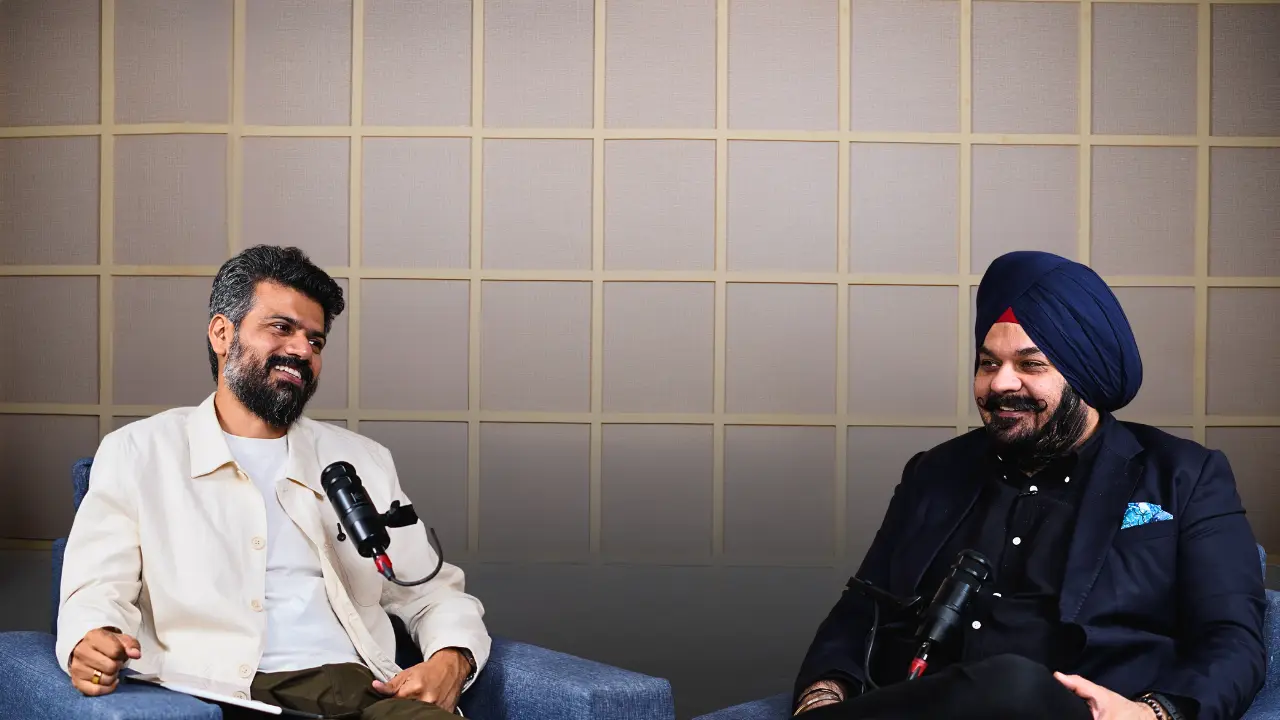

Avneet Singh Marwah, CEO of SPPL, discusses India’s evolving consumer electronics industry in a conversation with Nikhil Chawla. He traces SPPL’s journey from television manufacturing and licensed brands such as Thomson and Kodak to a broader push into appliances, backward integration and OEM and ODM manufacturing. The conversation explores the pressures facing Indian manufacturers, from soaring memory costs and price competition to the challenges of building a deeper domestic component ecosystem. Marwah also discusses changing consumer behaviour across India, AI-enabled smart TVs, connected devices and the growing opportunity beyond metros. His larger ambition is to make Indian manufacturing globally competitive and expand India’s presence in international markets.
Nikhil Chawla: Hi, hello, and welcome to the One Big Podcast. I’m Nikhil Chawla. And today we are talking about the business of putting a TV in every Indian home and what it takes to manufacture more of those televisions in India. My guest today is someone who probably has a very different relationship with TV remotes than most of us. Hi, Avneet. Welcome to the One Big Podcast. How are you doing today?
Avneet Singh Marwah: Doing good. Thank you for inviting me.
NC: Pleasure is all mine.
ASM: It’s always nice meeting you. It’s been a long time.
NC: Absolutely. So much has changed over the years. So, Avneet, you run a television manufacturing business. Let me start with an important question. I mean, at home, do you actually get to use the remote? Does your family use it or you?
ASM: No, no, I use it. I have a couple of TVs. So, if they’re using it, I have alternative choices.
NC: That’s great. But jokes apart, you’re building a business in India as one of the most competitive consumer markets with global giants, Chinese brands, and a new generation of Indian manufacturers competing for the same customer. I mean, so let’s start here. Let’s start with the important question. You entered the business in 2009, if I’m not wrong.
ASM: Yeah, 2010.
NC: It’s almost 20 years now. And you worked across manufacturing, supply chain, product, and sales. When did you realise, I just don’t want to work in this business, I want to run it, and I want to take it where it goes next?
ASM: When I initially, because we were a CRT manufacturer, and there was a transition that was going…
NC: Can you tell the Gen Z what CRT is?
ASM: Yeah, CRT is that old box TVs. If you see any old OTT, you will see that box TV, probably in one of the hotel scenes or somewhere. So it’s an old box TV. And CRT is the picture tube that it used to have.
NC: Cathode ray tube.
ASM: Yeah, exactly. So that was the TV, black and white, we started with. Before that, it was plastic moulding. And when we were doing that, there was a transition that happened, probably in 2010, 11, 12. And LCDs were coming in. LCDs were a very luxury sort of a product, premium product. And most of the upcountry brands and national brands were not doing well. So that’s in 2014, 15, I realised that in India, you need a brand equity where the recall is high. Plus, nostalgia is high about that brand. And that’s when I thought of Kodak. Because Kodak was such a brand, it was number four in recall. And then the nostalgia was completely, you know, with the brand. And all the sections of society have used Kodak because there were only a couple of reels that used to come in the camera. So from a, you know, digital picture to video, I think that that was a little easy to convince the customer. So that’s how the whole idea of getting these brands and these brand licensee business started. And eventually 15 we got, 16 we launched. And then we got Thomson, Blancpain, and a couple of more brands. So we didn’t have a 100% success ratio also, in brand licensees. But I think after Thomson came in, things got really changed for us. Some narratives that come into play. So we are giving service from the last 30 years, there is a constant consumer behaviour changes that we are completely on that. I’ll give you one more example, sound. Nobody talks about sound. So, you know, every country, every region has a different music genre. In India, it’s different. It’s beats, it’s different sort of beats where you have to have a certain level of bass, certain, you know, vocal should be there. We develop that sort of sound with Indian speaker manufacturers, which is competing globally, when as teens, you know, in our cars, the bass tube used to be a very big thing. So I took inspiration from the bass tube. And that’s what we did in Tigvi. Fantastic. We were sold out in about 15, 20. And that is 7565. And one lakh rupee TV. So we were sold out. So that sort of developments we keep on doing, and we are doing. And it’s very important. It’s just that when a consumer buys that product, then he realises more what exactly we are doing. And, of course, there are certain levels of brightness. Again, so while buying a television, number one is the colours of the TV, second is sound. And then third is software. Now, because of Gen Z coming in and OTT, etc. Applications and OTT have played a very vital role, but coming back to brightness. So in the US and Europe, the nits are below 200. In India, if it’s below 500, it’s a crime. And people are so used to it, but it’s not good. When you go and buy a TV, you see which one is the brightest. And the sales guys who’re in the store will tell you the brightness and the picture and the enhancement. But I feel that over there, brightness is not, it’s not good for the health of the television. Because the more brightness is used, the life shortens. Yeah. And then, of course, to your eyes.
NC: Yeah. There’s also one thing that I’ve noticed in a lot of households, they just keep the TV on throughout the day, even if they’re not in front of the TV. So that is something that just keeps on playing. People don’t realise, but that’s also taking away the life of the television, to be honest, because you want to listen to music. There are modes which can shut the picture, but people don’t use it. They just switch it on and leave it. And it’s playing like a music player for them. So that is something, what is a company like yours thinking about doing? Can it be a reminder to people that, you know, a pop-up comes up and says that, you know, you want to keep listening, are you still watching? You want to switch it off? All of those standby modes, all of that should be there.
ASM: So normally all these questions nobody asks, but we have that. You’ll be surprised. So when you, for example, you’re watching YouTube and then on a loop, or you just want to continue listening to something and you can’t watch, you don’t have to do anything. Just press on the menu button. While watching on YouTube, go to the sound section. And in that, there is a clear option. So there’s, you know, no picture, only sound. So, and we, in our A pluses and RPDs of the world where we have that option that the consumer can see. So yes, they do that. And even the kind of wastage that we are completely against, especially electricity. So it lowers down the power consumption. So that option is there.
NC: So you mentioned about LCDs. There were many other technologies, if I recall, plasma and all of these. So was your journey like that started from plasma or was it started directly from LCDs and then LEDs and OLEDs and whatnot?
ASM: So I’ll give you a very interesting, you know, story behind it, what happened actually. So there’s nothing called LED TVs. It is LCD backlight LEDs. So this term is today also, it is basically liquid crystal display. But this term LED was by one of the Korean giants. And then they started marketing as LED TV. And the rest of the world followed that.
NC: Now let’s go back to the beginning. I think you started your business around 2010, almost 20 years now. I mean, you worked across manufacturing, supply chain, product sales. When did you personally realise that I don’t just want to work in this business, but want to run it and shape it for the industry?
ASM: So actually, this is what has happened. I think, while you asked me this question, I just finally realised like, when did you finally realise what was happening? It was a blessing in disguise because most of the CRT brands were closing down. I feel for some time, Kodak was stuck somewhere. And there were a couple of decisions that happens with all the brands which are and it’s a century old brand. Apart from Kodak, Moment, Regal and etc. The best part about the brand was they were the first ones to click pictures on the moon. When the first step on the moon that was taken, that was Kodak Films. So that sort of legacy, the brand has it. There are some decisions that, once you’re going in the business, you don’t take that. But I think it’s doing great. And the same thing happened with Thompson. So we launched in 2018. The main focus was the kind of smartphone brands which were entering into, television space. To counter that we started and fabulously did well. I think that changed the whole perspective. And you need more American and European brands. That was the thought process. We got an overwhelming response from consumers. And we were sold out for about 15 odd flash sales. And this is our second highest. The first was a Chinese smartphone, but this second highest, not bad for an Indian manufacturer. So that sort of response. And today also, the day, Thompson is in stocks. It does exceptionally well and it gives a fight to the top three.
NC: The 75 inches that I have is Thompson. I just absolutely love it myself. But Kodak, everybody was a household name. Thompson was a very unique French brand. How did you feel that the Indian audience would relate to it?
ASM: So Thompson was number three and number four brand in CRT televisions. If you remember, Rahul Dravid was the brand ambassador. And it used to come in almost all cricket matches. So that sort of legacy with Thompson was there with the Indian consumers. And it was, it went back because one of the brands bought them. So they didn’t stop their operations, they were doing really well. They got acquired. And then that brand thought that we will not continue with Thompson, we will continue with our own brand. And I thought there was a gap, people liked the brand and forcefully, this brand was stopped in the middle of nowhere. And once we relaunched, we saw that spike and today also, consumers have a lot of confidence. Do we see Rahul Dravid coming back for Thompson? We actually tried.
NC: That will be interesting to see. So you build businesses in India like Kodak, Thompson, Bloppen and JVC. How do you compete with the consumer when it comes to brands like Samsung, LG, TCL and a dozen other options? And what does it take to build a trust around these licensed brands? I mean, you have given me a hint of it, like the service and everything. But to build the trust in terms of the name of the brand, like you’ve given us a good insight over Kodak and Thompson. What about the others?
ASM: See, when we started, I said that affordability was very key in the same spec set. And with the same amount, you’re getting one upgrade on the size.
NC: How were you able to manage that?
ASM: I think the first thing was how to make larger screen size affordable for the country. 55 was a very premium sort of a product. How to manage to get under 35k at that point of time? How to get 32 inches under 10k? How to get 43 under 20k? So that was the whole scenario. We worked on the product lineup.
NC: What was the pricing? Like, you wanted to bring it under 10k, you wanted to bring it under 25 or 40k. But what was the actual pricing of that?
ASM: No, we had healthier bettas that time. So we were not burning at all. It was just so again, to make margins, it’s not that you have to increase the price. You have to do a lot of work on backward integration. That’s what we did. We did on the product side, we were manufacturers. We were just seeing that where the cost is extra, we were doing backward integration. And that’s how we were cutting our costs. And then we did direct B2B2C by ecommerce. So there were less of dealers, sub dealers, distributors. And we were just going in and Thompson didn’t have any pressure. Online, offline, it was a complete online brand. So it’s just that and that’s where Flipkart supported us. They also cut down the margins. We also cut down the margins. And then we were able to give the best price. So that’s how we started growing in terms of how we can cut down on cost, how wherever there’s extra cost that was coming on the way for distribution, how we can go directly to the consumer.
NC: Talking about cost. Now, I’m going to test that topic that is kind of shaken the industry, the memory pricing. So everything is affected by it. Because automobiles, tech, phones, tablets, everything. I mean, I can see it on your face.
ASM: Yeah, it’s unbelievable what is happening. It’s unbelievable. Nobody has no control. You feel completely helpless. It’s when I speak to the giants, they feel the same. If they are feeling this and nobody knows what will happen. It’s just that we just keep on getting AI thing that the memory is going into the servers. But I don’t think so. When it comes to increase in pricing, that sort of increases there. And when I see the kind of quarter profits that they’re doing, so one of the giants, there are only three manufacturers for memory. One of them declared their profits. And if I accumulate that to our share market, one company against all of them in the profit, that sort of profit they have managed. So I don’t know what’s going on. I feel personally, whatever spike it’s there in AI, whatever spikes are there in the data room, that sort of increase is unhealthy. And you might be giving some support and because it’s an infrastructure cost for AI. You get depreciation out of these infrastructure costs. But still, I feel that this sort of a balloon is not good for the industry. Globally, there have been pushbacks. I see that the whole consumer or anything that is related to memory, there is a decline. Plus, on a broader side, a lot of small and medium scale brands have been affected very, very badly. And what we saw last year and this year, one of these three memory manufacturers is, fortunately, unfortunately, is global number one for televisions also, and smartphones. They didn’t increase the price. So I don’t know, that’s why…
NC: What’s the maths?
ASM: So this, one needs to see how in the name of AI, the kind of increase, I know, there is a spike in AI.
NC: Obviously, consumption and everything has gone up. But is it being bloated up?
ASM: Yeah, 1000%. And it will go up to about 1300%.
NC: Is it true? I was talking to one of the smartphone makers, like, really global chains. They said that whatever phones that we could buy four years ago, that pricing is never coming back. There is no way the memory pricing is coming back to what it was ever. Is it true?
ASM: Yes.
NC: So it’s always gonna go upwards now.
ASM: Maybe upward or it will, you know, if there’ll be stability after two years, what they say. But the stability will be much above.
NC: So we were lucky to have bought those phones and televisions at that time. Now it’s never going back to that price.
ASM: The worst part is, we are into this industry for more than 30-35 years. Lot of retailers, distributors, e-commerce players. The retail side of it, I still do not believe what is happening. There is a big disconnect. Let me tell you that they feel that maybe in season, again, brands will crash their prices. But it’s not happening. So what they’re doing is, if a product is for about 60,000, they will inflate to 80,000. And then again, they will sell at 60,000. Okay, so but in terms of retailers, there is a vacuum in the, I don’t know about smartphones for TVs, definitely, there is a vacuum in the market, the kind of stocks that were needed in the market, there’ll be a shortfall, I believe, because nobody’s believing that, you know, the sort of the market is not accepting. Mind you, the consumer was paying above all this, the consumer was paying for about 30,000, which was under 10k, because of the price war, they were paying 15,000, they were very happy to do that. It’s brands who have decreased the prices.
NC: But there’s also been recorrection by a lot of companies, including Apple, where the pricing of all their products have gone up, because of course…
ASM: This is the first time that has happened…
NC: That has ever happened before the cycle release…
ASM: That has really helped. Because they see if the big brands, as I said, the global number one, television brand didn’t increase the price. That’s why this sort of pressure was there on the market. Now they have, but I feel that is because of currency, not because of memory. So that’s where the intention is not in India, globally, how to acquire maximum because they don’t, they are out of China, by the way, China is biggest market for smart TVs. And they are not there, nor in phones, nor in televisions. So the biggest market, you’re not there, and then you have to compete in global number one. So that’s how you do it. And that’s why it’s quite visible. It’s nothing that you know, I’m just saying something, it’s on the papers. So if you’re not there in a region where it’s about 35-40 million sets. And minus that you have to be global number one. That’s how you’re global number one.
NC: Exactly. It’s like, the number one Chole Bhature of India and Delhi is West Delhi. It can be anywhere, but it is number one in that area.
ASM: What an example.
NC: We are Punjabis. So I mean, now, essentially coming to price wars, because we’re talking about pricing and all, is there still a room to build a premium consumer electronics brand from India based on product quality, technology, service rather than just the price alone, because pricing is tough now?
ASM: I think a couple of brands have tried that space. The quantum and mass is not there. I would really appreciate the kind of product development they’ve done. Really good TVs. But the consumer feels in India, especially for TVs. Firstly, till 43, the maximum use app is YouTube, which is free. And with their hotspot 2GB, because LAN is not available in TFO and upcountry. So this is because we live in a metro city. So we think that everybody has a router. And that’s how they’re connected. It’s not true. Second, if everything is going well, you have a couple of technologies at least 30-40% price down. So nobody is interested in buying and investing in that sort of quality or technology. Therefore, big brands, the Korean brands have come down and are competing with affordable category. Earlier, they were just selling technology and premiumness and now they have to come back and tackle the affordability part. So yes, I feel there is, all the big brands have started compromising on their specs. And you’ll be very surprised to know that some of the brands have lower specs than even Thompson, which is more surprising. And any of your viewers can just go to one of these ecommerce sites, the technology that they’re using and writing, it’s not that technology.
NC: So false claims.
ASM: Absolutely. And this must mean smartphones. I don’t know. I don’t come from that industry.
NC: A lot of things happen in smartphones where they say that this has this RAM, but they don’t mention it’s DDR5, DDR6, DDR4. So you get away with that. And also, is it 3.1, 2.1 storage, whatever, a lot of people get away with that in smartphones, because not everybody is getting into those intricate details of the memory quality and the memory speed, the bus speed of the memory, so many things people miss out on. But interesting to know that TV is also…
ASM: Yeah, TV is technology. So if it’s a QLED, they’re writing something else on that. And I’m not saying anybody can go and see the kind of reviews, who thought that these guys will get four stars? They used to be at 4.5. And it’s now the one of the technology television they’ve just launched was at 3.8, 3.9. They managed to get four stars. You compete with Thomson, it’s 4.2, same technology, 4.3.
NC: And in terms of pricing with these other brands?
ASM: 40% at least in large screen size, 40% in some of them, because that’s how they learn profit, because they will sell the premium TVs by giving you a lower spec TV. That’s where, you know, they feel the juices. Because in lower screen size, as I told you, the pricing is almost similar today.
NC: Yeah, you shared a very interesting insight about 4G, 3G hotspots and 43 inches TVs. Now, I wanted to ask you, you’re very focused on tier two and tier three in India. Yeah. What does the consumer in say, Jaipur, Lucknow prioritise that is in Mumbai, a customer that is in Mumbai or Delhi might not? And what are the differences, big or small? Or as the aspirations converge, you know, it’s a very interesting insight that they don’t even have wireless connectivity, or in fact, wired connectivity, they’re using the hotspot to watch TV on a 43 inches television. So what is your focus? And how do you differentiate these customers?
ASM: See, any metropolitan consumer base is not upgrading. The penetration is as high as 90%. And Delhi NCR is the highest after Goa. Yeah, because everybody’s rich, everybody coming down to Goa, hotels, etc. So because of tourism, and the money that’s there, the penetration is really high. But if you talk about tier two, tier three, that’s where the upgrades are happening. From your CRTs, from your LCDs, from your 32 to 55. Plus the real estate, the real estate cost is not so high. Metropolitan real estate costs are very high. You don’t tend to change real estate that easily. Or to upgrade in real estate also, it’s very tough. So that’s where most if you’ll see most of the real estate players also focussing on these markets a lot, especially in the affordable category. Same way, these markets where I feel that they are now more experimenting with sizes. Where I feel the growth pattern is there. Versus all the metropolitan cities, all the metros and because the penetration is so high. The only replacements of televisions happening.
NC: Now, everyone talks about Bharat as the next big consumer opportunity. What does it actually mean? When you’re sitting in a factory deciding what television to manufacture? Is it size, feature technology or price?
ASM: I feel as of today, where you know, we are not left with the kind of price increase that we see in memory.
NC: How long can you sustain that?
ASM: Oh, I think as of today, when we are developing a product, I think number one, I would, you know, choose pricing over anything. I think quality affordability has been hand in hand. But as of today, where you know, the memory prices have just gone bizarre. And apart from that, the dollar pricing, 9% in a year, How will you manage a business where the dollar is going up by 9%? Nobody and memory is going up by 1000%. So that’s quite, we are in a turmoil situation right now, if you talk about and then you have to be make in India and you know, do all sorts of schemes. So, you know, it’s really out of hands currently, what exactly is happening?
NC: Are there any PLI schemes for you guys?
ASM: No, we have requested a couple of times. So there is no PLI for washing machines, for smart TVs, only for IT products, mobile phones, air conditioners. Car manufacturers.
NC: So why do you think the government is not one because they want the ecosystem to be here for televisions, everything and everything should be made in India, then why is there is no PLI for televisions or electronics?
ASM: I think if I have to choose between PLI and a parallel economy, the cash economy that’s going on, I will definitely choose if they will take some action on parallel economy. We don’t want PLI, we want this market and they’re not able to do it. The finance minister in the parliament recently shared the kind of fraud that is happening in GST and there are absolutely some bizarre things that are happening. And but they have in parliament, they have said that this sort of thing is happening and TV is also happening. The entry level is primarily affected. That’s why premium brands have come into affordability. One of the reasons is this. But, you know, if there’ll be no equal playing fields that will happen. And this sort of, despite of action, there is a huge revenue loss that is happening to the country. So, they have to decide, If you will ask me, we don’t need PLI, if you’ve given enough schemes to us that, you know, we are enabling. But if we have to choose then I think they have to do something about the parallel economy, which is kind of dominating huge, huge losses to the manufacturers also and to the country.
NC: That’s sad because after all, the consumer will be affected one day or the other.
ASM: Yes, because, you know, the worst part is there is no proper service. The spare part issue. And as we call Jugaad, that’s what is happening at the entry level. Some panel, some mainboard, something and then the service guy does and because the consumer is not so aware, and this is all upcountry villages.
NC: And you mentioned that there were reports of TV blasting and all that is the reason that is happening for sure then if they’re mixing up all these parts.
ASM: Absolutely, there is no test. There is the kind of, it just happens in a room, the manufacturing and still the norms are so high. So again, then your certification.
NC: So they’re skipping all of that?
ASM: Absolutely. The agencies are taking strict action against them. They have told, they have done multiple meetings, but I feel that a lot more needs to be done on this. and there is, and everybody knows what is exactly happening in the market.
NC: Let’s talk manufacturing, you have argued for much higher domestic valuation, what is still missing in that Indian ecosystem and how far we are from generally be able to say that this television is made in India, like you just touched upon it.
ASM: Three years, still, three years, I think, and that’s a dream come true. Yeah, let me tell you, because a lot of entrepreneurs, especially senior ones, are still, it’s becoming hard for them to believe what exactly has happened.
NC: So you were saying that the whole ecosystem would be here and you don’t need to import anything for a television.
ASM: We’re already buying open cell in India. There is an open cell bonding. That’s there, we’re already buying from them. So our open cell about a couple of sizes is completely make in India. So that is about 60%, 50% because of memory price used to be 70%. Today, we are doing that there are a lot of semiconductor investments that are happening. But that is primarily in the solar sector and electric cars, the Tata ones will be there. So they’ll be developing those. But if it comes to smartphones and smart TVs, this ecosystem will definitely be close to about 70-80% which is impossible.
NC: Where are we at right now in 2026?
ASM: Yeah, 2026 if we average out from 10% to 20%. Now, as of now, it’s about 50% or 40%. We are there. Next 30 to 35% I think in the next three years, which is big, because then you’ll be globally competitive.
NC: And also then it actually makes you can worthily call it made in India.
ASM: Yeah, absolutely. And that’s where all your FDIs etc will come into the picture because source of the manufacturer and the country of origin. So everybody’s talking about FD 100%, no duty, but nobody talks about the country of origin. If your parts are not from the same country, you don’t get that benefit. So, that is very, very important. If that comes in, yes. Globally, also, you will give a good and that and I feel that as of today, whatever is happening, there are restrictions of getting visas to our neighbouring countries, because now they feel that small scale and medium scale, a lot of machines. Yeah, it’s true. It’s nothing secret. I’m sharing it with you. It’s down there in papers and there are a lot of colleagues who have visas and they have one of my colleagues. He’s been going to this country for about what good 30 years, about more than 80 visits, 70 visits. Okay, and his visa got rejected.
NC: Brilliant. I haven’t tried after COVID but I’m not even trying now. Yeah.
ASM: But whenever you go, don’t go with your normal phone. Just go with a phone that doesn’t have any things on your phone, not brand new.
NC: I’m not going. So let’s talk about the other country that is slightly uncomfortable for you. When you compete with Chinese brands on price, where does an Indian manufacturer actually have an advantage, and where are these Chinese companies and their manufacturing ecosystem still ahead?
ASM: So part number one, and whenever there is, so this company, one of the best top companies from them is, unfortunately, sponsor of Pakistan cricket team. So the more matches there, it gives us a lot of advantage. I would say that. And we request the cricket board to have more of India Pakistan matches. That’s how we’ll increase the sales.
NC: Brilliant. Yeah. And most of the televisions are also broken in Pakistan after the match.
ASM: Yeah. So once my tweet, I posted when India, one of these, I think in 21 or 22, India lost one of the major finals with Pakistan.
NC: Yeah. Let’s not talk about that.
ASM: Yeah. So my tweet was that guys, whosoever has broken their TVs, and next day I had offered a flash sale on all the TVs.
NC: That’s brilliant marketing. It’s crazy. Okay, now a fun one. You’re a basketball player yourself. And basketball is all about competition, right? If the Indian TV market for a basketball game, who are you guarding right now? And who is the player you absolutely cannot afford to leave apart?
ASM: Definitely, I will compete with one of these Chinese brands. And yes, and you know, in basketball, so I was a post player. Okay, so I really want to use my elbows. Yeah, so it’s this and then yeah, so I really want to do that. I just want to give a good fake and then shoot. So you’re also investing in manufacturing capacity and have spoken about building IoT and R&D capabilities. What is the bigger ambition? Is it to manufacture more television in India, or eventually design more of the underlying products and technology ecosystem here as well?
ASM: I think it goes hand in hand, the moment you will build a television, which will have the latest technology, latest specs, automatically you will get the quantum. Now, you know, now you’ve talked about IoT and stuff. I think currently, everybody’s talking about AI. So AI was there in TVs from 2018, by the way.
NC: What was it doing?
ASM: It just didn’t have a word called AI. It was Google Assistant.
NC: Yeah, exactly. So people say that generative AI has come now, but AI was always there. When you were talking to your smart assistant Siri came back in 2013, 14, whatever year it was. It has always been there. It’s just that it wasn’t that conversational, it was still learning, it was still growing. And that is the misconception people feel that AI just evolved and reached today. It’s been working on for years now. And it’s learning about you, your calendars, your work, whatever it is. But you’re right, you when you say that it’s about building the entire thing. And the AI is not just from today.
ASM: And the next big thing that we’re telling is that all our televisions, which have a memory of 2GB RAM, will get a free update of Gemini. It’s just started.
NC: How long back would you go with that television?
ASM: Anything with 2GB and Android 12. It will automatically already started, already started. It’s rolling out. It’s already rolling out. And that’s what we do. So we became one of the first television brands to do so. And when everybody was banking on low memory. Yeah, that’s when I told you we will invest on next five years. And that’s what we did. The best part of Gemini is that you can generate. Apart from learning, apart from talking, it is more smart, but now you can generate. So on your television, if you give a command that, hey, I want a picture on the beach with sunset, it will generate.
NC: So that can become your TV’s wallpaper.
ASM: Yeah, anything. And then through your Google Pictures, you can give commands to change background, etc.
NC: On your TV, or you don’t even need a smartphone.
ASM: So this is one of its kind. And it’s going, of course, you can dim your lights, smart lights, you can see on your doorbell, etc. Whatever IoT through you can connect, or you can, or if you have electric car charging also helps. So all those features are already there. But I think Gemini is very interesting. And apart from that one more interesting thing is that Google will have come up with interesting facts. For example, it has facts with space, volcanoes, you know, aeroplanes, something you can learn every day and or we have forgotten, we must have studied in school or college, but something which I feel is very interesting.
NC: Do you also see that taking away the standalone smart home devices, if your television can do all of that, would you need specifically a Google Home or an Alexa?
ASM: I’ve been saying that for the last one decade, it’s not an idiot box anymore. Yeah, it is a smart TV. You integrate all the devices from a large screen, you can monitor everything. Yeah. And that’s where the real use case of television is that. And if you’re not doing that, and using smart devices, I feel you’re not doing justice to your television.
NC: Yeah, that’s true. You mentioned about like, this conversation is going as if you’re just a television manufacturer. It’s not right. You do a lot of things. Can you talk about that? And how did that manufacturing happen? Where is your manufacturing facility? Are you planning to expand? Are you planning to export all of these numbers?
ASM: Yeah, things like memory will keep on happening. We have to do other appliances where there’s less memory being used. I feel that we started with the washing machines, complete backward integration. Thompson, fabulously online, we became top five, suddenly in semi automatics. Today, after this global issue that has happened, but still, I think we’re coming back strong. And we manufacture from 7.5 kgs to about 14 kgs, which is end to end everything in house. And it’s a semi-automatic machine, and then fully automatic, it’s top loads, top loads, yes, that we do in house completely. Apart from that air coolers, from 35 litres to 160 litres, I think, all patent designs, all in house, all in house, we even have one of the fastest growing cooler brands in the country. Plus, the fastest growing manufacturer also, in about three years, we started doing in house motors and in house pumps. So nobody ever has done that in the first three years. So that ecosystem space also because I feel that there are appliances which genuinely have to grow, penetrations are low. And seasonal, of course, we’re coming out with other appliances also.
NC: You also had ACs. I remember using one of your AC products.
ASM: Yeah, we have it. But the only problem with air conditioning is, so that’s a whole one, I can do a podcast only on air conditioning.
NC: On ACs? Why is that?
ASM: Because it’s everybody’s I feel that burning a huge amount. And the biggest, so this is the, you know, a part that nobody talks about.
NC: But if you don’t have an AC, you’ll burn yourself.
ASM: But the kind of pricing companies are burning, so they are burning themselves to give good air to the consumers. So the biggest manufacturer for air conditioning went public. First one to be in that space. Today, they’re manufacturing cell phones, they’ve just, it’s so funny. They’re not able to sustain. And they diversified. The number one market share that the company has, no matter how much profit they declare, they are on net loss, the kind of pricing that they float in the market. I know what you’re talking about, which company? So the chairman just recently resigned. So that sort of competition, it’s just a commodity. The penetration is low in the country. The problem is that whenever any product’s penetration becomes low, and you feel that there is a growth, there is so much capacity that keeps on building. And then your focus completely changes. I know a brand which bought a brand, an electric brand bought a brand, then invested huge in designing, get a power couple for their marketing. And they decided by changing the fascia, things will change. 95% of the sale comes from the normal white grill. So when you change your focus, and when you start burning, it’s very difficult to sustain. Yeah, a couple of I’m not saying everybody’s doing that. There are at least half a dozen brands which are not burning, but they are happy where they are. And with healthy margins, they’re doing business.
NC: But are you still manufacturing?
ASM: No, we are not right now. Okay, we’re not right now.
NC: So it’s TVs, washing machines and coolers for now.
ASM: Yes, and speakers.
NC: And you said you’re also expanding your manufacturing.
ASM: Yeah, we have just recently expanded. All the big sizes that we have spoken about. That’s where we’ll be manufacturing it.
NC: Have you set up a new factory somewhere?
ASM: Yes. It’s in Harpur. It’s on the main national highway, because of the connectivity. And we have started doing OEM and ODM business also. So for years, let me just tell everyone there was a misconception that why don’t we do ODM business after getting Google licence also? Yeah, it was what we really wanted to do, but we were not able to, because of the space constraints and the capacity issues.
NC: Can you tell people what OEM and ODM are?
ASM: Yeah. So OEM and ODM is when you light white label on something. And when you develop a product. So there are two different things. A lot of people do OEM. So that is only tightening the screws. ODM is when you develop.
NC: So you’re wanting to become an ODM.
ASM: We are ODM. We are ODM. It’s just that we were not able to give…
NC: Didn’t have the capacity to do that for others.
ASM: Absolutely. So that’s what we were doing for our own brand. But now we are expanding to that. And things have been very kind in this space, so we’ll be one of the very few Indian manufacturers which has their own brands, has a decent market share, and has entered into the space. So this has never happened. So this is the vision of the company. Let’s see if we’ll be successful in that.
NC: Talking about vision, I just want to ask you, what is your one big dream for India’s future?
ASM: Backward integration completely in-house. Okay, nobody thought that, you know, we became a trading company and trading was a core in India. Nobody was focussing on manufacturing. About two decades back, we left everything and we were just dependent on a couple of countries and majorly one country, and everything was coming from there. From there to we started talking about manufacturing, hardcore manufacturing. And today, the dream is how we can be globally competitive. That is our plan. Also, if I want to see our company growing, it has to be exports, not the domestic market.
NC: So that is your one big dream?
ASM: Yes, that, you know, I feel the kind of penetration that China has globally, exporting televisions to 160 countries, versus India, not even half dozen, or maybe a dozen countries and the kind of exposure that country has. I’ve seen my and no disrespect to anybody. But my colleagues didn’t even know about the countries that they mentioned. They’ve never heard of those countries either.
NC: 160 countries is hard to remember.
ASM: Yeah, but no, but major countries, South American countries, we’re not doing anything. Over there, GCC, we are missing, European, Eastern Europe, we are missing, there’s a good amount of opportunity, I feel, but because of less exposure, they have a lot of exposure, they’ve been doing that. If we get the right kind of exposure, I can see India on a global stage and that’s what the vision is.
NC: Do you see that happening by 2047 Vixit Bharat, which is the PM’s theme and motto?
ASM: There are two things to it. Firstly, I don’t, he always talks about 30-40 years ahead. But it will be very difficult for the person who will be leading that time. Because he has given that sort of vision. But of course, there’s so many schemes that have been enabled in India that I’ve never seen. It’s just that the domestic market is not growing and still, our GDP is one of the highest in terms of growing GDP. Still, the domestic market is not 100%, not even close to 100%. Imagine the consumption, because we are very conservative when it comes to consumption.
NC: Yeah, that is true. Very frugal as a market.
ASM: Yeah, we will just, you know, if something happens to any product, we first try to, you know, repair that, fix it. And then if you know, I’ve seen, and this is where it was very surprising for me. I’ve seen in very good households, there is some line on the television still, they’re saying, it’s going on. So yeah, so that’s how, but GenZs are changing that.
NC: They are changing a lot of things, we can’t go there.
ASM: Yeah, so they don’t want to do this compromise. And that’s where we feel that avoid of purchases will be less, sentiments will go up. If the sentiment goes up, and you know, the buying increases in the country, a lot of things will change. That’s what happened in COVID. When everybody was working from home, no schools, nothing, everybody was dependent on screens, the kind, the true consumption, because I saw myself and OTT was not in a full form. People didn’t use their TVs for years. And that’s when they realise that it’s not working properly. Because they were not using the time. And now we’re back on Netflix, nights, etc. So yeah, good, good for the TV industry. Yeah. But I feel that the market should come back next year.
NC: Well, thank you so much, Avneet for your time. That was One Big Dream for Avneet and thank you so much for watching the One Big Podcast.
Watch the full podcast here.