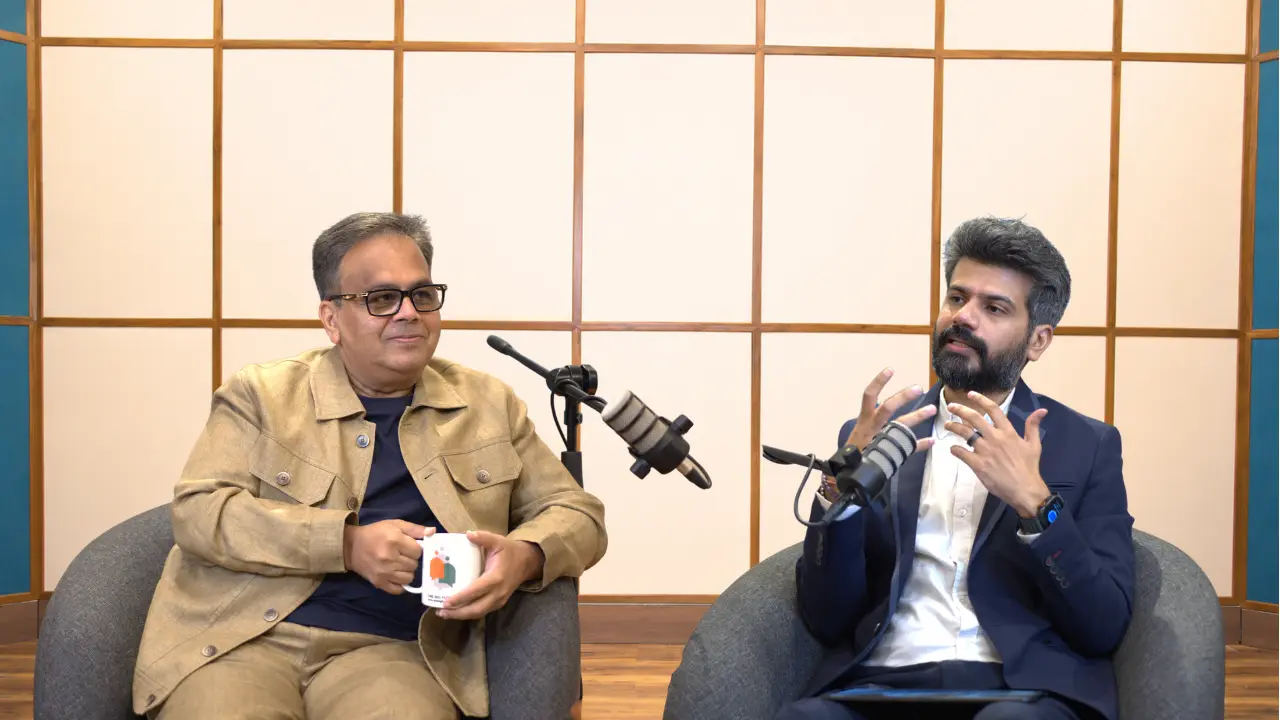

Anupam Bansal, Executive Director of Liberty Shoes, has seen India’s footwear industry evolve from a market dominated by unorganised manufacturers to one in which domestic and international brands compete for increasingly discerning consumers. In this conversation with Nikhil Chawla, he reflects on Liberty’s seven-decade journey and shares insights on changing consumer preferences and the growing role of technology in product design, highlighting why established Indian brands must continually reinvent themselves to stay relevant. He describes the gaps and challenges in footwear manufacturing in India and the integration of AI in the manufacturing process. Bansal also discusses why Indian companies need to build stronger products and brands to compete internationally, and how Indian consumers could become trendsetters rather than followers of global fashion.
Nikhil Chawla: Welcome to One Big Podcast. I’m Nikhil Chawla, and today I have a guest whose business is making shoes, chappals and sandals for everyone. Welcome to the show, Anupam.
Anupam Bansal: Thank you. It’s a pleasure to be with you.
NC: Thank you so much. A quick question before we start: how many pairs of shoes are sitting in your shoe rack, and how many do you actually wear?
AB: To be very honest, I have loads of shoes, and I distribute loads of them because I try so many new pairs. With every new collection, I get at least eight to ten pairs to try myself. So, I’m pretty loaded with shoes. I don’t want to say that I gift my worn shoes to people, but if anybody asks for a pair I’ve worn only two or three times, I’m happy to give it to them.
NC: If you had to put a number on it, how many would that be? I know it’s a tough one.
AB: I’ve never counted, but I think there are more than a hundred. My wife has more trouble managing them than I do. My Man Friday is always asking, ‘Sir, where do I keep all these shoes?’ That’s a problem. And after a while, I don’t wear a lot of them. Once I find a comfortable pair, though, I tend to wear it very often. It’s not as if I need a new pair every day. We recently introduced a shoe called EasyGo. You just slip your feet in and slide them out. I have the same shoe in four colours, and I wear a different colour to the office depending on what I’m wearing. I find them super comfortable.
NC: So they’re slip-ons? You just put them on?
AB: Exactly. I don’t need to use my hands. I just slip them on. I find that so comfortable.
NC: I love what you’re wearing today. Could you tell us more about it? I didn’t think Liberty was into sneaker culture. People have a particular image of Liberty Shoes, and this seems quite different. Tell us about the pair you’re wearing.
AB: This is Leap7X, a brand we introduced about five years ago. It focuses on the athleisure category. You could call them sneakers, and we also make some sports shoes. It’s aimed at connecting with the youth, and it’s doing pretty well. We’ve positioned it between international brands and some of the domestic brands, so it offers something a little more aspirational than what conventional Indian brands have been offering. It’s a stepping stone between very local products and premium or luxury products.
NC I get it. You said you try new shoes a few times, but if you like a pair, you wear it more often. Is this one of those pairs?
AB: This pair has laces. Because I was coming on your podcast, I thought I should look a little more formal. Otherwise, I prefer shoes without laces. I like EasyGo more than shoes I have to tie.
NC: Lovely. Be honest: when someone says ‘Liberty’, what image do you think they have of the brand? What do most people actually associate it with?
AB: To be very honest, you represent a younger generation. Earlier in our conversation, you said that Liberty reminded you of your school shoes. I take that as great feedback. In the 1990s and early 2000s, when you were very young, Liberty was very popular, so that’s probably what you remember. Recently, many more brands have entered the market. It’s become competitive and crowded. Consumers also enjoy trying newer brands. That’s exciting because about 70 per cent of the market is still unorganised. The arrival of more brands helps create a more level playing field. Earlier, our challenge was to take market share from the unorganised sector and persuade customers to try something more premium. Now the challenge is to find our place among different brands. It’s an exciting journey and definitely a big challenge. People often tell me, ‘My parents used to wear Liberty, but I haven’t tried it.’ That’s a great opportunity for us to encourage young Indians to try legacy brands.
NC: As India approaches 2047, what role do you see Indian consumer brands playing in making the country a global economic and manufacturing powerhouse?
AB: It’s definitely good to have a vision for 2047. But every business works with a shorter-term vision because forecasting what consumers will want in 15 or 20 years is almost impossible. For us, we take it step by step and think about the next two or three years. It’s difficult to forecast trends 20 years ahead.
NC: As a national goal, though, is it useful to set targets for 2047? I agree that, as a business owner, you have to account for many factors and can’t just set a number for 2047 when trends and markets will change. But as a country, should we set targets for automobile manufacturing, EV penetration or manufacturing output more broadly? Is that a good thing?
AB: It’s definitely a great thing. The vision for 2047 gives us encouragement and a sense of where India is headed. We take it as motivation and grounds for optimism that India will be a major growth story. That’s important. But when we translate it into what our business needs to do, we also have to think about the next five years, two years and one year. We’re in the fashion business, so we need to understand trends. I’m not going to start planning to manufacture in some part of Africa because India might be more developed by then and labour might be more expensive. I don’t think we have the ability to plan that far ahead right now. Right. Perhaps Modi ji does. We prefer to take steps with a three-to-five-year horizon. Technology today also means a company like ours doesn’t need to plan every implementation ten or twenty years in advance. We can look at what’s feasible in the next two to five years. I wouldn’t plan a plant in some remote location on the assumption that labour will be cheaper or a raw-material hub will develop there decades from now. I’d love to think that far ahead, but we don’t have the appetite for planning beyond five years at this point.
NC: I take that. Has ‘Make in India’ genuinely changed the manufacturing ecosystem, especially for footwear?
AB: I think the current GST norms, BIS standards and, above all, the consumer have contributed to change. The biggest shift I see is in the consumer mindset. Even in our conversation, I get the sense that you’re more inclined towards foreign brands. You might not yet think an Indian brand is cool. I believe that will change over the next few years. I’ve seen it in China, where Chinese consumers buy a very large proportion of products made in their own country. That sense of national pride can help drive a country’s progress. Indians need to develop that confidence, and Indian companies need to work harder to offer products that Indian consumers want. We can grow together. If we do that, the vision for 2047 will become much more achievable. I would also like India to have its own platforms, social media and AI rather than depend entirely on foreign versions. Sometimes I feel we’re trapped because these platforms can shape what we do and what we think. Meta and Google have paid activities that can influence opinions. How do we get Indian consumers to think for themselves, about what is actually good for them, rather than let paid influence drive their choices? I would love to see India become the Sone ki Chidiya again. We’ve heard stories about Indians being major consumers of Rolls-Royce cars and Cartier jewellery. I can see that kind of prosperity returning by 2047.
NC: Coming back to the legacy brand, do you have to fight the ‘Liberty uncle’ image?
AB: Yes, definitely. I don’t want to shy away from that. It’s an image that exists, and all legacy brands carry some baggage.
NC: There is some baggage.
AB: There always is. People may age gracefully, but we need to become younger and trendier all the time. When we started, customers often wanted one comfortable black shoe that would go with everything, perhaps because they had knee pain. Today, people want different shoes for the morning, the evening, parties, jogging, running, golf, walking, the bathroom and the market. It’s an interesting market, and we try to cater to most of those needs.
NC: Coming back to Woodland, Campus, Adidas and Nike, as you said, many more players have entered the market. Where does Liberty stand? Whom do you consider competition, and whom do you not?
AB: That’s an interesting and difficult question. Around 70 per cent of India’s footwear market is still unorganised, so the biggest competition for Indian footwear brands often comes from that sector. There are cheap imitations coming from China and plenty of local, unbranded products. Much of the Indian market is concentrated in footwear priced below ₹1,000 or ₹2,000. Only a select group of consumers buys international brands priced above ₹3,000 or ₹4,000. That’s more of an urban market. Indian footwear remains strong in several categories. So, for us, the unorganised sector is a major competitor. But the organised share is also growing, and we need to build a competitive edge there. Liberty has adopted a sub-brand strategy. Healers is our comfort-focused brand. Leap7X is our athleisure brand. AHA is for slippers and flip-flops, and Lucy & Luke is our children’s brand. Each caters to a different segment. We also have brands such as Force10, Fortune and Senorita. We’re evolving that portfolio to appeal to a newer set of consumers.
NC: But Force10 is everywhere. If you visit smaller towns or Tier II cities, you see its advertisements all over the place. Are you consciously trying to move away from that Force10 image?
AB: Yes, there is a conscious effort, because Indian consumers like trying newer brands. That’s part of the changing consumer culture. Many people also thought Liberty was an international brand. Only recently did we launch the Mera Joota Hindustani campaign. Indians are beginning to feel proud of wearing Indian products in a way that wasn’t always the case. Earlier, some would wear even a cheap imported product with pride. That image is changing, and we have to keep evolving with Indian consumers.
NC: It’s funny that people thought Bata was an Indian brand and Liberty was an international brand. Could you talk about Liberty’s roots? You said you’re an Indian brand, but many people assumed otherwise, perhaps because the name is in English. How did it start, why was it called Liberty, and where are you from?
AB: Liberty originated around the time of Independence, when liberty and freedom were the buzzwords. Bata was an inspiration because it was one of the few international footwear brands available in India. We wanted to build a technologically advanced Indian brand. We began as a 100 per cent export business, specialising in value-added footwear exports. We had joint ventures in Russia and Hungary and offices there. We were also among the early Indian footwear companies to open stores internationally.
NC: No wonder people thought we were an international brand.
AB: We entered the domestic market only in 1982. Liberty brought in new technologies and mechanised footwear manufacturing. We pioneered technologies such as EVA and PVC in India, at a time when those technologies, and even the raw materials, weren’t readily available. In fact, I wouldn’t say all the raw materials are available in India even today. Many are still imported. India’s footwear industry was very nascent when we entered the domestic market. It’s evolving and, with everyone’s efforts, it will evolve further. Liberty was technologically advanced from the beginning. More recently, international players have come in, India has focused more on manufacturing, and the China Plus One strategy has encouraged investment in new plants.
NC: It’s fascinating that you were so technologically advanced back in the 1980s. Technology has changed completely since then, with AI and robotics doing so much work. Have you incorporated these newer technologies into manufacturing? Has AI or robotics made things easier?
AB: We had robots in our factories even ten years ago. It’s not as though we have to start thinking about robots today. We implemented SAP back in 2000, when many people weren’t even thinking about an ERP environment. AI is interesting, and we’ve started using it more, but not really in manufacturing. We’re using it for data analysis, forecasting, 3D modelling, product design, material inspiration and colour forecasts. AI isn’t particularly prevalent in our manufacturing processes at the moment. Maybe one day you’ll ask for a shoe to be designed for you, and it will be delivered to your home immediately, perhaps through 3D printing. But 3D-printed shoes have been tried and haven’t been very successful so far. We keep evaluating new technologies. I recently met some people from IIT who were talking about customised shoes using AI modelling. They’re due to give me a demonstration in a couple of days. We keep evolving, but we also have to be practical. AI is a great buzzword, and we need to understand its potential, but use it with caution.
NC: Indians might spend ₹3 lakh on a phone but think twice about spending ₹5,000 on shoes. Why is that? Why do we think that way?
AB: We have to understand India as a market and work with that. There’s no point in challenging the consumer mindset without understanding it. Earlier, many Indians preferred imported footwear even when they couldn’t afford the originals. They might buy cheap replicas from China and feel those were better. Consumers are much more evolved now. They know what they want. We’ve seen that shift over the last five years. People make their own style statements. We’ve reflected that in our new marketing campaign, Chalo Apni Chaal, which is about having your own individual style. Earlier, people relied heavily on recommendations. Even an educated customer would walk into a shoe shop and ask the salesperson what to buy, although the salesperson might not share the same socioeconomic background or exposure to trends. Our sales training was built around that habit of customers seeking guidance.
NC: It’s like going to a restaurant and simply accepting whatever the waiter recommends.
AB: Correct. That used to be common, but we’ve seen a big change in the last five years. If someone recommends noodles at a restaurant, it doesn’t mean I’ll order noodles. People have their own preferences.
NC: Take coffee, for instance. We were just discussing how particular people are about where they get their coffee, whether they want it hot or cold, and even the type of beans.
AB: There’s something I want to add about a brand you mentioned but didn’t name.
NC: I noticed that you’re using an iPhone Air. I love that device. Apple’s engineering, especially making such a slim smartphone, is remarkable. And now there’s the foldable phone people had been waiting for and a phone costing around ₹3 lakh. I’m curious why you chose the iPhone Air, because it’s quite a niche device. It’s not for everyone.
AB: I think that’s enough marketing for the iPhone! I’d rather talk about Indian brands, which I love. We had Blue Tokai coffee, and that’s what I’m drinking now. I rate it much higher than Starbucks or any international coffee brand. For me, the product is important. I love brands, but they need to offer great value. For my taste, Blue Tokai has a better coffee flavour than Starbucks. Apple might make a better phone than some others, and I would buy one because it’s a great product, not simply because of its brand value.
NC: What is the hardest part of manufacturing footwear in India? You mentioned that some raw materials still aren’t available here. When do you think the supply chain will become more developed? We’ve seen the China Plus One strategy in electronics, automobiles and other sectors. Can we build a streamlined footwear supply chain that doesn’t depend so heavily on imports?
AB: It’s a very interesting question, but also a complex one. Many of our factories were established 50 or 70 years ago, when India didn’t have a coordinated manufacturing strategy or policy. If you look at China, when they develop a manufacturing hub, they build the whole ecosystem around it. India didn’t develop in that way. Older factories still face that challenge. Only in the last few years has the Indian government started thinking more about developing industrial complexes and clusters. Traditional factories aren’t necessarily located in those complexes, where a whole ecosystem of suppliers can develop. Our factories, for example, are in Libertypuram. Leather comes from Chennai, some materials come from Gujarat and others come from different parts of the country. The supply chain might take a week or ten days. In China, by comparison, a factory can have suppliers within a kilometre. Lead times are much shorter. Factories can also be located right next to ports, making imports and exports easier. The entire ecosystem works together. In India, we’re still dealing with those inefficiencies. But we can’t simply move all our existing factories to coastal areas for better access to raw materials. We’ve begun adapting, but that won’t happen overnight.
NC: It will take decades.
AB: Many footwear raw materials are petrochemical-based. We’d like everything to be greener, but the domestic ecosystem for those alternatives isn’t fully developed. India is not yet a major manufacturer or supplier of all the petrochemical inputs we need, so many materials still come from abroad. We have to work with that reality.Over the past three or four years, India has been focusing more on developing ecosystems and ancillary industries. I’m sure those will be in better shape in five to seven years.
NC: When you mentioned Libertypuram, all I knew about was R.K. Puram. Could you tell me about Libertypuram?
AB: Libertypuram is on the highway between Delhi and Chandigarh, almost halfway between them. It’s where we have one of our major plants. Around 2,000 to 3,000 people live in the community there. It’s reasonably well developed, and we provide facilities to make it easier for people to live and work there. We would have loved to develop it further, but that needs government policies that support townships and encourage more industries to come in. A single company can only go so far.
NC: I ask because you spoke about the challenges of building a manufacturing ecosystem. In a way, you were trying to create one with Libertypuram: a township where people could live, work and send their children to school, all in one place.
AB: To be honest, one company can’t build a full ecosystem unless government policy supports it. When people think of a footwear town in India, they think of Agra, or, around Delhi, a place such as Bahadurgarh. These are the kinds of clusters the government has begun supporting, where there are multiple factories. We have built some infrastructure independently, but we can’t compete with the ecosystem that Agra has, or with developing footwear clusters near Chennai. We need to be part of broader ecosystems to reduce supply-chain costs and improve efficiency.
NC: Why should someone like me or you buy an Indian brand over an international brand if both are available at the same price? What are the pros and cons? What would you do?
AB: I could give you a blunt answer: why shouldn’t you buy an Indian brand? Why should you automatically think of an international one? If the quality is comparable, why not choose Indian? Of course, if you feel the Indian product doesn’t meet your expectations, buy the international brand. But I would like people to consider India first. Why spend foreign exchange unnecessarily when India has a trade deficit? If you’re thinking about the country as well as yourself, that matters. If our balance of trade were comfortably in our favour, perhaps you could be less concerned about it. I would like Indians to holiday in India and buy Indian products. I run an Indian company, and I’m passionate about India’s growth story. I want us to support that story rather than spend it abroad on things that aren’t essential.
NC: Everyone talks about ‘Make in India’ now, but you were actually manufacturing in India long before that. Where has the government been helpful, and where could support still improve?
AB: I’ve seen a positive change over the last five years, with a greater focus on manufacturing from the current government. Those efforts have encouraged us. Earlier, we were also importing a lot from China, and the focus on domestic manufacturing was diminishing. So the renewed emphasis is encouraging.
NC: Are there government schemes or PLIs specifically supporting companies like yours?
AB: There are PLIs, but I wouldn’t say our focus on manufacturing comes primarily from government incentives or policies. It’s more about the ecosystem that’s developing and the changing consumer mindset. Consumer demand is what is pushing us. It isn’t any one incentive that is encouraging us to manufacture in India.
NC: Talking about consumer mindset, which markets are your main focus? Are most of your sales coming from big urban centres, rural areas or Tier I, II and III cities?
AB: Geographically, we’ve historically been more focused on North India, and about 70 per cent of our sales come from the North. We’re present in the South too, but our penetration there isn’t as deep. Liberty started as a very premium brand. With so many international brands in the market today, urban consumers often want to move up to more aspirational products. We want to serve the middle segment: customers looking for something better than local, unbranded footwear, but who may not wish to spend heavily on international labels. They’re looking for a well-made, comfortable pair of shoes. We believe we can offer quality and trends comparable to those of many international players, even if our brands aren’t seen as quite as aspirational.
NC: You mentioned using labs for 3D mapping and pressure mapping. Can a shoe really help with back pain or flat feet? Is that possible with customised footwear?
AB: I’ve always thought of footwear as part of the wellness category, as far as our brand is concerned. There may be specialised shoes designed for medical conditions, but Liberty doesn’t want to be in the business of claiming to cure people. We want to be in fashion and comfort, helping customers feel better when they wear our footwear. We’re not presenting our shoes as medical or orthopaedic treatments. They may have comfort-related features, but we wouldn’t claim that they cure a condition.
NC: Do you think some of the claims are marketing gimmicks, or can those shoes genuinely help?
AB: Comfort helps. But I wouldn’t make claims about curing people.
NC: That’s what I wanted to understand for consumers. Some companies claim that their shoes will make back pain or flat feet disappear, and I wasn’t convinced.
AB: I don’t think we can make claims like that. Ultimately, it’s for the person making the claim to substantiate it. All I can say is that our objective is to make footwear more comfortable. So you can’t claim that a pair of shoes will get rid of someone’s back pain or flat feet.
NC: That’s right.
NC: You backed founders on Ideabaaz. If someone like me wanted to start a footwear business, what advice would you give? What did you learn from being on the show, and what drew you to supporting those ideas?
AB: Ideabaaz was a very interesting experience. I’d never been a big investor in start-ups or a television personality. I was actually quite scared on the first day. But it came naturally because everyone was so supportive. The learning curve during the show was amazing. I saw so much young talent. When you spend most of your time in boardrooms, you don’t get exposed to that many fresh ideas. Over those three to six months, I met so many founders who were building businesses from the smallest ideas, sometimes in ways we wouldn’t have imagined. It was transformational for me. My respect for young founders increased enormously. Seeing how someone can turn a very small idea into a business was an education, and it was very encouraging.
NC: Was there one idea on the show that really swept you off your feet? Something that made you think, ‘Wow, I really like this’?
AB: There were some fascinating ideas. IT Chennai was the technology partner, and there were many teachers and professors involved. I saw deep-tech ideas across India: people working on rockets, drones and other advanced technologies. I hadn’t realised there was so much happening in those areas.
AB: I’ve also started developing an interest in drones. It’s a new area I’m funding, and we’ve started a company called Aero IQ.
NC Coming back to chappals, slippers and sliders, is there a trend in India that we’re missing? And how important is the Indian home market for a footwear company like yours?
AB: I’m not sure I fully understand your question. I think India is such a cosmopolitan market…
NC: You see luxury brands launching Kolapuri chappals and adapting products associated with Indian culture. Are we participating in that trend? Is this something with lasting appeal, or is it a fad?
AB Let me ask you a different question. Haven’t chappals been worn in India for ages?
NC: Of course.
AB: Were you waiting for an international brand to make them fashionable before you could follow the trend?
NC: Not at all.
AB: That’s my point. Indians will become trendmakers, and consumers should make their own trends rather than simply follow them.
NC: Correct.
AB: So, that’s why I am saying Chalo Apni Chaal, make your own trend.
NC: Have you ever tied up with a film, a character or a television series? We see so many collaborations now, such as special-edition shoes based on Stranger Things or Avengers. Has Liberty ever done something like that?
AB: We’ve done that in the past. We had an Avengers collection and collaborations with various films. We’ve worked with many fashion designers. We sponsored Lakmé Fashion Week when it was just starting and supported several designers. At the time, the market for such collaborations was still developing. It’s only in recent years that you’ve seen these collaborations become so visible, but we were doing some of them years ago. Maybe we were a little too early. It might be time to do them again.
NC: Before social media, many of these campaigns probably didn’t register with people the way they do now. Today, consumers see collaborations repeatedly on social media, so they remember them. You were doing them before that. You should do them again.
AB: Absolutely. We’ve had associations with cricket, including cricket shoes with Ravi Shastri. We also did a collection linked to Amitabh Bachchan’s film Mrityudaata. We worked with designers such as Ashish Soni, and Sabyasachi received a Designer of the Year award from Liberty. We’ve had many collaborations with designers, celebrities and brands such as Avengers.
NC: That’s so interesting. I didn’t know about all these associations.
AB: Perhaps it’s because I have more grey hair and you have more black hair. That’s the difference!
NC: Liberty has survived and evolved through several generations of Indian consumers. What does a legacy brand need to do to stay relevant for the next 50 years?
AB: A lot of hard work. Indian consumers have evolved enormously over the last 25 years. It’s a big challenge to keep up with them. Look at Nokia, which once had such a huge market share, or Kodak and its cameras. A company can suddenly become irrelevant. The challenge is to keep making yourself relevant, and that isn’t easy. It’s difficult to remain relevant from the 1980s through to 2026…
NC: Especially with social media and all the influences shaping consumer choices. Being a brand that Gen Z aspires to is very tough.
AB: But if we’ve survived for 70 years, we must have been doing something right. Not many businesses survive even eight or ten years. We’re in the second generation of the family business. I’m the youngest family member in the second generation, and the third generation is getting ready. We need to keep finding ways to evolve the business rather than allow it to decline.
NC: Since you mentioned that the third generation is getting ready, are you already getting Gen Z ideas from them?
ABl: For sure. It’s important to take ideas from Gen Z, and we’d love to implement them. Ideabaaz also helped me learn to absorb new ideas and think about how to remain relevant.
NC: I’ve asked many guests this: when you’re travelling abroad, perhaps in New York or London, can you imagine a future in which you walk into a store, see a footwear brand from India and think, ‘Wow, that’s an Indian brand’?
AB: For sure. In fact, while we didn’t have a store in New York, we did have stores in Bangkok, Singapore, Dubai, Kathmandu, Bangladesh and Sri Lanka. We were present in several international markets, perhaps a little ahead of our time. After COVID, many businesses scaled back and the economic environment changed. But we’d love to see Indian brands going international, and we’d support that idea. I don’t think that time is far away.
NC: If you could choose a celebrity to be the face of Liberty today, who would it be?
AB: To be very honest, we want to be consumer-centric and connect with the real world. So I’d say you should be my brand ambassador!
NC: Get me the signing cheque!
AB: You could be my brand ambassador. Shah Rukh Khan’s first advertising film was for Liberty. I love celebrities, but I want genuine associations. The most genuine association is with your consumer.
AB: We wouldn’t want a celebrity who privately says, ‘I love international products, but I’m doing this Liberty advertisement for the money.’ We’d prefer an emotional connection and people who genuinely believe in the story. Consumers can sense when something is authentic. That’s also why reels are becoming relevant: people see content coming directly from creators.
NC: Absolutely. Finally, what is your one big dream for India, both personally and as a brand?
AB: I’m a great fan of India. I’ve had many friends who wanted to move abroad, and I would always discourage them. I feel privileged to live in this part of the world. I’m very happy to be Indian. I love consuming Indian products and associating with Indian brands. That doesn’t mean I don’t appreciate international brands. I’d also like to see how we can partner with them in India and make their stories stronger here.
NC: Lovely. Thank you so much. It was lovely talking to you.