
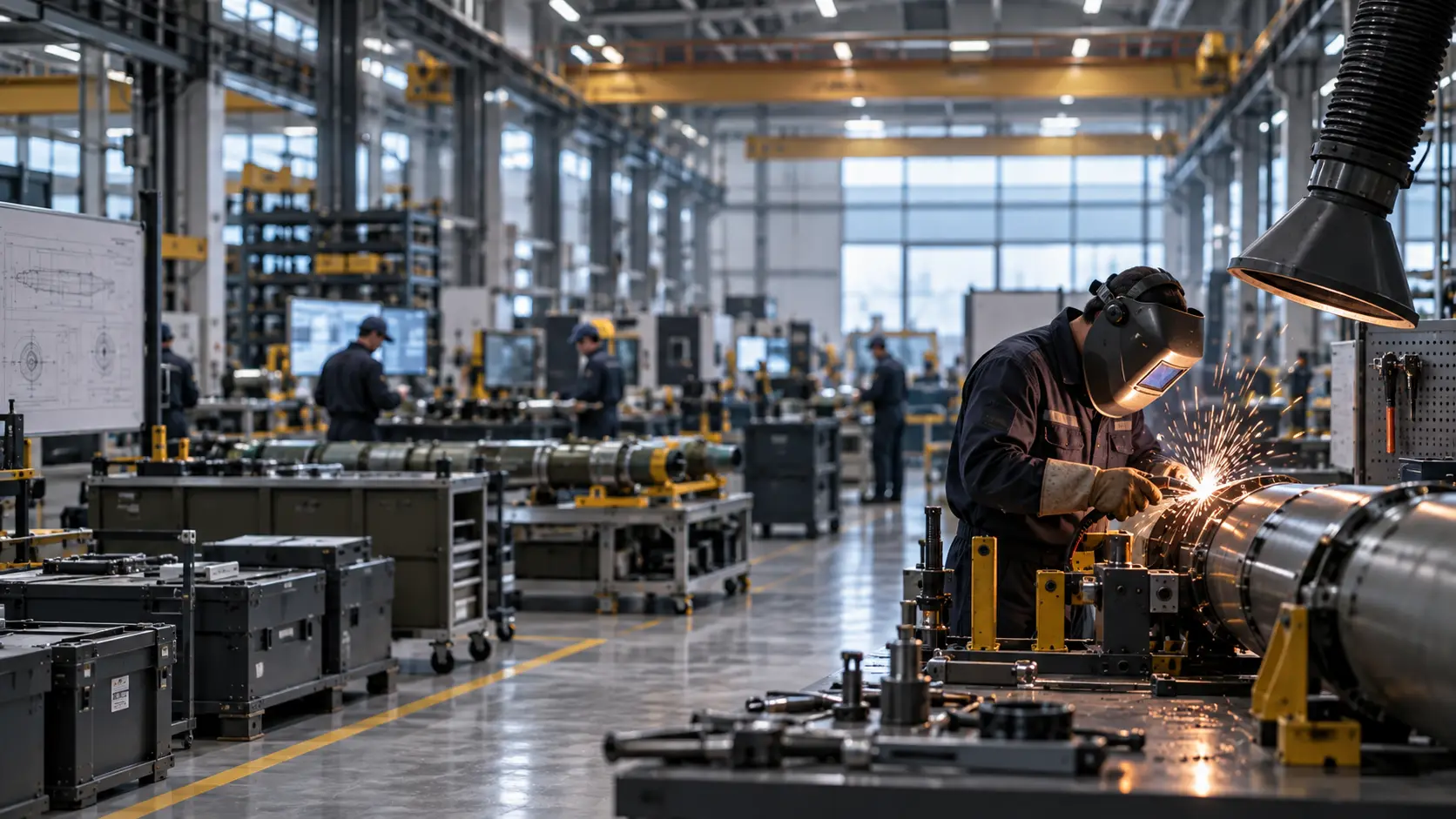

India is opening DRDO-developed conventional missile technologies to domestic industry, marking a shift in how the country builds capacity for its indigenous missile systems. The decision, announced on August 25, allows qualified Indian companies to access DRDO technologies for conventional missile systems and participate in their production, subject to certification and regulatory requirements. The move expands a role historically dominated by public-sector manufacturers, particularly Bharat Dynamics Limited (BDL), and is part of a broader effort to move DRDO technologies from development into industrial-scale production.
What Is Changing?
For many DRDO-developed missile systems, production has been concentrated around government-owned manufacturers. Bharat Dynamics Limited (BDL) has been the principal integrator of many DRDO-developed missile systems, while private companies have largely supplied components and subsystems.
DRDO has described Indian industry as moving from a ‘build to print’ partner to a ‘build to specification’ partner, reflecting the growing role of industry in defence development and manufacturing. The new decision opens conventional missile production to a wider group of Indian companies. Eligible firms can compete with public-sector manufacturers to become Development-cum-Production Partners, working with DRDO to manufacture complete missile systems using its technologies, according to Business Standard.
Why Does It Matter?
India needs a larger industrial base capable of producing sophisticated weapons at scale. In June, the government said technological superiority alone was not enough and stressed the need for defence systems in “sufficient quantity and at the right time”, calling for DRDO, the armed forces and industry to work together to move technologies rapidly from development to large-scale production.
Recent conflicts have also highlighted the importance of production capacity. Business Standard reported that the missile-production push reflects lessons from the Russia-Ukraine war and the West Asia conflict, where sustained use of precision weapons has highlighted the need to produce weapons at scale and at sustainable cost. On September 9, The New Indian Express similarly reported that India’s challenge is no longer simply designing and testing sophisticated missiles, but manufacturing them at sustained rates and replenishing stocks during prolonged operations.
India’s defence industry is expanding, but production remains heavily weighted towards the public sector. Defence production reached a record ₹1.78 lakh crore in 2025–26, with DPSUs and other public-sector entities accounting for about 76% of output and the private sector contributing 24%.
What Happens Next?
The decision will now move into programme-level implementation, with individual conventional missile systems opened up for production by Indian companies. Some of this process is already underway. The New Indian Express reported that Astra Mk-2 could be among the first major systems offered to private industry, with a formal request inviting companies to bid for its production.
According to Financial Express, the move could also deepen the supplier base around missile production and expand manufacturing capacity beyond the current pool of producers over time. That would support higher production volumes and add to India’s capacity to supply defence equipment for export.
***
Source Note:
This article is based primarily on Government of India and PIB announcements on opening DRDO-developed conventional missile technologies to Indian industry and expanding defence production capacity. Additional context on industry participation, missile production, recent conflict lessons and specific programmes is drawn from Business Standard, The New Indian Express and Financial Express.
Editorial Disclosure:
AI-assisted tools were used to help summarise and organise information from the source reports and to support language and copy-editing.