
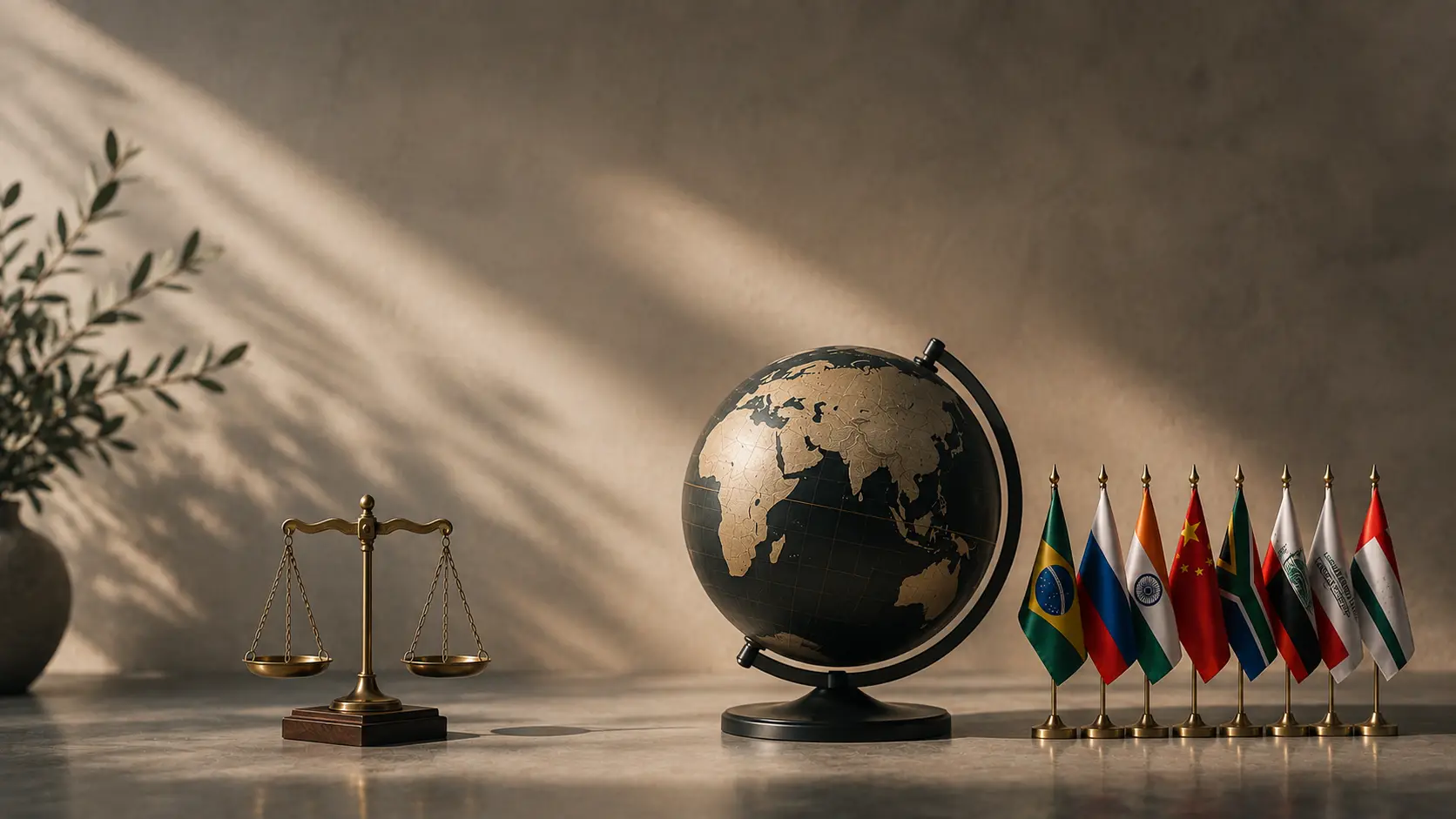

Sixty-one years ago, delegates from Asia, Africa and Latin America gathered in Havana and declared, in the language of their time, that the struggle against imperialism was one struggle, fought on three continents. It was a heady, defiant moment and for decades afterward, the dream of a unified Global South voice seemed to fade into the footnotes of Cold War history. Today, that dream has resurfaced in an unlikely form: a bloc of finance ministers, central bankers and trade negotiators called BRICS Plus.
As the group moves from Brazil’s presidency in 2025, through India’s more cautious stewardship in 2026, towards a Chinese chairmanship in 2027, it is worth asking a blunt question. Is BRICS Plus actually building a new world order, or is it simply managing a slow, uneven drift away from an old one?
The achievements are real, if modest. The New Development Bank, once dismissed as a vanity project, has quietly expanded its lending to member states for infrastructure and green energy. BRICS-Pay, a fledgling alternative to Western-dominated payment networks, is being tested for cross-border trade.
A handful of member states have begun settling bilateral trade in local currencies rather than dollars, not a revolution, but a genuine crack in a financial architecture that has gone unchallenged for eighty years.”
There is also quieter, less headline-grabbing work underway on artificial intelligence governance and on protecting traditional knowledge and genetic resources from exploitation by wealthier economies issues that matter enormously to countries in Africa, Latin America and South and Southeast Asia, even if they rarely make the evening news.
One Bloc, Very Different Interests
But achievements only tell half the story. BRICS Plus is not a tidy alliance; it is an unwieldy coalition of eleven full members and a widening circle of partner countries, each with its own interests, and some of them openly at odds with one another. India has little appetite for picking a fight with Washington over the dollar. China has every incentive to do exactly that. Russia wants sanctions relief and diplomatic cover; Brazil and South Africa want investment and market access without being dragged into a great-power confrontation they did not choose.
As the bloc grows larger, it also grows harder to steer enlargement brings legitimacy but also friction, and friction is expensive in an organisation that runs on consensus rather than command.”
Why 2027 Will Be A Test Of Execution
This is the tension that will define 2027. China’s chairmanship arrives at a moment when the appetite for “de-dollarisation”, a word that would have sounded fringe a decade ago is no longer confined to seminar rooms. Tariff wars, sanctions regimes and the routine weaponisation of the dollar-based financial system by Western governments have pushed even reluctant states to hedge their bets. Beijing, unlike New Delhi, has few reasons to tread carefully on this front, and every reason to press its advantage.
Expect louder talk of a BRICS cross-border payment system, renewed pressure for IMF voting reform, and an attempt to translate three years of communiqué language into something that actually moves money.”
Whether that translation happens is an open question, and it is the right one to ask before applauding or dismissing BRICS Plus wholesale. Coalitions of the Global South have promised a great deal before and delivered less. The Non-Aligned Movement, born from the same Bandung spirit that animated Havana, produced solidarity and rhetoric in abundance but struggled to convert either into durable institutions. BRICS Plus has, so far, done somewhat better; it has banks, payment pilots and summit calendars, not just declarations. But institutions without binding commitments are still, in the end, closer to rhetoric than to power.
Three Things to Watch in 2027
What should readers in the Global South and, frankly, in the Global North watch for in the year ahead? First, whether China can hold a fractious coalition together without simply imposing its own priorities on smaller members, several of whom are already uneasy about trading dependence on Washington for dependence on Beijing. Second, whether the bloc’s financial innovations move beyond pilot programmes into instruments that ordinary exporters and importers actually use. Third, whether BRICS Plus can speak with one voice on the issues that matter most to its poorer members debt relief, climate finance, technology transfer rather than being captured by the strategic rivalries of its largest ones.
None of this guarantees a new global order. It is entirely possible that BRICS Plus settles into a permanent, useful, unglamorous role: a pressure valve that gives the Global South leverage in negotiations with the old powers, without ever fully displacing the system it was built to challenge. That would be a modest legacy compared to the sweeping ambitions of Havana in 1966 or Bandung in 1955. But modest and real is still an improvement on grand and empty and sixty-one years on, that may be the most honest measure of progress the Global South can claim.
Disclaimer:
This article is published as a guest contribution in the interest of encouraging informed public debate. The author is responsible for the accuracy of all facts, claims, data, citations, references and representations made in the article. One Big Future does not independently verify every statement, claim or source contained in guest submissions and shall not be held liable for any errors, omissions, inaccuracies, copyright issues, defamation claims or other consequences arising from the author’s contribution.