
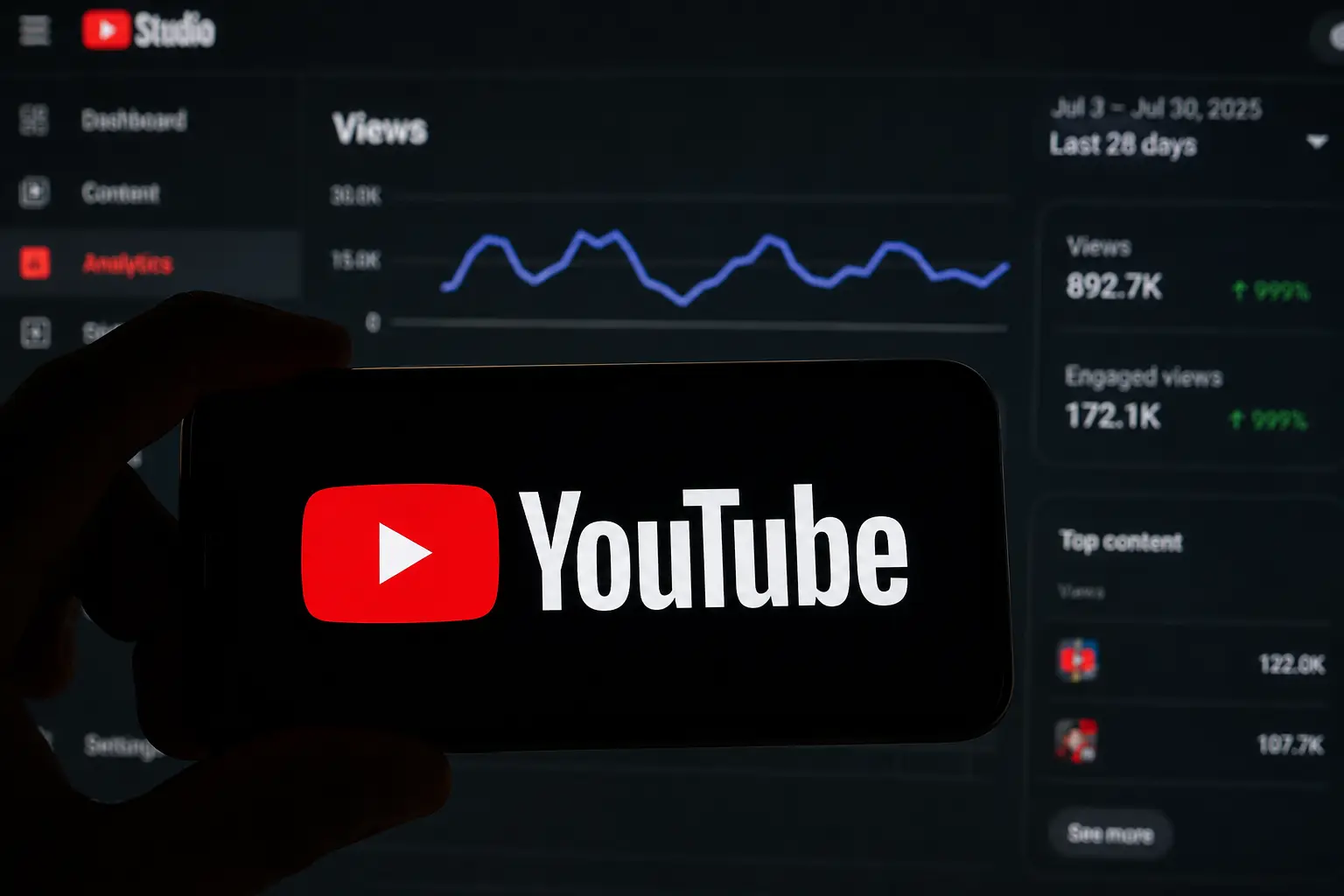

Beginning August 24, 2026, YouTube has started to count a public view as soon as a video starts playing from the first frame, across all formats.
Previously, long-form videos required a minimum watch time, typically around 30 seconds, before a view was registered. Now, a view is counted immediately from the first frame.
This update aligns long-form videos, podcasts, and live streams with YouTube Shorts, which already use first-frame counting, and matches competitors such as TikTok and Instagram.
Creators will see public view counts increase faster now that YouTube has removed the previous retention threshold.
The previous, stricter metric is now called “Engaged Views” and remains available in YouTube Analytics to track genuine retention. Metrics such as watch time and audience retention remain essential for performance evaluation.
For the creator economy, the distinction matters. Views are not simply a performance metric: they help creators demonstrate reach, attract brand partnerships and establish commercial value. As the definition of a view changes, creators and advertisers may increasingly have to distinguish between content that starts playing and content that actually holds attention.
What Is Changing?
YouTube says this distinction is designed to give creators a clearer understanding of both their overall reach and deeper audience engagement.
The change does not mean that every other YouTube metric has been reset. YouTube says metrics such as retention, average view duration and click-through rate continue to rely on engaged views. Recommendations are also unchanged, while monetisation and YouTube Partner Programme eligibility continue to use qualified engagement metrics.
For creators, the key change is not in content performance itself, but in how that performance is represented.
Why Does It Matter?
Views serve as currency in the creator economy. They let creators demonstrate audience scale, attract sponsors, and negotiate commercial partnerships. For brands, views provide a straightforward way to compare the reach of different creators.
A public view now indicates that a video began playing, while an “engaged view” more clearly shows that a viewer continued watching. This distinction between reach and attention is one advertisers may increasingly need to consider.
Forbes describes this shift as giving marketers two metrics instead of one. As a result, brands may look beyond headline views and focus on retention, watch time and other indicators of audience behaviour when evaluating creator partnerships.
This is important as the creator economy becomes more commercial. As creators operate more like businesses, a single metric cannot capture the full value of their audience. A creator with broad reach but low engagement may offer different value than one with fewer views but a highly engaged audience.
YouTube’s update does not render views meaningless. Instead, it clarifies the difference between being seen and being watched.
What Happens Next?
The immediate impact will be on how creators and brands interpret performance data.
Creators may begin reporting public views alongside engaged views, retention or watch time when presenting to brands. This could lead to more sophisticated media kits and campaign reporting.
Brands may place greater emphasis on the quality of attention rather than just audience size. This shift could benefit creators who build strong communities and consistently maintain viewer engagement, even without the highest view counts.
A key trend to monitor is whether the creator economy shifts from counting audiences to measuring attention.
What Should India Do?
India’s creator economy is expanding rapidly, making accurate measurement increasingly important for creators, brands and agencies. The ecosystem must become more sophisticated in understanding what platform metrics truly represent.
Creators should distinguish between reach, engagement and outcomes rather than relying solely on headline views. Brands should assess creator partnerships using deeper indicators of audience behaviour, and agencies can help establish clearer standards for comparing performance across platforms.
***
Source note:
This article is based on YouTube’s 24 August 2026 update to how public views are counted across long-form videos, podcasts and live streams, including its distinction between public views and engaged views. Additional context on the implications for creators and advertisers was drawn from Forbes’ reporting on the change and YouTube’s updated analytics guidance.
Editorial Disclosure:
AI-assisted tools were used to help summarise and organise information from the source reports and to support language and copy-editing.