
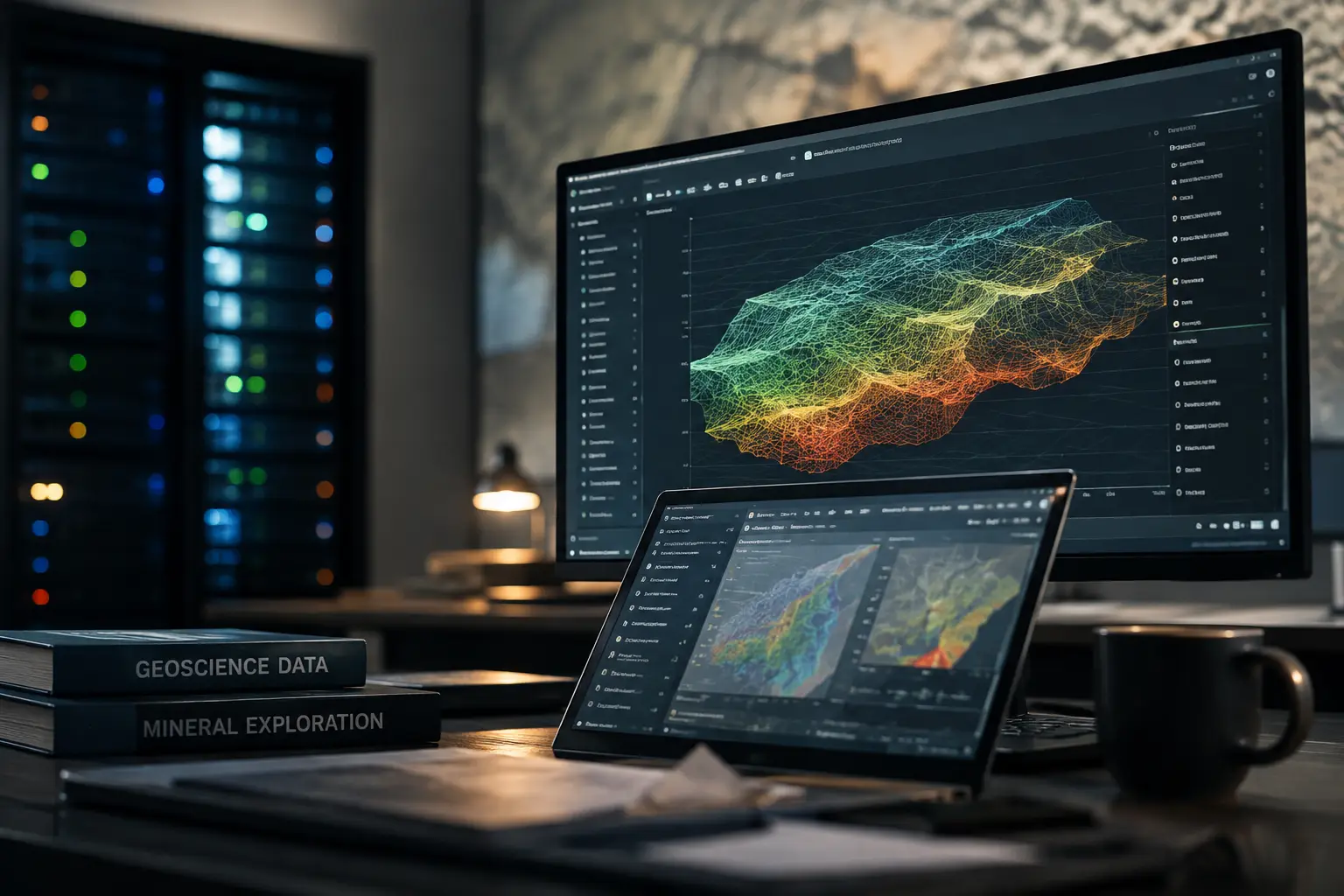

On August 4, the Centre for Development of Advanced Computing (C-DAC) and the Geological Survey of India (GSI) signed a memorandum of understanding to bring Artificial Intelligence, high-performance computing and advanced digital technologies into geoscience, mineral exploration and disaster management. According to the Ministry of Electronics and Information Technology (MeitY), the collaboration will combine C-DAC’s computing capabilities with GSI’s geological expertise. This will support applications including 3D subsurface mapping, predictive mineral targeting, processing large geophysical datasets, landslide monitoring, early-warning systems and studies of glacial lake outburst floods.
What Is Changing?
C-DAC, MeitY’s research and development organisation for advanced computing, will bring computing infrastructure and technical expertise to some of GSI’s most data-intensive work.
The partnership is intended to use AI and high-performance computing to analyse large geological datasets and could also convert decades of unstructured geological records into a domain-specific large language model. This could help GSI search for critical minerals and rare earth elements by making geological information easier to analyse.
The agreement also gives disaster management a significant role. The same computing capabilities will support monitoring of landslide-prone slopes using satellite radar, development of early-warning systems and studies of glacial lake outburst floods.
This builds on an existing technological shift within GSI. It has already been using drone-based magnetic surveys and developing AI-based mineral-targeting models, while its National Geoscience Data Repository hosts more than 18,000 geoscientific and mineral-exploration reports.
Why Does It Matter?
The agreement comes as GSI is expanding mineral exploration. In 2025-26, it completed 458 mineral exploration projects, including 230 on critical minerals and 92 on rare earth elements, and handed over 80 Geological Reports for auction.
For 2026-27, GSI has planned around 500 mineral exploration projects, with roughly 300 focused on critical and strategic minerals, about 30% more than the previous field season. As exploration expands, the challenge is not simply collecting more geological information, but using it to identify promising areas and make faster decisions.
The disaster-management side matters for a similar reason. India already generates large amounts of satellite, terrain and geological data. The challenge is turning that information into earlier and more useful warnings in areas exposed to landslides and glacial hazards.
What Happens Next?
The next step in the critical mineral exploration project will be whether the MoU becomes part of GSI’s actual working systems.
In mineral exploration, GSI wants projects to move faster from initial surveys towards more detailed critical mineral exploration, helping create mineral blocks that are ready for auction. For disaster management, the test is whether better computing and data analysis can improve identification of vulnerable areas and make early-warning systems more useful on the ground. C-DAC’s value will therefore not simply be in providing more computing power, but in whether that capacity leads to better exploration targets and better risk assessment.
What Should India Do?
India should treat geological data, computing infrastructure, mineral exploration and disaster monitoring as parts of the same geoscience capability.
For minerals, that means using AI and high-performance computing to turn surveys and historical records into stronger exploration targets. For disaster management, it means linking geological expertise with satellite and terrain data so risks can be identified earlier.
The larger opportunity is to ensure that India does not simply generate more data, but becomes better at turning that data into decisions, whether that means finding strategically important minerals or protecting communities from geological hazards.
***
Source note:
This article is based on the Ministry of Electronics and Information Technology’s 4 August 2026 announcement on the C-DAC–GSI MoU; GSI’s 2026–27 exploration programme as reported by Energy Watch; and official Ministry of Mines information on the National Critical Mineral Mission and GSI’s digital and geoscience infrastructure. Additional reporting on the MoU was drawn from ANI. GSI’s January 2026 programme initially listed 236 critical-mineral exploration projects for 2026-27.
Editorial Disclosure:
AI-assisted tools were used to help summarise and organise information from the source reports and to support language and copy-editing.