
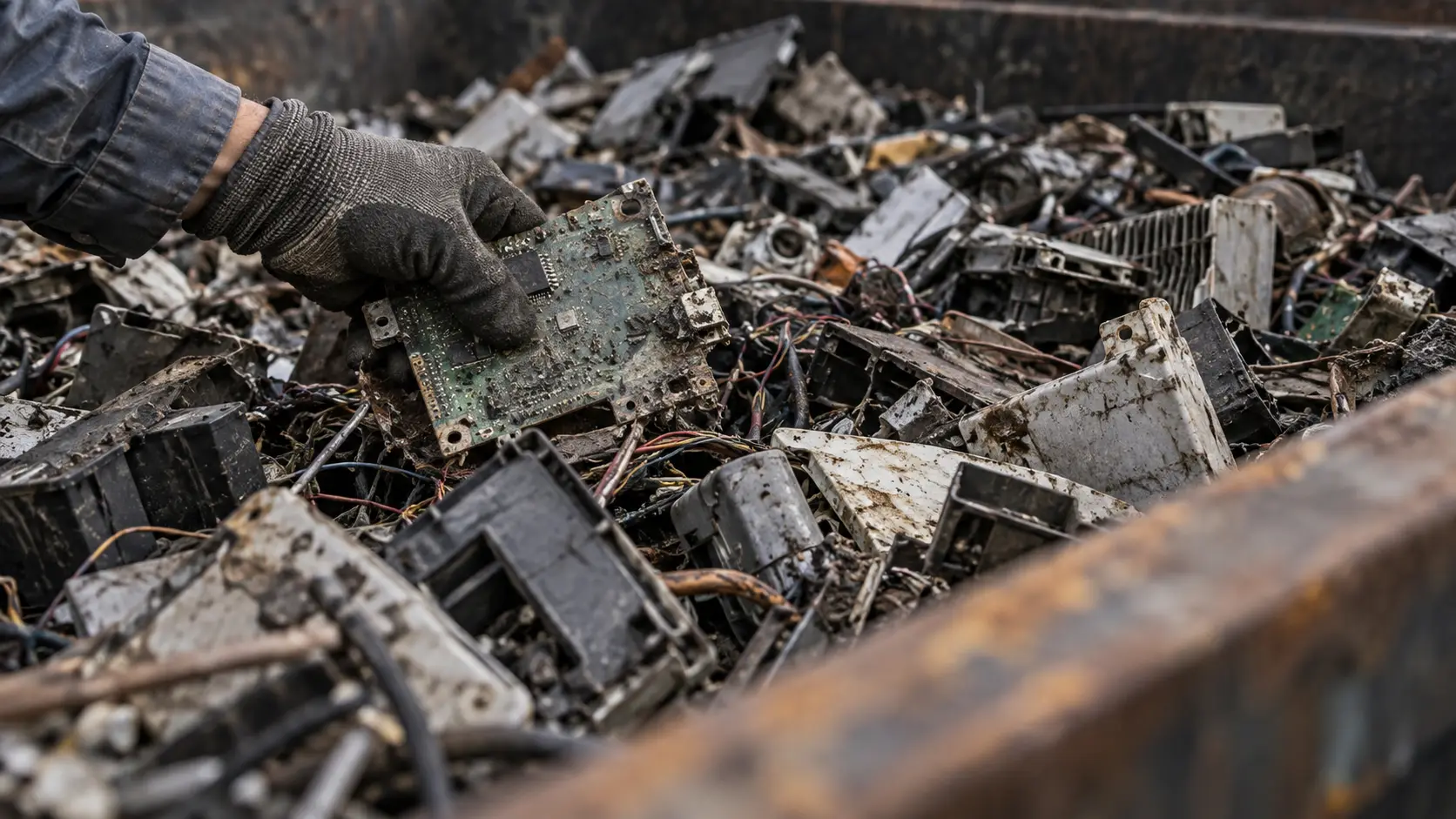

A seminar organised by the Ministry of Mines in collaboration with the Materials Recycling Association of India on 21 September 2026 focused on strengthening India’s critical-mineral recycling ecosystem and advancing a circular economy. Mines Minister G. Kishan Reddy called for greater recovery from end-of-life products, linking recycling to clean energy, defence, the digital economy and advanced manufacturing. Mines Secretary Keshav Chandra identified e-waste and industrial waste as potential sources of recovered minerals. The ministry also launched a concept paper on the critical minerals recycling ecosystem, which its press release describes as a broad framework for recovery from secondary sources. Alongside recent work by recyclers on recovery technology and government plans for mineral processing, the ministry’s initiative forms part of a wider effort by policymakers and industry to turn discarded products into a dependable source of materials for Indian manufacturers.
India’s Incentive To Recover Minerals From Waste
As India expands electric vehicles, battery storage and other technologies that use critical minerals, it needs more dependable sources of those materials. While mining extracts minerals from geological deposits, recycling recovers materials already present in used batteries, electronics and industrial equipment. Making that recovered material useful at scale requires collection systems that bring waste to recyclers, facilities that can safely separate and refine it, and manufacturers able to use the resulting inputs.
India’s ₹1,500 crore Incentive Scheme for Promotion of Critical Mineral Recycling opened for applications in October 2025. It supports facilities that separate and extract critical minerals from e-waste, spent lithium-ion batteries and other scrap, rather than facilities that stop after producing black mass, an intermediate material from battery recycling.
That month, the ministry also identified organised collection under Extended Producer Responsibility rules as a way to supply recyclers with material. Those rules make producers responsible for ensuring products are collected and recycled after use. In April 2026, the ministry said 58 companies had passed the eligibility assessment, pledging around 850,000 tonnes of annual recycling capacity and ₹5,000 crore in investment. The next stage is project execution and the start of production.
The Path From Scrap To Industry
In May 2026, India and the EU launched a joint funding call worth €15.2 million (approximately ₹169 crore) for EV battery recycling research. It covers mineral recovery, safe collection and pilot-scale demonstrations of recycling processes.
Work on secondary resources extends beyond batteries: in August, public-sector aluminium producer NALCO opened a pilot plant in Bhubaneswar to test the recovery of valuable materials from coal fly ash, including a residue enriched with rare-earth elements.
Mines Secretary Keshav Chandra has said the government is preparing a separate incentive scheme for lithium and nickel processing, with Andhra Pradesh, Odisha, Gujarat and Maharashtra identified to promote critical-mineral processing plants. The proposed scheme concerns mineral processing more broadly, including material obtained through mining or imports.
Indian battery and e-waste recycler Attero has opened an R&D centre in Greater Noida to develop technologies for recovering critical minerals from used batteries, electronic components and other scrap. Its work includes rare-earth recovery, refining, automated battery cutting and discharging, and processes for turning recovered materials into higher-value products.
Alongside investment in recovery and processing, recyclers have raised the cost and movement of scrap as practical concerns. They want the goods and services tax (GST) on metal scrap reduced from 18% to 5%, saying the current rate increases their working-capital needs. They have also asked the government to replace the Pre-Shipment Inspection Certificate requirement for imported metal scrap, under which consignments are checked overseas for prohibited or radioactive material, with scanning and radiation checks at Indian ports. The industry says overseas inspections delay deliveries. Reddy said inter-ministerial consultations would examine the tax and import requirements.
The developments point to a broader source of industrial materials: batteries, electronics and residues from existing production. Their value to India lies in recovering the minerals within them and supplying those materials to domestic manufacturers.
***
Source Note:
This article is based primarily on Ministry of Mines and Press Information Bureau announcements on India’s critical-mineral recycling ecosystem, including the ₹1,500 crore recycling incentive scheme, the September 2026 seminar and concept paper, recycling capacity commitments, India–EU battery-recycling research and NALCO’s work on recovering materials from industrial waste. Additional reporting on the seminar and remarks by Mines Minister G. Kishan Reddy and Mines Secretary Keshav Chandra are drawn from Orissa Diary. Context on the proposed lithium and nickel processing scheme comes from The Indian Express, while developments in private-sector recycling technology and industry concerns around GST and scrap-import rules are drawn from NewKerala and Moneycontrol.